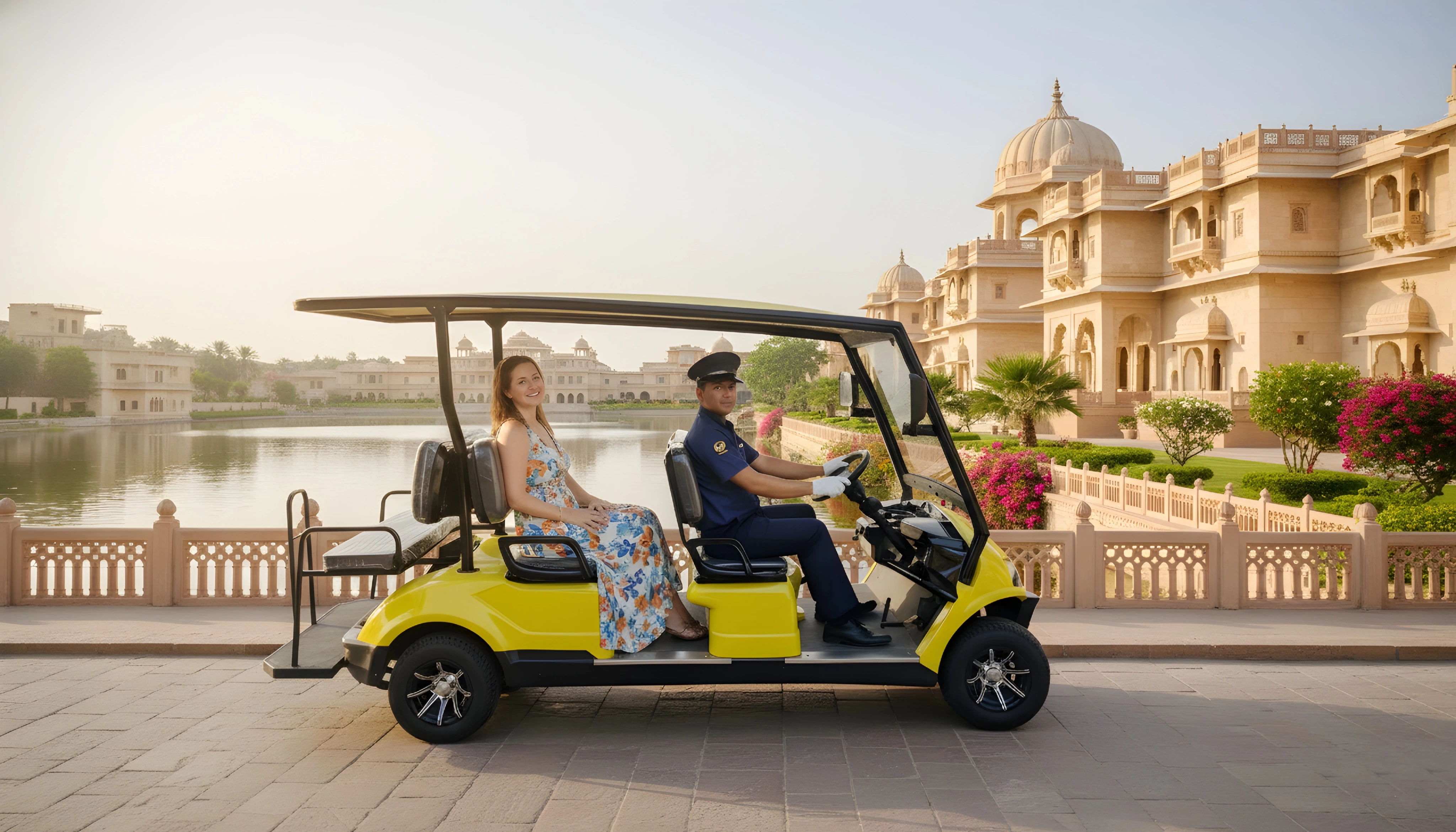
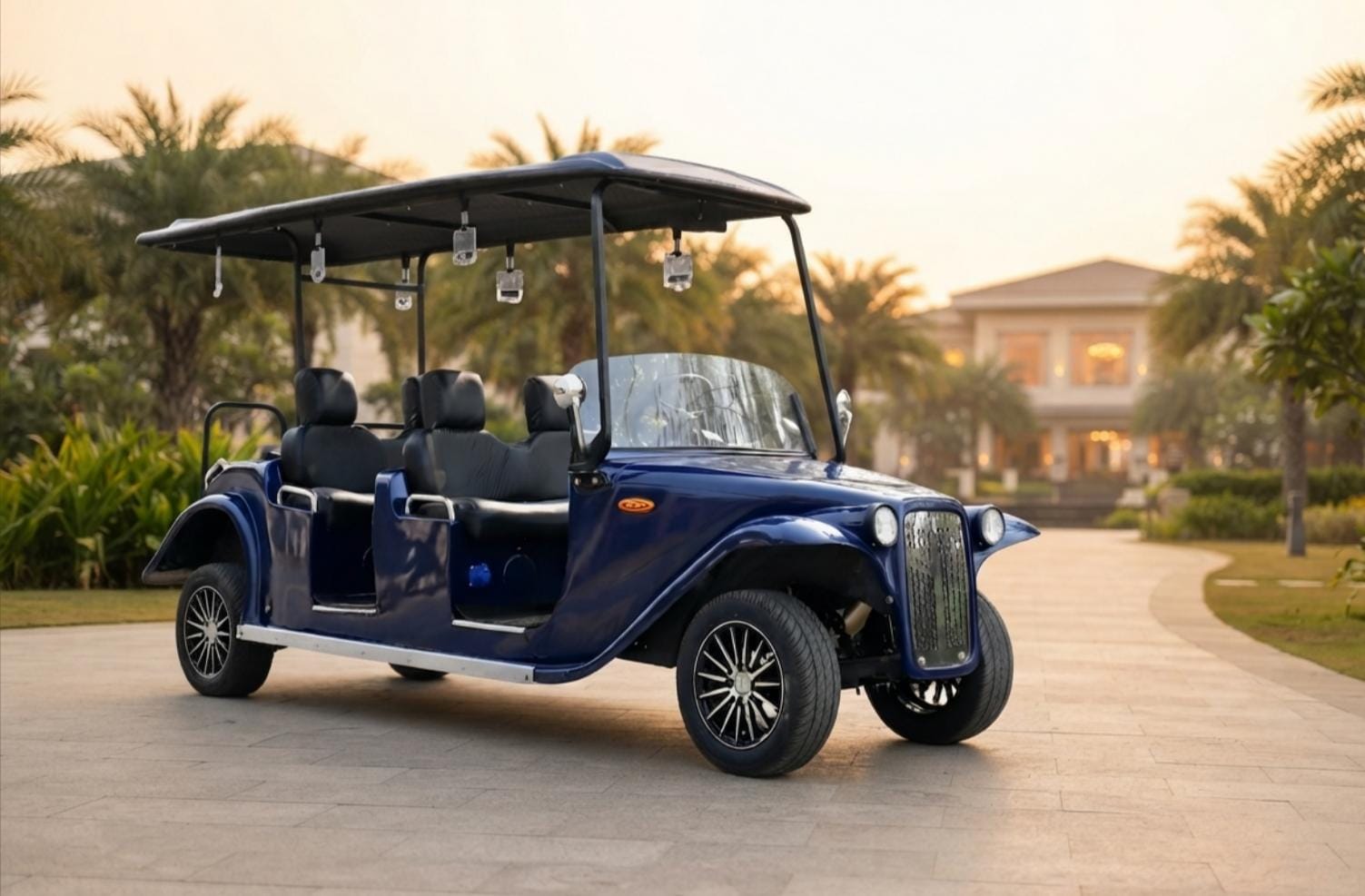
Hotels, golf courses, factories and public institutions operating EAYS vehicles in daily service.
Manufacturer & Fleet Partner
Electric Golf Carts Built to Work Every Day
2 to 14 seat carts, shuttles and utility vehicles — engineered for heat, dust and gradient.
Modern solar-hybrid fleet — 2 to 8 seats, 48 V AC drivetrain.
Key advantages of EAYS electric vehicles
Verified on mixed resort and campus routes with two occupants and accessory load switched on.
Roof PV supplements the pack during the shift, cutting plug-in cycles and grid consumption.
Choose lowest capital cost or lowest cost per cycle — we model both against your duty pattern.
Documented service intervals, genuine spare-part supply and remote diagnostic support.
Industries Served
Where EAYS Vehicles Earn Their Keep
Low-speed electric mobility is not one product. A 30-acre resort, an airside terminal apron and a factory logistics loop each stress the drivetrain differently — so we match motor rating, suspension travel and body type to the duty cycle rather than selling a single platform.
Golf Courses
Resorts & Hotels
Airports
Defence Bases
Hospitals
University Campuses
Factories
Farmhouses
Amusement Parks
Tourism Hubs
Gated Communities
Zoos & Gardens
Fleet Showcase
Four Platforms, One Engineering Standard
Every platform shares the same galvanised chassis philosophy, AC drivetrain and battery management logic. What changes is body, seating layout and payload — so a resort shuttle and a cargo mule are still serviced with the same parts knowledge and the same technician training.
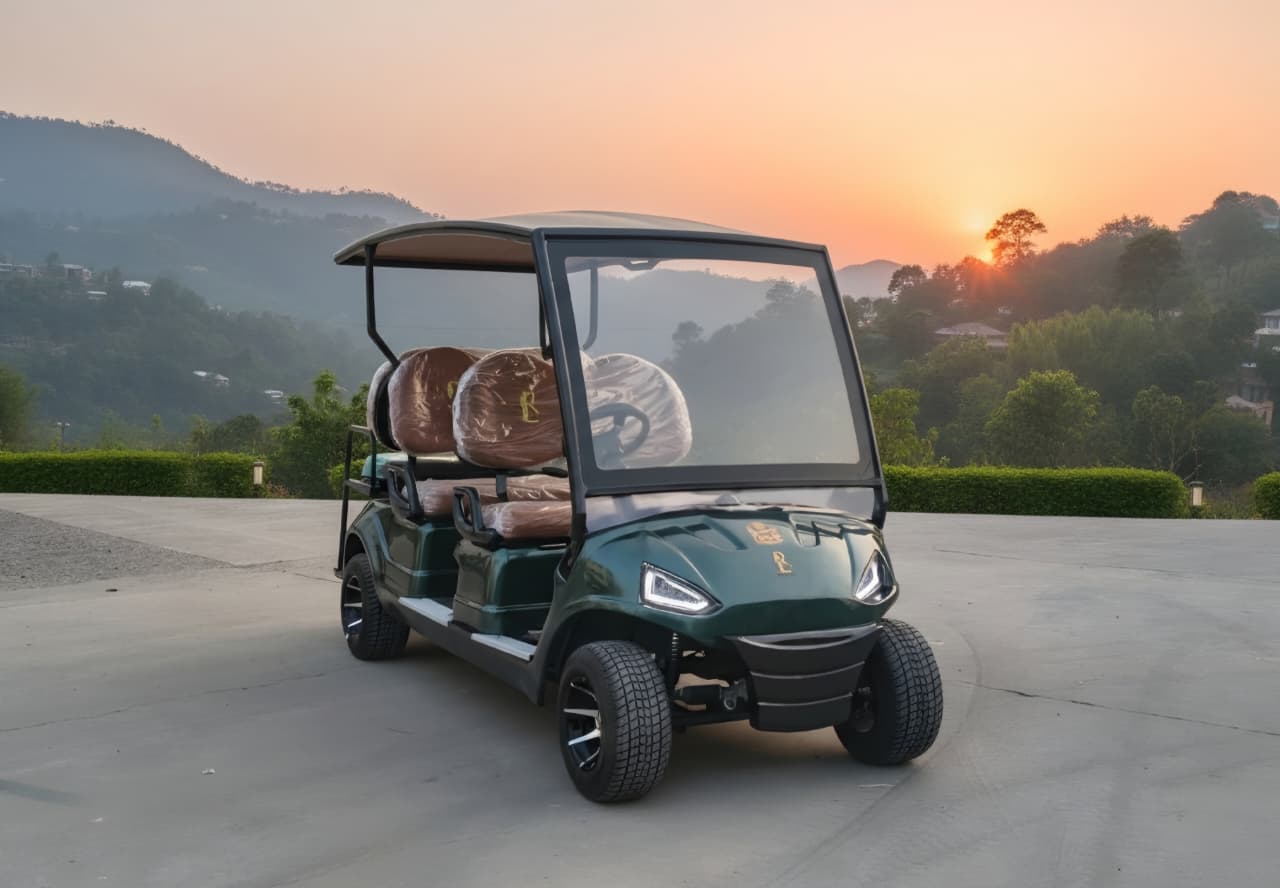 Best Seller
 Solar Hybrid Golf Cart
Contemporary body with roof PV assist. The default choice for hotels, airports and modern campuses that run long daytime shifts.
- Motor
- 4–5 kW AC
- Seating
- 2 / 4 / 6 / 8
- Range
- 60–80 km
 Heritage
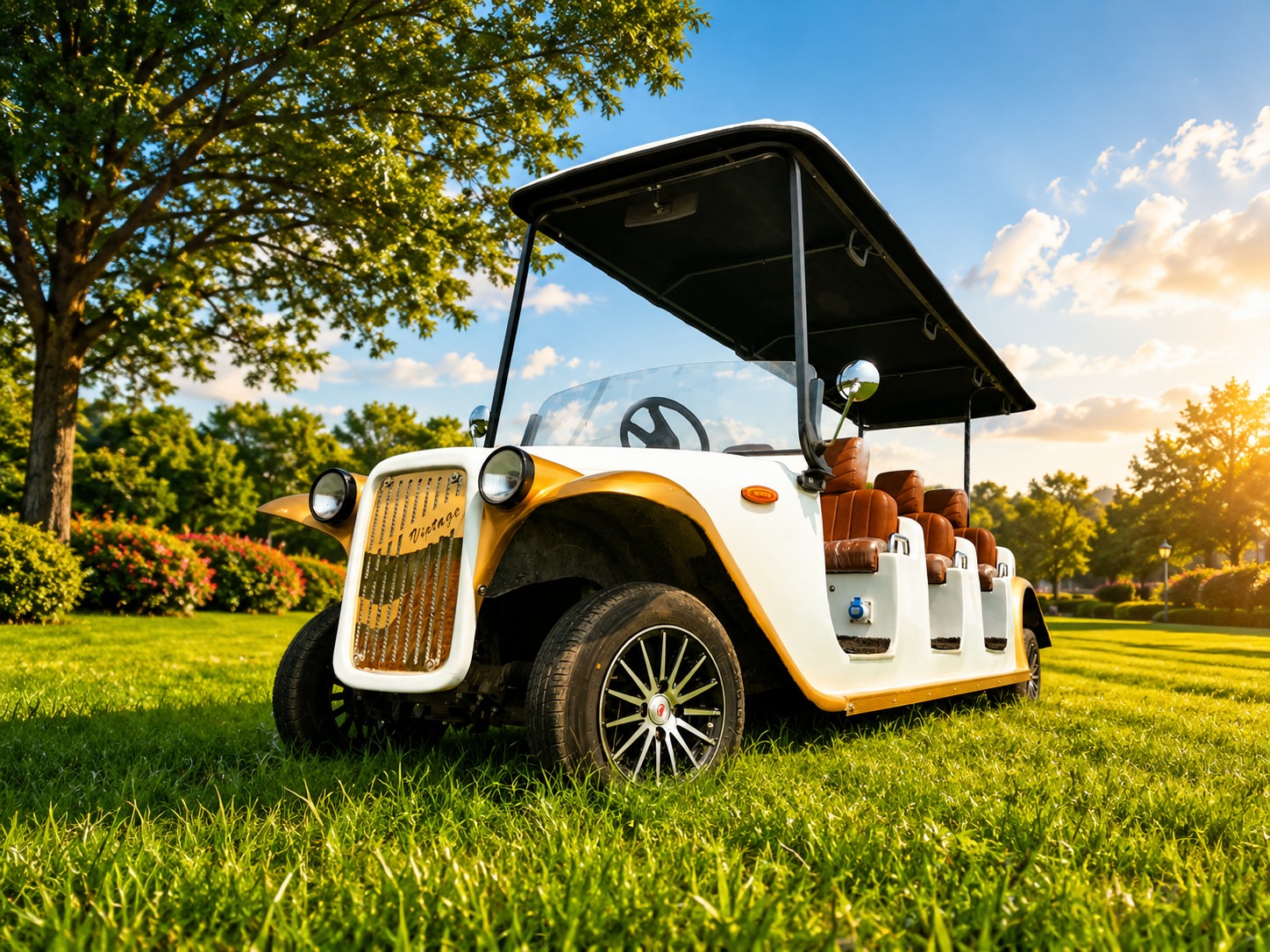
 Vintage Electric Golf Cart
Classic coachwork over a modern electric drivetrain. Selected by heritage hotels, palaces and themed properties where the vehicle is part of the brand.
- Motor
- 4–5 kW AC
- Seating
- 4 / 6 / 8
- Range
- 60–70 km
 High Capacity
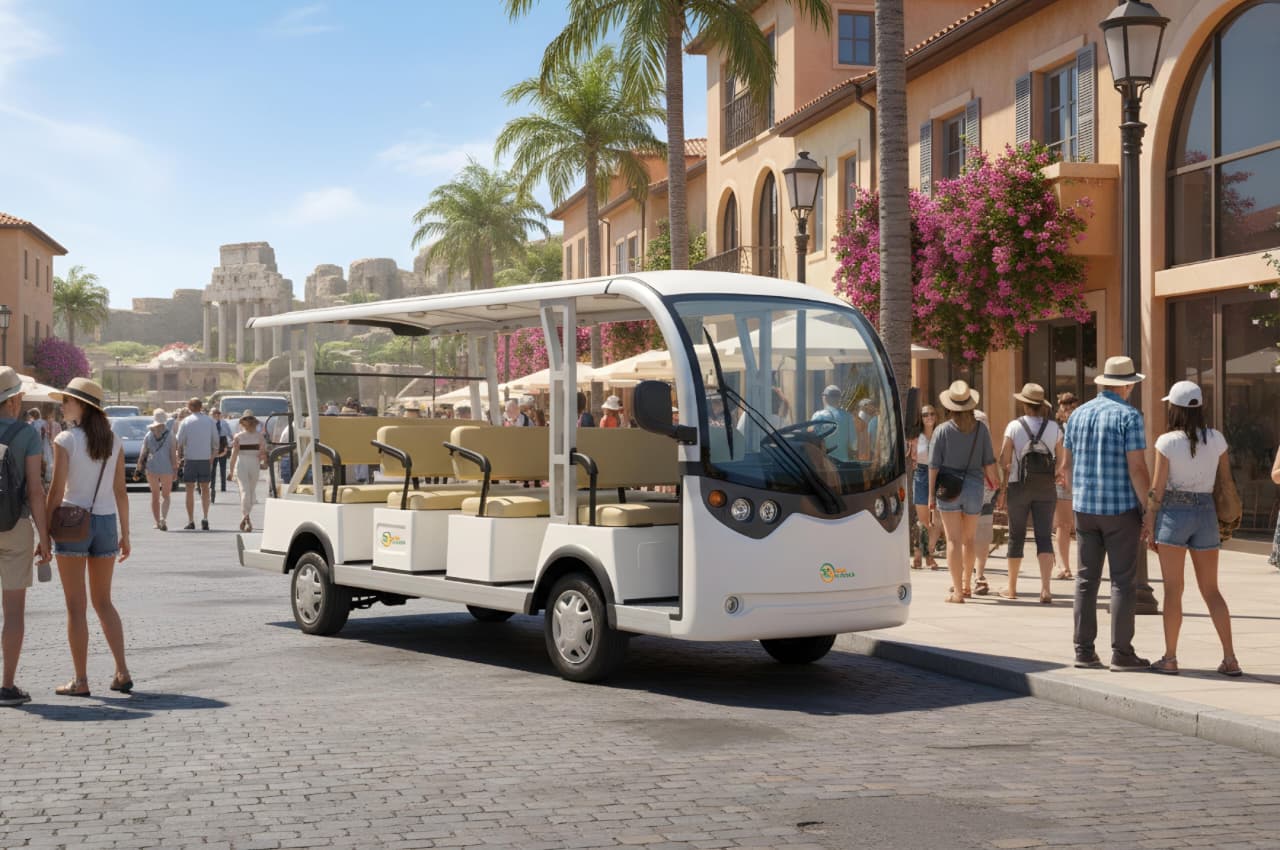
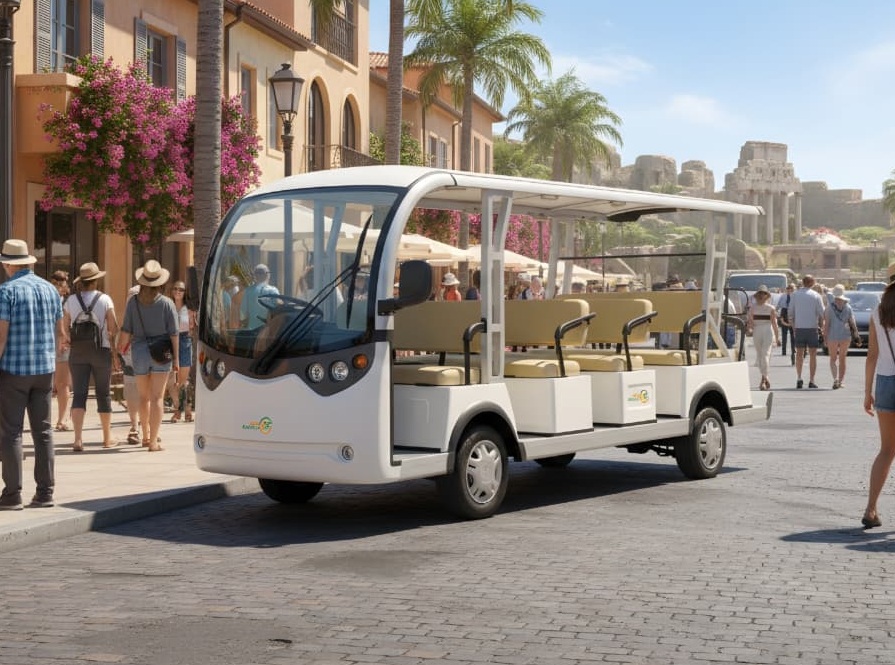
 Electric Mini Bus
Built for repeat shuttle loops: staff transfer, terminal links and campus routes. Power steering and a longer wheelbase keep ride quality high when fully loaded.
- Motor
- 7.5 kW AC
- Seating
- 11–14
- Range
- 80–100 km
 Work Duty
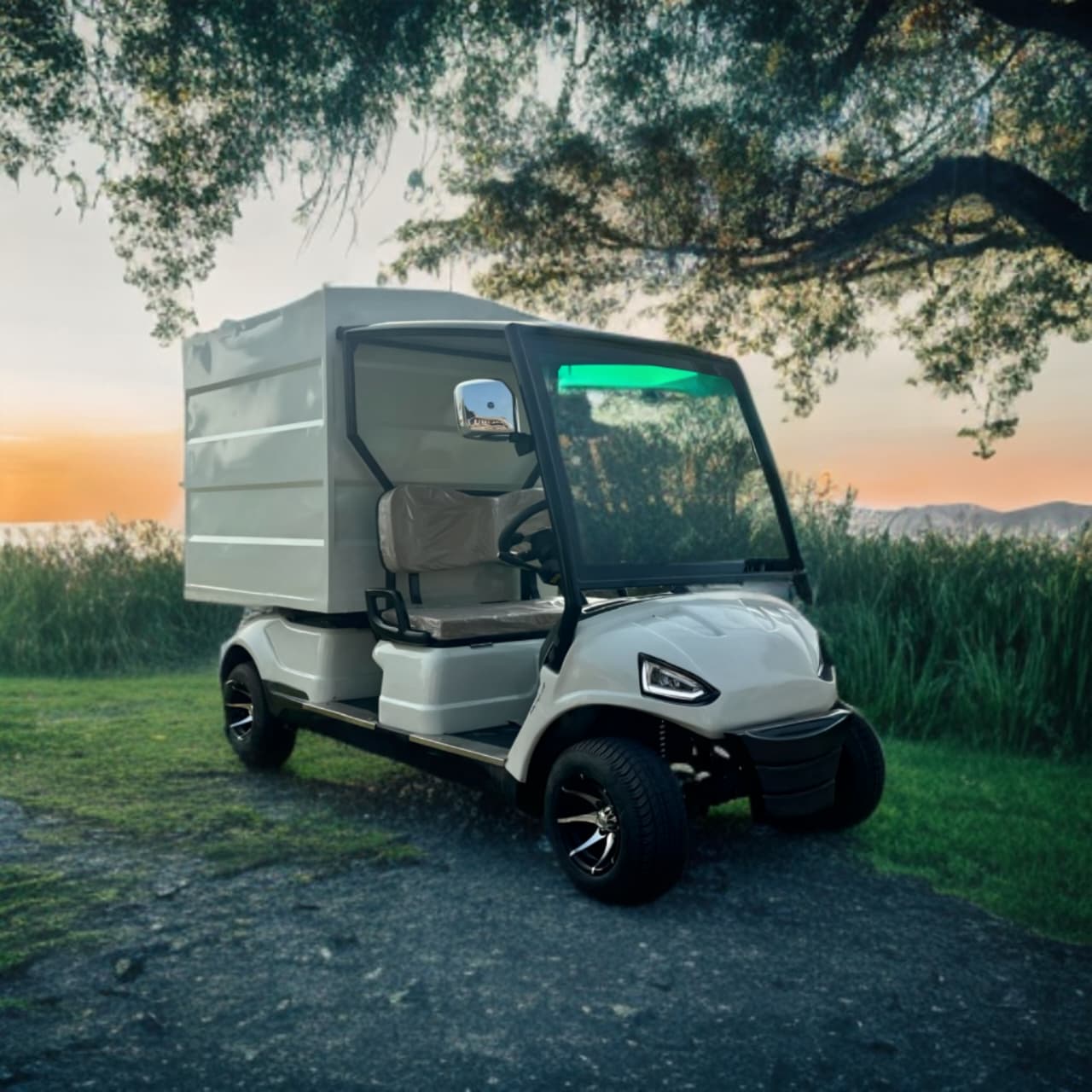
 Electric Utility Cart
Cargo decks, tipping boxes, housekeeping and maintenance configurations for factories, warehouses and back-of-house resort operations.
- Motor
- 4–5 kW AC
- Seating
- 2 / 4 / 6
- Range
- 60–80 km
Selection Data
Compare Before You Commit Capital
The table below is the same shortlist sheet our engineers use during fleet sizing. Figures reflect typical configurations on mixed paved routes; final numbers are confirmed on the approved drawing for your order.
| Platform | Seats | Motor | System | Range | Best Duty Cycle |
|---|---|---|---|---|---|
| Solar Hybrid Cart | 2 / 4 / 6 / 8 | 4–5 kW AC | 48 V, lead-acid or LiFePO4 | 60–80 km | Guest transfer, long daylight shifts |
| Vintage Cart | 4 / 6 / 8 | 4–5 kW AC | 48 V, lead-acid or LiFePO4 | 60–70 km | Heritage hotels, VIP movement |
| Electric Mini Bus | 11 / 14 | 7.5 kW AC | 48–72 V, LiFePO4 preferred | 80–100 km | Fixed shuttle loops, staff transfer |
| Utility Cart | 2 / 4 / 6 + deck | 4–5 kW AC | 48 V, lead-acid or LiFePO4 | 60–80 km | Cargo, housekeeping, maintenance |
Precision Engineering
Eight Details That Decide Fleet Uptime
Low-speed vehicles fail at the joints: corroded frames, sagging bushes, cooked controllers and unbalanced battery strings. These eight design decisions are where we spend the build budget, because they are what a fleet manager pays for over five years.
01 / ENERGY
Solar Hybrid Charging
Roof PV feeds the pack through a charge controller during operation, trimming plug-in cycles and grid load on long daytime shifts.
02 / STRUCTURE
Galvanised Chassis
Corrosion-resistant galvanised steel frame — the single biggest factor in resale value for coastal and poolside deployments.
03 / SAFETY
Monocoque Body Frame
Single-piece frame construction distributes load across the structure instead of concentrating it at welded joints.
04 / RIDE
Independent Suspension
Hydraulic independent front suspension keeps occupants comfortable and wheels planted on broken or unpaved sections.
05 / BATTERY
Managed Battery Pack
BMS-monitored cell balancing, temperature cut-off and charge profiling to protect pack life in high-ambient operation.
06 / DRIVE
AC Powertrain
Brushless AC motor with sealed housing — no brush wear, consistent torque on gradients and minimal scheduled attention.
07 / CONTROL
Regenerative Braking
The controller recovers energy on deceleration and descents, adding range while reducing friction brake wear.
08 / BUILD
Configurable to Order
Seating, colour, upholstery, canopy, lighting, cargo deck and branding specified and drawing-approved before production.
Our team stays involved after the drawing is signed: delivery logistics, on-site commissioning, driver induction and a written maintenance calendar are part of the handover, not an add-on.
Customers
Operators Who Run EAYS Daily
Hospitality groups, golf courses, industrial campuses and public-sector organisations rely on EAYS vehicles for movement that cannot stop.
Testimonials
Field Feedback, Not Marketing Copy
“The ruggedised carts EAYS built for us operate in extreme conditions. Silent running is critical for our night movements.”
Col. Amit SharmaBase Logistics Officer — Northern Command
“EAYS carts changed our guest experience. Quiet, comfortable and consistently available through peak season.”
Rajesh MehtaGeneral Manager — Golden Palms Resort & Spa
“We replaced the entire fleet with EAYS. Build quality is noticeably better where it matters — frame, bushes and brakes.”
Vikram SinghCourse Director — Classic Links Golf Course
“Twelve vehicles in daily campus service with no major failure in eleven months of operation.”
Dr. Priya PatelCampus Facilities Director — Tech Valley University
“Six carts serve our township residents. Charging discipline was easy to teach and the maintenance sheet is simple.”
Anil KapoorResident Welfare President — Green Meadows Township
“Utility carts handle our plant logistics loop across three shifts. Spare parts arrived faster than our previous supplier.”
S. RamakrishnanPlant Maintenance Head — Industrial Park Unit
After-Sales Care
Ownership Support, Step by Step
Vehicle purchase is a five-year relationship. This is the handover process we follow on every delivery, domestic or export.
Delivery & Commissioning
On-site unloading, pre-delivery inspection sign-off, charger installation guidance and first full charge cycle supervised.
Driver & Staff Induction
Hands-on training for drivers and housekeeping teams: safe loading, gradient handling, charging discipline and daily checks.
Scheduled Maintenance
A written service calendar with monthly, quarterly and annual checkpoints, plus a torque and wear reference for your own technicians.
Parts & Remote Support
Genuine spares supply, fault-code guidance by phone or video, and warranty coordination through regional service partners.
Procurement Questions
Answers Buyers Actually Ask Us
Collected from real fleet enquiries across hospitality, institutional and industrial procurement teams.
A 48 V lead-acid pack delivers 60–80 km on flat resort paths with two passengers. Lithium LiFePO4 packs hold voltage better under load and typically return 15–20% more usable range on gradients. Range drops with continuous full load, hill climbing and heavy accessory use such as fans or lighting.
Yes. Seating layout, body colour, upholstery, canopy, cargo deck, lighting, wheel covers, number of battery modules and logo branding are all configurable. Specification sheets and drawings are prepared before production so your fleet manager approves the exact build.
A 40 ft high-cube container typically carries four to six four-seater carts, depending on canopy height and whether windshields and roofs are packed separately. Utility models and 11-seater mini buses are planned per unit volume because of their longer wheelbase.
If daily running is short and the vehicle sits idle between duties, lead-acid keeps capital cost lowest. If the cart runs multiple shifts, faces opportunity charging or operates in high ambient temperature, LiFePO4 usually wins on cost per cycle, weight and the removal of watering labour. Our battery guide breaks this down against duty patterns.
Plan monthly checks of tyre pressure, brake travel and battery terminals; quarterly inspection of suspension bushes, steering linkage and wiring looms; and distilled-water topping every two to four weeks for lead-acid packs. Lithium packs remove watering entirely and need only a periodic balance charge.
No. The roof panel supplements the pack during daylight operation, reducing plug-in cycles and extending the usable shift. Overnight AC charging remains the primary method for a full recharge.
Ready to Go Electric?
Share your passenger capacity, route profile, gradient and preferred battery type. Our engineers will recommend the right platform, pack size and charging layout for your site.