Choosing a Defence Electric Utility Vehicle in 2026 means looking beyond its powertrain. Buyers need to assess payload, usable range, ground clearance, and charging options against the demands of each duty cycle. A vehicle carrying tools across a maintenance depot faces different requirements from one moving supplies over uneven service roads. The right fit depends on the work.
Electric utility vehicles may offer reduced local emissions and quieter operation than comparable conventional models. Yet neither benefit guarantees suitability. Battery performance can change in cold weather, while heavy loads and rough surfaces can reduce practical range. Check manufacturer specifications, but treat them as a starting point. Ask for demonstrations under realistic conditions.
Details matter. Consider cabin layout, storage access, tire availability, charging equipment, and technician training. A well-designed cargo bed is useful only if crews can load it safely and reach equipment quickly. Service support matters, too. A vehicle sidelined for a specialized component may disrupt routine operations.
This guide reviews leading defence electric utility vehicles for sale in 2026, focusing on practical specifications, common applications, and purchasing considerations. Availability and configurations may vary by market, so confirm current details directly with manufacturers or authorized suppliers. Compare total operating costs, not just purchase prices. No single model suits every fleet. Some published claims may also lack enough context; verify them against test results and your own operating requirements before making a decision.
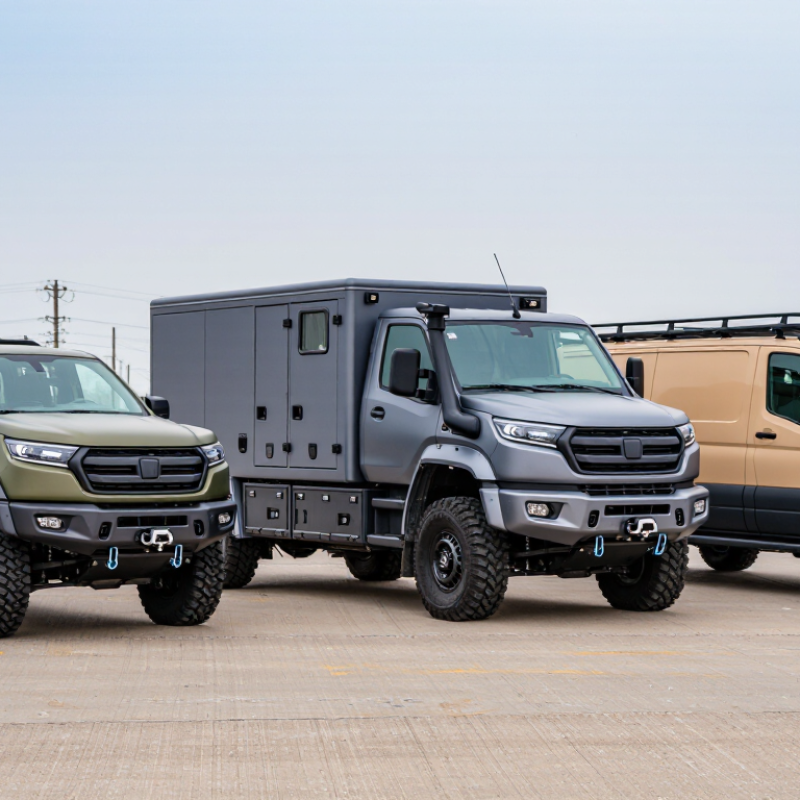
Definition and Mission Roles of Defence Electric Utility Vehicles
Defence electric utility vehicles are battery-powered vehicles designed to move people, tools, and supplies around military facilities and support areas. They may include compact cargo carriers, personnel transports, and maintenance vehicles. Unlike combat platforms, their main purpose is practical movement and routine work. A crew might use one to carry repair kits across a depot, move supplies between buildings, or inspect a perimeter road. These vehicles can reduce local exhaust and noise, though they are not silent. Their usefulness depends on payload, terrain, charging access, and the distance between tasks.
Mission roles vary with the site. On a base, a utility vehicle can support logistics, facility maintenance, medical supply movement, and administrative transport. In a field setting, it may carry equipment over prepared tracks or connect nearby work areas. It is not a substitute for every diesel vehicle. Mud, steep ground, cold weather, and long shifts can affect range and performance. On paper, replacing fuel trips seems simple; in practice, charging schedules and backup transport need careful planning.
Tips: Match payload and ground clearance to the actual route, not just the vehicle’s advertised range. Check charging time, battery performance in local temperatures, and access to service support. Keep a practical reserve for detours or delays. A small trial on representative routes can reveal problems that a specification sheet misses.
FAQS
Compare traction, ground clearance, and service access. Mud, loose gravel, and steep ramps can expose weaknesses quickly. Wheel count alone is not enough.
GVWR is the vehicle’s maximum loaded weight. Payload is what remains after curb weight, occupants, equipment, and protection are counted. Battery mass can reduce it.
Not always. Ask for payload with the proposed equipment fitted, plus axle and tire ratings. A bare-chassis figure can mislead.
Test the vehicle on representative routes with realistic loads. Include hills, cold starts, and power use from onboard equipment. Record energy use and remaining charge over repeated runs.
Check axle limits and handling on uneven ground. Weighing the vehicle can reveal missing accessories or an overloaded setup. It is less tidy, but useful.
Ask for charging times at the power level actually available on site. Keep a reserve for delays and detours. Ideal conditions are not guaranteed.
Include electricity, charger installation, maintenance, battery coverage, and downtime. Ask for the assumptions behind each estimate. Estimates can miss things.
Probably not. Model several duty cycles and ask operators to review them before ordering. Some uncertainty should remain visible in the plan.
Conclusion
A Defence Electric Utility Vehicle is a battery-powered platform designed to support transport, maintenance, logistics, and other utility tasks in demanding environments. Buyers can compare 4×4 configurations by traction needs, payload capacity, and gross vehicle weight, balancing mobility with the equipment and personnel the vehicle must carry. Vehicle class and intended mission should guide these choices rather than a single headline specification.
Battery capacity and charging access shape daily availability. SAE J1772 Level 2 charging can support AC charging up to 19.2 kW when the vehicle and supply equipment are compatible. Ruggedization should also be assessed against stated test evidence, including relevant MIL-STD-810H methods and IEC 60529 IP67 protection requirements. For 2026 procurement, evaluate practical range under expected loads, payload, charging time and infrastructure, durability, maintenance, and total lifecycle cost. Comparing these factors together helps identify a vehicle suited to operational needs and long-term value.