Hospitals, clinics, and medical campuses often need practical ways to move people across long corridors and outdoor pathways. A Hospital Electric Passenger Cart can support this work when walking distances are difficult or shuttle routes are spread out. The best option is not automatically the model with the highest capacity or lowest price. Buyers should compare passenger limits, seat access, turning space, braking, weather protection, and battery performance under realistic loads. Small details matter. Measure doorways and ramps, and consider where the cart will park and charge. A cart that looks suitable in a brochure may be awkward beside a crowded entrance.
This guide looks at what to check when comparing Chinese manufacturers and available models for sale. It will cover vehicle configuration, battery and charging information, safety equipment, warranty terms, spare-parts access, and after-sales support. Ask suppliers for clear specifications and, where possible, arrange a demonstration on routes similar to those at your facility. Confirm how advertised range was tested; passenger weight, slopes, stops, and temperature can affect actual performance. Still, a specification sheet cannot tell the whole story. Staff feedback from a trial can reveal practical issues, such as difficult boarding or limited turning space. No single cart fits every hospital. Careful questions and a realistic evaluation can help buyers shortlist suitable choices without relying on “best” claims alone.
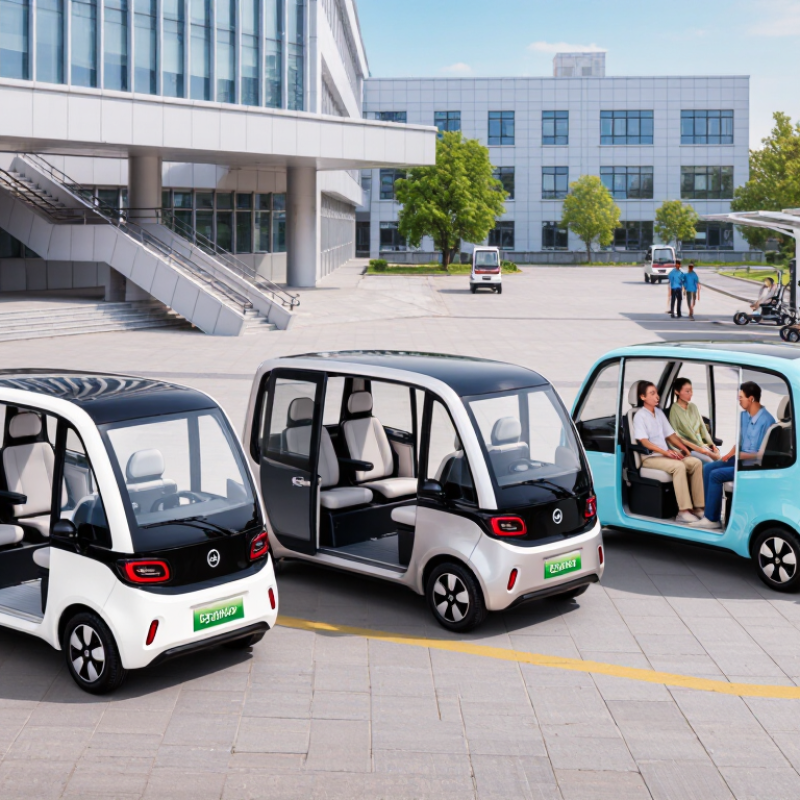
Hospital electric passenger carts are best classified by task, passenger access, and operating environment—not by appearance. Compact two- to four-seat models typically move staff or visitors between entrances, wards, and parking areas. Larger shuttle layouts suit long corridors or campus routes. Accessible configurations need clear boarding space, secure seating, and room to turn. Utility-style carts carry supplies, but they are not passenger shuttles. Keep the distinction clear. A cart is also not a substitute for clinical patient transport equipment.
The International Energy Agency’s Global EV Outlook 2024 reports nearly 14 million electric cars sold worldwide in 2023, about 18% of car sales. That figure shows wider electrification, not hospital-cart demand. For facilities, route conditions matter more: measure corridor width, ramps, door thresholds, passenger load, and charging access before choosing a class. Ask for tested range under realistic loads, not just an ideal figure. Small details matter. A neat specification sheet can still mislead; staff should trial turning and boarding on the actual route. Also check who handles daily charging and battery checks. An overlooked task can become a persistent operational problem.
For a hospital electric passenger cart, compare payload, speed, and range under the conditions your staff will actually face. Payload means people plus carried items, not just passenger capacity. A cart rated for 300 kg may feel different with several passengers, a nurse’s bag, and medical supplies onboard. Check the permitted load and seating layout, then test it on ramps and tight corridors.
Speed should suit busy pedestrian areas, not simply look impressive on a specification sheet. Ask for the adjustable speed range and confirm how braking feels on a slope. A modest top speed can be more useful near patient entrances, where people may step into the cart’s path. Numbers need context.
Range figures can vary with passenger weight, temperature, hills, and stop-start driving. Ask whether the quoted distance was measured with a full load, and compare it with a typical shift route. For example, map trips between parking, wards, and outpatient entrances, then leave a practical battery reserve. Test it loaded. I would not rely on one brochure figure; a real route trial may reveal slow charging or reduced range that was easy to overlook.
For a hospital passenger cart, battery voltage affects how the system delivers power, but it does not determine runtime by itself. A 48-V pack may suit short, steady routes between buildings. A 72-V system can deliver the same power with less current, which may help on ramps or under heavier passenger loads. Numbers can mislead.
Compare the battery’s watt-hours, not just its voltage. Multiply nominal volts by amp-hours to estimate stored energy. For example, a 48-V, 100-Ah pack holds about 4.8 kWh, while a 72-V, 100-Ah pack holds about 7.2 kWh. Actual runtime also depends on passenger weight, route length, speed, stops, and battery condition. A busy loop with frequent starts can drain power faster than a smooth, level route.
Charging needs a compatible charger matched to the battery voltage and chemistry. A higher-voltage pack does not automatically charge faster; charger output and battery limits matter. Ask how long a typical shift takes, then check whether the cart can recharge during breaks or overnight. That matters. We would also leave some capacity in reserve rather than plan every trip around a perfect range estimate. Real routes rarely behave perfectly.
For a hospital passenger cart, an IP54 rating describes protection against dust and water under specific test conditions. The “5” means dust can enter in limited amounts, but not enough to interfere with normal operation. The “4” indicates protection from splashing water from different directions. It does not mean the cart is waterproof.
That distinction matters. A cart may pass through a damp entrance or encounter light splashes during routine cleaning. But pressure washing, standing water, and flooded areas are different risks. Water can still affect connectors, switches, or battery compartments if seals are worn or panels are left open. IP54 is a useful baseline, not a promise against every real-world condition.
When comparing carts for sale, ask which components carry the rating and how the test was performed. Check the charging port cover, door seals, and cable entry points during regular inspections. Follow the manufacturer’s cleaning instructions, and avoid directing water at electrical parts. A rating alone can feel reassuring, perhaps too reassuring. Even a well-rated cart needs careful use, especially in busy corridors where cleaning routines and occasional splashes vary.
IP54 has two separate ratings: the first digit, 5, means dust ingress is not fully prevented but must not enter in an amount that interferes with satisfactory operation or safety. The second digit, 4, means protection against splashing water from any direction. These digits are protection classifications, not percentages, and their scales are different.
When evaluating a China-made hospital electric passenger cart, verify the factory behind the quotation, not just the trading contact. Ask for a live video of the production line, serial-number records, and references from healthcare or campus operators. The International Energy Agency’s Global EV Outlook 2024 reports nearly 14 million electric cars sold worldwide in 2023, about 18% of car sales. This reflects a growing electric-vehicle market, not proof that a particular cart is reliable. A brochure is not evidence.
Request current test reports that identify the exact cart model and battery configuration. Confirm which electrical, electromagnetic-compatibility, and local transport requirements apply at your facility; requirements can differ by use and destination. Put warranty duration, covered parts, labor, shipping costs, and response times in the contract. Ask how quickly the supplier can provide tires, controllers, and batteries, and who performs repairs locally. A long warranty means little without parts. I would also check whether the service promise is practical during a busy shift.
Tips: Match report model numbers to the quotation. Test the cart on ramps and hospital corridors before ordering. Get service contacts and spare-part lead times in writing. Keep a little skepticism; even careful checks cannot predict every breakdown.
No. Runtime depends on stored energy, passenger load, route, speed, stops, and battery condition. Voltage alone can mislead.
Multiply nominal voltage by amp-hours. A 48-V, 100-Ah pack stores about 4.8 kWh. A 72-V, 100-Ah pack stores about 7.2 kWh.
It can deliver the same power with less current. That may help on ramps or with heavier passenger loads.
Frequent starts, long routes, higher speeds, and heavier passenger loads use more energy. A busy loop may drain power quickly.
Not automatically. The charger must match the battery’s voltage and chemistry. Charger output and battery limits also affect charging time.
Ask how long a typical shift lasts. Check whether breaks or overnight periods allow recharging. Leave some capacity in reserve.
Request a live production-line video, serial-number records, and healthcare or campus references. Match test-report model numbers to the exact quotation.
Specify duration, covered parts, labor, shipping costs, and response times. Confirm who handles repairs locally and how soon spare parts can arrive.
Drive it on ramps and hospital corridors. Check service contacts and spare-part lead times in writing. Estimates still miss things.
A Hospital Electric Passenger Cart can help hospitals move patients, visitors, and staff across large campuses with greater convenience. Buyers should first match the cart’s intended use to its payload capacity, maximum speed, and driving range, considering passenger numbers, equipment, route distances, and operating conditions. These specifications affect daily practicality, so compare them together rather than choosing by a single headline figure.
Battery voltage also matters: 48-V and 72-V systems can differ in performance, runtime, and charging needs, so confirm the usable operating time and full charging duration with the supplier. An IEC 60529 IP54 rating indicates protection against limited dust ingress and water splashes, but it does not make a cart waterproof. Before purchasing, verify the supplier’s documentation, applicable compliance information, warranty terms, replacement-part availability, and service support to help ensure the cart suits the hospital’s needs over time.