Mon–Sat 10:00–17:00 IST Bhiwani, Haryana 127306, India 1-Year On-Site Warranty
0%

Choosing a reliable Industrial Factory Cargo Cart supplier in China begins with the actual work on your factory floor. A cart carrying metal components across smooth concrete needs different wheels, frame strength, and braking than one moving bins through narrow assembly aisles. Buyers should compare load capacity, turning radius, weld quality, finish, replacement parts, and customization—not just catalog prices. Small details matter. A handle that sits too high can slow repeated transfers.

Industry data offers useful context, but it should not be overstated. The International Federation of Robotics’ World Robotics 2024 report recorded 541,302 industrial robot installations worldwide in 2023, while the global operating stock reached about 4.28 million units. These figures show how widely factories are adopting automation. They do not measure cargo-cart purchases or prove that every facility needs automated transport. That distinction matters. Manual carts still serve many production lines, especially where routes change or budgets are tight.

This guide examines China’s top industrial factory cargo cart manufacturers through practical procurement questions: Can the supplier provide drawings and load-test information? Are wheel and caster options suited to your floor? Can sample carts be inspected before a larger order? Factory experience suggests that simple products can hide uneven workmanship. A polished brochure is not enough. Buyers should verify specifications, request clear production records, and discuss how damaged parts will be replaced. No ranking can replace a site assessment, and that is an imperfect but important limit.
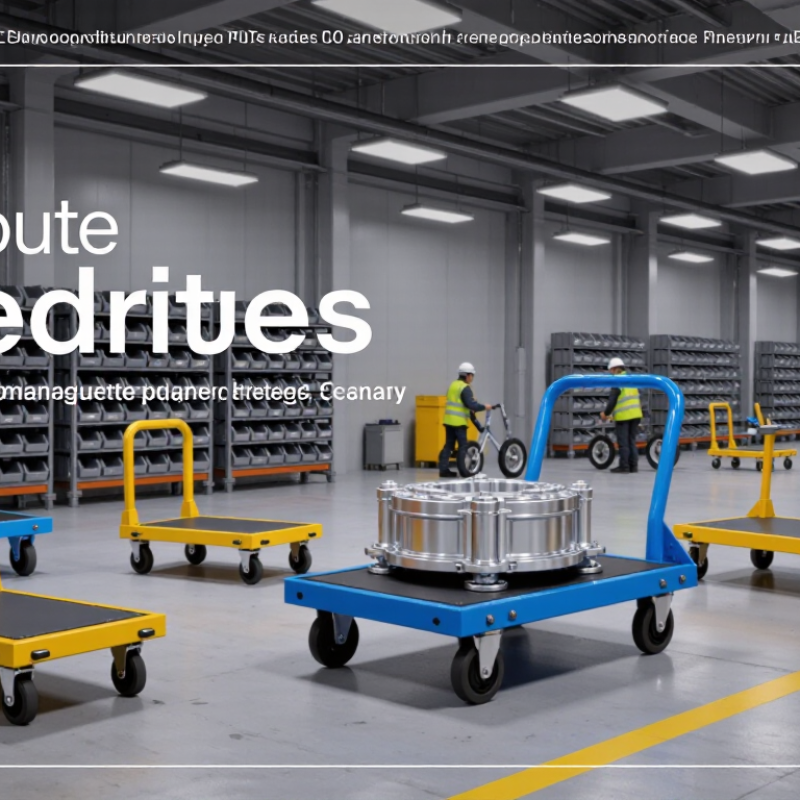
China Top Industrial Factory Cargo Cart Manufacturers?

What Industrial Factory Cargo Carts Are and How They Are Used

An industrial factory cargo cart is a wheeled platform or enclosed carrier used to move materials between workstations, storage areas, and packing lines. Unlike a forklift, it usually handles smaller loads over short, repeated routes. Workers use flatbed carts for bins and parts, shelf carts for staged components, and towable carts for grouped loads. A typical shift might involve carrying fasteners from a stockroom to an assembly bench, then returning empty containers.

Cart choice depends on load weight, route width, floor condition, and turning space. Measure doorways and aisles before selecting a frame. Check wheel type, handle height, brakes, and load stability; a cart that fits the payload may still be awkward on a rough floor. Keep heavy items low and distribute weight evenly. Small details matter. A cart is not a cure-all.

The U.S. Bureau of Labor Statistics reported 2.6 million nonfatal workplace injury and illness cases in private industry in 2023, or 2.4 cases per 100 full-time workers (Employer-Reported Workplace Injuries and Illnesses, 2023). This broad figure does not isolate cart-related incidents, but it reinforces the value of practical material-handling controls. Clear routes, maintained wheels, and training on pushing rather than pulling can reduce avoidable strain. Even so, the best setup needs observation: workers may take a different route when production gets busy.

Industrial Factory Cargo Carts: Typical Payload Ranges

Cargo carts move materials between workstations, storage areas, and production lines. Choose a cart based on its rated load and the route it needs to travel.

Ranges are representative examples, not a universal standard. Actual rated capacities vary by design and model; check the cart’s specifications before use.

Common Cargo Cart Types Made for Factory Operations

Factory operations use several cargo cart types, each suited to a different route or load. Platform carts carry boxed parts, tools, and bulky components across smooth floors. Their open decks allow quick loading, but unsecured items can shift during sharp turns. A raised handle and locking casters help with control and parking.

Shelf carts keep smaller supplies visible and separated. They work well near assembly stations, where operators need fast access to bins or fittings. Cage carts add mesh sides for loose packages, while towable carts can move in groups between receiving and production areas. A train saves repeated trips, but tight corners and crowded aisles can make it harder to maneuver. There is no perfect cart. The right choice depends on load size, floor condition, travel distance, and how often workers handle the goods.

Tips: Check the cart with a realistic load, not an empty one. Test it loaded. Listen for rattling and watch for wheel drag on floor joints. Small details matter. A handle that sits too low or a shelf that blocks sightlines may seem minor, yet both can slow a busy shift. Reassess the setup when routes or products change.

How Chinese Manufacturers Design and Produce Industrial Cargo Carts

Industrial cargo cart design starts with the work, not a catalog sketch. Engineers ask what the cart will carry, how far it travels, and whether it must pass through narrow aisles. A 300-kilogram load differs from stacked cartons, so deck size, frame sections, and handle position must match. Small details matter. A raised edge can keep bins in place, but it may slow loading.

Designers often use CAD drawings to check clearances and estimate frame strength before metal is cut. A prototype can reveal practical problems: a handle may feel too low, or a swivel caster may catch on a floor joint. Manufacturers select steel or aluminum based on load, weight, corrosion exposure, and cost. They cut, bend, drill, and weld the frame, then add wheels, brakes, and a protective finish. Inspect welds closely.

Production checks can include dimensions, fastener tightness, wheel tracking, brake response, and controlled load tests. Inspectors should record results rather than rely on appearance alone. Still, one test cannot represent every warehouse floor. Cart performance changes with wheel material, uneven surfaces, and operator habits. This part is easy to underestimate. Clear specifications and realistic test conditions help buyers compare carts with less guesswork.

Key Criteria for Comparing China-Based Cargo Cart Manufacturers

Comparing China-based cargo cart manufacturers starts with the route, not the brochure. Measure aisle width, floor joints, ramp angles, and the tightest turn. Share the actual load, including uneven weight distribution. A cart rated for 500 kilograms may still handle poorly if its frame flexes or its wheels are too small. Small details matter.

Ask how load capacity is tested and whether the test matches your working conditions. Review welds around the handle and platform corners; these areas often take repeated stress. Check wheel material, bearing access, brake design, and corrosion protection. Request drawings, material specifications, and sample inspection records. A polished catalog is useful, but it cannot replace evidence. That is not enough.

Production consistency deserves equal attention. Ask how dimensions are checked between batches, how defects are recorded, and whether replacement wheels or fasteners are available. A factory visit or live video inspection can reveal storage conditions and assembly steps, though neither guarantees long-term performance. Compare lead times, packaging, and communication in writing. I would be cautious about choosing the lowest quote alone; still, a higher price does not prove better quality. One detail I would revisit is the cart’s turning radius after adding its real load.

How to Evaluate Quality, Customization, and Supplier Support

A cargo cart should match the route, load, and floor—not just the purchase specification. The U.S. Bureau of Labor Statistics reported that musculoskeletal disorders made up 27% of workplace injury and illness cases involving days away from work in 2021. That makes handle height, wheel resistance, and turning effort practical quality checks. Push a loaded sample over the actual floor. Watch it cross expansion joints and turn in narrow aisles. A polished catalog photo cannot show that.

Customization should start with measured loads and site conditions. Ask for deck dimensions, rated capacity, wheel material, brake options, and corrosion protection in writing. Then check welds, fasteners, and whether replacement wheels are standard sizes. Small details matter. MHI’s 2024 Annual Industry Report found that 55% of surveyed supply-chain professionals expected disruptions to increase. For cart buyers, this supports checking spare-part availability, repair instructions, and response times before ordering. Supplier support is not just a promise; request a sample inspection record and a named technical contact. Still, paperwork can look reassuring while the cart handles poorly. A short pilot with operators may reveal problems the checklist misses. That extra test takes time, but it can prevent a fleet-wide mistake.

FAQS

What information should I provide before ordering a cargo cart?

Share the load weight, dimensions, route, aisle width, floor joints, and ramp angles. Mention uneven loads too. Small details matter.

How can I check whether a cart will fit my workplace?

Measure the narrowest aisle and tightest turn. Test a loaded sample across floor joints. A catalog picture cannot show that.

Which materials are commonly used for cart frames?

Manufacturers may choose steel or aluminum based on load, weight, corrosion exposure, and cost. The right choice depends on the working site.

What should I inspect on a cart frame?

Look closely at welds near the handle and platform corners. Check fasteners and frame movement under load. I might overlook a small crack.

How do I assess wheels and brakes?

Ask about wheel material, bearing access, and brake design. Test braking and wheel tracking on your actual floor. Feel the resistance.

What production records should I request?

Request drawings, material details, sample inspection records, and load-test results. Ask how dimensions are checked between production batches.

How can I compare supplier support?

Ask about replacement wheels, standard fasteners, repair instructions, and response times. Get lead times and communication details in writing. Promises are not proof.

Is a higher-priced cart always better?

No. Price alone does not confirm quality. Compare evidence and test a loaded cart with operators before ordering a full fleet. That takes time.

Conclusion

An Industrial Factory Cargo Cart is a practical material-handling solution for moving components, tools, and finished goods through production areas, warehouses, and loading zones. Factories may use platform carts, shelf carts, cage carts, or towable models, depending on the load, travel distance, aisle layout, and handling process. Choosing the right type can help organize internal transport, reduce unnecessary lifting, and keep materials moving smoothly between workstations.

When comparing China-based manufacturers, buyers should consider production capabilities, material selection, structural design, load capacity, wheel options, and consistency of quality checks. It is also important to assess whether a supplier can customize dimensions, handles, shelves, and finishes to suit specific factory conditions. Clear communication, reliable lead times, accessible technical support, and responsive after-sales service can make a significant difference. A thorough evaluation of both product performance and supplier support helps businesses select a cargo cart solution suited to daily operational needs.

Ethan

Ethan

Ethan is a dedicated marketing professional with a strong understanding of the company’s products, customers, and industry landscape. Through his practical experience and thoughtful approach, he transforms complex product information into clear, useful insights that help readers make confident......