Mon–Sat 10:00–17:00 IST Bhiwani, Haryana 127306, India 1-Year On-Site Warranty
0%

Choosing an 8 Seater Commercial Electric Buggy requires more than counting seats and comparing prices. It means examining real operating conditions. Will it carry hotel guests, campus staff, resort supplies, or airport passengers? Each use creates different demands. A steep driveway tests motor torque. A narrow service lane exposes steering limits. A twelve-hour shift reveals battery weaknesses.

Dan Amato, a longtime golf-car fleet adviser, says, “The best cart fits the route, load, and charging routine, not merely the feature list.” That practical view should guide this discussion. Buyers should evaluate passenger capacity, payload, battery chemistry, charging time, braking performance, weather protection, and maintenance access. They should also inspect the seating layout. Forward-facing seats improve passenger confidence. Rear-facing seats may reduce loading flexibility.

Technical specifications can look impressive. Real performance may differ.

A fleet manager should request a demonstration with representative passengers and equipment. Measure hill climbing, turning space, stopping distance, and energy use. Ask how the vehicle performs after repeated daily cycles. Service records matter, too. A low purchase price can become expensive when replacement parts arrive slowly.

This guide will compare the details that influence long-term value. It will also question common assumptions. More seats do not always mean better productivity. A larger battery may add useful range, but it can increase weight and charging demands. No vehicle is perfect. The right 8 Seater Commercial Electric Buggy is the one that matches its route, workload, safety expectations, and local operating requirements.
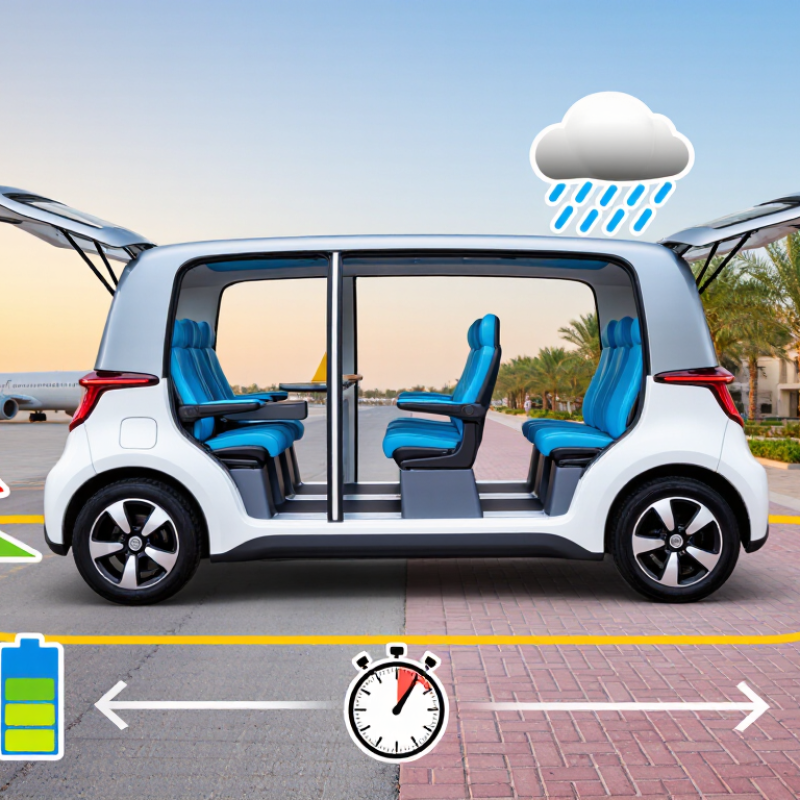
How to Choose an 8 Seater Commercial Electric Buggy?

Define the Intended Use and Operating Environment

How to Choose an 8 Seater Commercial Electric Buggy?

Define the Intended Use and Operating Environment

Choosing an eight-seater commercial electric buggy should begin with its daily job, not its passenger count. Will it carry hotel guests, workers, tools, or visitors across a large site? A vehicle moving people between buildings needs different priorities from one hauling supplies on uneven ground. Record the usual passenger load, trip distance, surface conditions, and working hours before comparing specifications.

Think about the environment in practical detail. Smooth pavement allows smaller tires and a tighter turning radius, while gravel, grass, or sloped paths demand stronger ground clearance and dependable braking. In a coastal location, salt air can accelerate corrosion. In a warehouse, narrow aisles and overhead doors may decide the vehicle’s dimensions. Measure charging areas too. A buggy that fits the route but cannot charge safely becomes an expensive interruption.

Weather and traffic patterns also affect the decision. Frequent rain calls for effective weather protection and drainage, while hot climates may reduce battery performance during long shifts. Ask how often the buggy will stop, start, and wait with its lights or accessories operating. Real-world tests are valuable. A short demonstration on the actual route can expose poor visibility, uncomfortable seating, or weak hill performance. We once underestimated turning space on a busy site; that mistake changed the layout. Specifications help, but observation should have the final word.

Compare Seating Capacity, Dimensions, and Passenger Comfort

How to Choose an 8 Seater Commercial Electric Buggy?

An eight-seater buggy must fit people, not merely eight seats. Compare exterior length, width, and turning radius before checking battery capacity. SAE J1100 measurement practices separate usable passenger space from overall vehicle dimensions. This distinction matters in resorts, campuses, and warehouse roads. A wide vehicle may feel stable, yet struggle through narrow gates. Measure the tightest route, including mirrors and open doors. One overlooked detail can disrupt daily operations.

Seat width, legroom, grab points, and step height strongly affect passenger comfort. Eight adults need more than short test-ride space. Ask the supplier for seat-cushion width, backrest angle, floor height, and rated payload. The 2024 IEA Global EV Outlook reports continued growth in electric transport, but fleet efficiency still depends on real operating conditions. Heavy passengers, slopes, and frequent stops reduce practical range. Do not trust the brochure range alone. A route trial with a full load is more revealing. ISO 2631-1 evaluates whole-body vibration, including exposure from 0.5 to 80 Hz. That standard reminds operators to examine ride harshness, not only seating numbers.

Tips: Place eight adults inside before purchase. Check knee clearance in the rear row. Test the buggy over ramps and uneven paving. Leave space for bags or tools. This is where many evaluations become imperfect. Comfort is subjective, so record passenger feedback after a full working shift.

Evaluate Motor Power, Battery Range, and Charging Requirements

Choosing an 8 Seater Commercial Electric Buggy requires more than checking its passenger capacity. Motor power must match the working environment, including slopes, rough paths, and frequent stops. A buggy carrying eight adults needs stronger torque than one used on flat, paved grounds. Ask for the rated motor output, hill-climbing ability, and performance under full load. A short test drive matters. Notice whether acceleration feels weak near an incline.

Battery range should be measured realistically, not only by the maximum figure in a brochure. Passenger weight, cargo, terrain, weather, and driving speed can reduce usable distance. During a site trial, record the starting battery level, route length, passenger load, and remaining charge. My first estimate was too optimistic because repeated uphill trips consumed more energy than expected. Leave a safety margin of at least 20 percent for unexpected detours and colder conditions. Even better, repeat the test on a busy operating day.

Charging requirements also affect daily productivity. Confirm the battery type, charging time, input voltage, and charger protection features before purchase. The charging area should be dry, ventilated, and close to a suitable power outlet. Check whether the charger can complete an overnight cycle without overheating. Staff should receive clear instructions, since incorrect charging can shorten battery life. A replacement battery may also require lifting equipment and planned downtime. Small details matter. Record charging times for one week before final approval.

How to Choose an 8 Seater Commercial Electric Buggy? - Evaluate Motor Power, Battery Range, and Charging Requirements

Evaluation Dimension Standard Campus and Resort Use Heavy-Duty Commercial Use Extended-Range Fleet Use
Typical Application Hotels, campuses, residential communities, and short shuttle routes Industrial parks, large venues, airports, and routes with frequent stops Large resorts, parks, property-management fleets, and long daily routes
Passenger Capacity 8 Seats
Two rows of forward-facing or club-style seating, depending on vehicle layout
8 Seats
Designed for regular passenger loading and unloading throughout the day
8 Seats
Suitable for continuous shuttle operation with scheduled charging
Recommended Continuous Motor Power 5–7 kW 7–10 kW 7–12 kW
Peak Motor Power 8–12 kW 12–18 kW 12–20 kW
Why Motor Power Matters Provides adequate acceleration on level roads while helping reduce energy consumption and operating cost Offers stronger hill-climbing ability and better performance when the vehicle is fully loaded Supports demanding routes, repeated starts, gradients, and longer operating periods
Recommended Maximum Gradient Approximately 10–15% when fully loaded, depending on road surface and gearing Approximately 15–20% when fully loaded, subject to motor controller and traction limits Approximately 15–20% when fully loaded, with sufficient traction and thermal management
Battery Chemistry Lithium-ion battery for lower weight, faster charging, and reduced routine maintenance Lithium-ion battery for frequent-duty operation; a high-quality battery-management system is essential Lithium-ion battery with a larger usable capacity and active protection against over-temperature and over-discharge
Typical Battery Voltage 48–72 V nominal 72 V nominal is commonly preferred for higher power and lower current at equivalent output 72 V nominal, with pack capacity selected according to route length and charging schedule
Typical Battery Capacity 10–15 kWh 15–25 kWh 20–35 kWh
Estimated Practical Range per Charge 60–100 km under moderate load and relatively level conditions 70–120 km under commercial duty cycles with frequent stops 100–180 km under moderate operating conditions and careful route planning
Range Factors to Check Passenger load, tire pressure, road gradient, temperature, driving speed, and accessory use Stop-and-go traffic, maximum passenger load, hills, payload, air-conditioning, and daily operating hours Route distance, number of trips, outdoor temperature, charging availability, and battery reserve policy
Recommended Usable Energy Reserve Keep at least 15–20% battery capacity available at the end of a normal operating shift Keep at least 20–25% available because frequent acceleration and heavy loads increase energy demand Keep at least 20% available to allow for weather, detours, traffic, and battery aging
AC Charging Power 3.3–6.6 kW onboard charger 6.6–11 kW onboard charger, subject to site electrical capacity 6.6–11 kW onboard charger; higher power may reduce fleet turnaround time
Approximate Charging Time 3–6 hours from a low state of charge, depending on battery size and charger output 3–7 hours from a low state of charge, depending on battery capacity and charging limits 4–8 hours from a low state of charge; overnight charging is generally recommended
Charging Infrastructure Dedicated single-phase AC outlet with appropriate circuit protection and weather protection Dedicated charging bays, load management, cable protection, and clearly defined parking positions Multiple charging points, scheduled charging, energy monitoring, and sufficient site transformer capacity
Daily Operating Pattern 1–2 shifts or intermittent passenger service Multiple short trips with frequent stops and passenger turnover Long route cycles or multiple shifts requiring planned opportunity or overnight charging
Regenerative Braking Helpful on mild slopes and during repeated low-speed stops Highly beneficial for reducing brake wear and recovering energy during frequent stops Important for improving efficiency on long routes with repeated deceleration
Thermal Management Basic monitoring may be sufficient for moderate-duty operation Battery, motor, and controller temperature monitoring is strongly recommended Advanced thermal monitoring and protection are recommended for long operating hours
Key Selection Priority Balance purchase cost, passenger comfort, range, and simple overnight charging Prioritize torque, braking performance, durability, charging turnaround, and load handling Prioritize usable battery capacity, fleet charging management, reliability, and route coverage

Important: The figures above are practical planning ranges for generic 8-seater commercial electric buggies, not guaranteed vehicle specifications. Actual performance varies with total passenger and cargo weight, terrain, speed, tire condition, temperature, battery age, accessories, and driving behavior. Confirm the final motor rating, battery capacity, charger specification, electrical requirements, braking system, and local vehicle regulations before purchase.

Check Safety Features, Build Quality, and Accessibility

How to Choose an 8 Seater Commercial Electric Buggy?

Safety should be judged beyond the speed limiter and parking brake.

The World Health Organization’s 2022 Global Report on Health Equity estimates that 1.3 billion people experience significant disability. An accessible buggy needs a low step, wide entry, stable handrails, and clear space for different body sizes. Check whether passengers can board without twisting around fixed seats. Small details matter.

Seat belts should fit every seating position. NHTSA reported that seat belts saved an estimated 14,955 lives in the United States in 2017.

Look for strong anchor points, adjustable belts, effective hydraulic or electromagnetic braking, bright lighting, mirrors, and a reverse warning signal. Test the buggy fully loaded, not only with an empty battery. That is where weak braking often appears.

Build quality shows in the frame, welds, suspension, and battery protection.

Inspect the underside for exposed cables, loose fasteners, and water entry points. The International Electrotechnical Commission’s battery safety standards can guide questions about cell protection, charging control, and thermal risks. Ask for documented testing, maintenance intervals, and load ratings.

I would not trust polished paint alone. A heavy frame can still contain poor welds. Accessibility may also reduce usable capacity, because ramps and wider seats add weight. That compromise deserves a real site trial, not a brochure decision.

Assess Maintenance Needs, Regulations, Warranty, and Total Cost

Choosing an 8 seater commercial electric buggy requires more than checking passenger capacity. Inspect the battery, brakes, tires, suspension, steering, and charging equipment before purchase. Ask how often each part needs servicing under daily commercial use. Small details matter. A loose seatbelt or cracked tire can quickly become a safety concern.

Confirm the regulations for your operating location before placing an order. Requirements may cover road access, lighting, mirrors, braking performance, passenger restraints, insurance, and operator training. Written compliance records are valuable during inspections. Ask the supplier for test documents and clear operating limits. Do not assume a vehicle approved for private property is suitable for public roads.

Warranty terms deserve careful reading. Check coverage periods for the battery, motor, charger, and structural frame. Clarify whether labor, transport, and replacement parts are included. Response times matter when the buggy carries guests or workers every day. Calculate total cost using energy, routine servicing, tires, insurance, charging installation, and possible battery replacement. Downtime is expensive. A spreadsheet is useful, but it can still hide inconvenient assumptions. Many first estimates also overlook seasonal battery performance and training costs. Compare realistic five-year costs, not only the purchase price. Ask for service schedules, parts availability, and maintenance training before signing.

FAQS

What should I measure before choosing an eight-seater electric buggy?

Measure length, width, turning radius, mirrors, and open doors.

How can I evaluate passenger comfort?

Place eight adults inside before purchase.

What motor performance is suitable for a fully loaded buggy?

Match motor torque to slopes, rough paths, frequent stops, and passenger weight.

How should I test the practical battery range?

Do not rely only on the maximum brochure figure.

What charging details need confirmation?

Confirm battery type, charging time, input voltage, and charger protection features.

What maintenance items require regular inspection?

Inspect the battery, brakes, tires, suspension, steering, seatbelts, and charging equipment.

What regulations should operators check before purchasing?

Confirm local requirements for access, lighting, mirrors, brakes, restraints, insurance, and operator training.

How should I calculate the total five-year cost?

Include energy, servicing, tires, insurance, charging installation, training, downtime, and possible battery replacement.

Conclusion

Choosing an 8 Seater Commercial Electric Buggy starts with understanding its intended use and operating environment. Consider whether it will serve resorts, campuses, warehouses, residential communities, or other private sites, and check the terrain, weather, passenger frequency, and available storage space. Compare seating layout, overall dimensions, legroom, headroom, entry points, and luggage capacity to ensure every passenger can travel comfortably and the vehicle can move easily through its routes.

Next, evaluate motor power, battery range, charging time, and charging-site requirements according to daily operating demands. Safety should include reliable braking, lighting, seat belts, durable construction, clear visibility, and convenient accessibility features. Also review maintenance schedules, replacement-part availability, operator requirements, warranty coverage, and the total cost of ownership. A well-chosen buggy should balance passenger comfort, dependable performance, practical charging, long-term durability, and predictable operating expenses rather than focusing only on its initial purchase price.

Ethan

Ethan

Ethan is a dedicated marketing professional with a strong understanding of the company’s products, customers, and industry landscape. Through his practical experience and thoughtful approach, he transforms complex product information into clear, useful insights that help readers make confident......