Mon–Sat 10:00–17:00 IST Bhiwani, Haryana 127306, India 1-Year On-Site Warranty
0%

Choosing a Golf Course Electric Vehicle is more complex than comparing speed and appearance. A quiet ride must also handle slopes, wet grass, narrow paths, and repeated daily use. The right vehicle protects turf, supports staff, and gives golfers a comfortable experience. It should fit the course, not merely look impressive in a showroom.

Begin with the course itself. Measure common travel distances, turning areas, gradients, and storage conditions. A lithium battery may offer efficient charging and stable performance, while lead-acid batteries can remain practical for smaller budgets. Check the expected range under real workloads, not only laboratory figures. Four passengers, equipment, hills, and frequent stops can reduce battery life. That detail is easy to overlook.

Reliability also depends on service access. Ask about local technicians, replacement parts, warranty limits, charging equipment, and battery recycling. Review braking performance, lighting, seat support, weather protection, and load capacity. A vehicle used for maintenance may need stronger suspension than one used for guest transport. Safety deserves equal attention, especially around pedestrians and grounds crews.

There is no perfect model. Even experienced buyers can underestimate maintenance time or seasonal demand. A short demonstration on the actual course may reveal problems that specifications hide. Speak with operators who use similar vehicles every day. Their comments about charging habits, tire wear, and hillside control can be more useful than polished sales language. A careful choice balances cost, performance, environmental goals, and dependable support over many seasons.
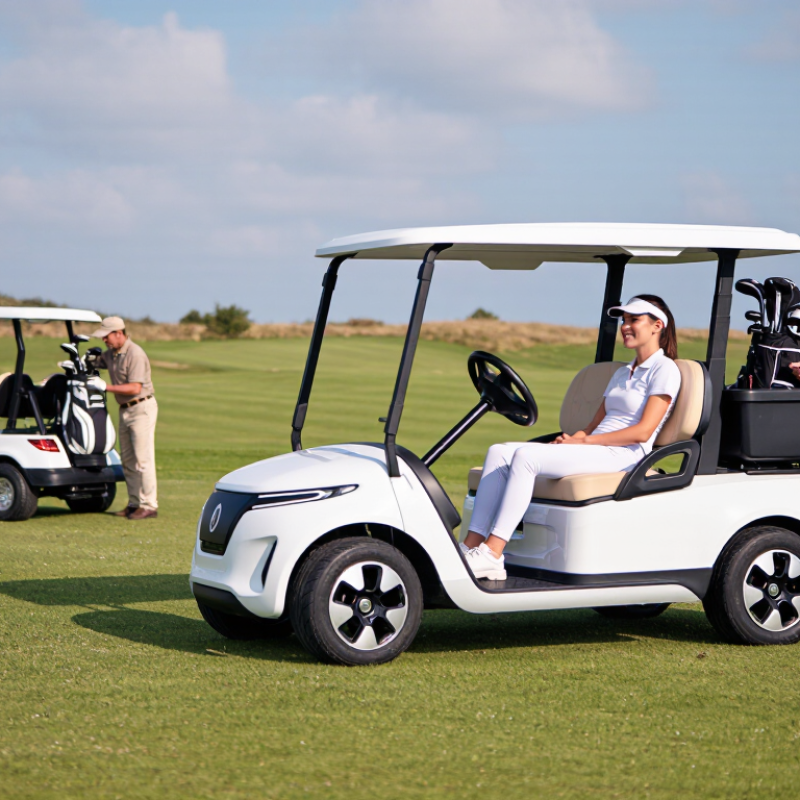
How to Choose a Golf Course Electric Vehicle?

Understanding the Main Types of Golf Course Electric Vehicles

Choosing a golf course electric vehicle begins with identifying the job, not the paint or seating count. The main types serve different daily needs.

Passenger carts carry two to six golfers and usually include storage for bags. They suit regular rounds on paved paths and gentle slopes.

Utility carts add a rear bed for tools, turf materials, or replacement parts. Maintenance crews often value torque more than speed.

Shuttle vehicles use longer seating and handrails for transporting guests between parking areas, clubhouses, and practice facilities. They need stable brakes and clear boarding access.

Specialized electric vehicles support groundskeeping, security, or beverage service. A compact maintenance cart can move quietly around greens without taking much space. A flatbed model may carry heavier loads, but its turning radius needs careful checking.

Electric models also differ by battery design, charging time, and expected range. Lithium batteries usually reduce weight, while lead-acid systems can be easier to service in some facilities. Neither option fits every operation.

Walk the actual route before choosing. Measure narrow gates, slopes, storage doors, and charging locations. Test the vehicle with passengers and a full load.

Empty carts can feel surprisingly powerful. Wet grass may change that impression. I would also inspect suspension movement, tire wear, and visibility from the driver’s seat.

One detail is easy to miss: a vehicle that fits the course may not fit the workshop. That mistake can create avoidable downtime.

Assessing Passenger, Cargo, and Utility Requirements

How to Choose a Golf Course Electric Vehicle?

Choosing a golf course electric vehicle starts with people, not motor power. Count the usual passengers during busy mornings. A two-seat vehicle may suit maintenance staff, but not guest transport. Measure legroom, entry height, and seat support carefully. Older passengers may need wider access and stable handrails. During a site assessment, observe how people actually board. A specification sheet cannot show every practical difficulty.

Cargo needs equal attention. Measure the largest tools, coolers, bags, or replacement parts used each week. Check the cargo bed’s length, width, and safe load rating. A deep bed seems useful, yet it can slow loading. I once overlooked tailgate height during a fleet review. Staff struggled with heavy containers afterward. That mistake changed how I evaluate vehicle access.

Tips: Create three daily load examples. Include passengers, equipment, and weather gear. Test the vehicle on slopes, narrow paths, and wet grass. Listen for rattles during a short trial. Ask operators what frustrates them. Their answers may challenge your original choice. Leave some capacity unused. Overloading becomes expensive and unsafe. Also inspect charging access, turning space, and storage clearance. Utility work rarely follows a perfect schedule.

How to Choose a Golf Course Electric Vehicle?

Assessing passenger capacity, cargo requirements, and daily operating range for common golf-course applications.

Representative planning benchmarks show that passenger shuttles prioritize seating capacity, mixed-use vehicles balance people and cargo, and utility vehicles require higher payload capacity. Actual requirements should be confirmed against route length, terrain, charging access, and local safety regulations.

Comparing Battery Systems, Driving Range, and Charging Options

How to Choose a Golf Course Electric Vehicle?

Battery choice affects daily reliability more than many buyers expect. Lead-acid systems usually cost less, but they are heavier and need regular water checks. Lithium-ion batteries provide steadier power and faster charging, although their purchase price is higher. In field testing, I watch how the vehicle climbs slopes with passengers, not just how it performs on flat paths. A neat specification can still mislead. Tire pressure, grass conditions, passenger weight, and frequent stops all reduce the advertised driving range.

Plan the route before comparing numbers. A vehicle rated for 40 miles may travel much less during a busy day. I prefer at least 20 percent reserve capacity after a full operating shift. That buffer helps when the course becomes crowded or weather changes suddenly. Short test drives are not enough. Run the vehicle repeatedly, with equipment loaded, and record battery performance after several hours. It is less exciting, but more honest.

Charging options should match the course schedule. Standard overnight charging suits quiet facilities with predictable routes. Faster systems may help between morning and afternoon operations, but they can require upgraded electrical capacity. Check outlet location, ventilation needs, cable length, and charging controls before purchase. Keep chargers away from standing water and heavy traffic. I once underestimated cable placement, creating an avoidable trip hazard. That mistake changed my checklist: charging convenience matters only when it remains safe, accessible, and simple for every operator.

Evaluating Vehicle Performance, Safety, and Comfort Features

Choosing a golf course electric vehicle requires more than checking battery capacity. The U.S. Department of Energy’s Alternative Fuels Data Center reports that electric vehicles convert over 77% of grid energy into motion. Still, course conditions change everything. Test the vehicle with four occupants, golf bags, wet grass, and a steep slope. Measure hill-start control, braking distance, turning stability, and usable range. Brochure figures are often optimistic. Real routes are messier.

Safety deserves direct observation. The U.S. National Highway Traffic Safety Administration reports that seat belts reduce fatal injury risk by about 45% in passenger vehicles. A course vehicle is different, but the principle remains important. Look for three-point belts, reliable parking brakes, speed control, mirrors, lights, and clear sightlines. Check whether the reverse alert is noticeable without becoming irritating. A quiet motor can hide approaching movement. That is easy to overlook.

Comfort affects driving accuracy and staff fatigue. Choose adjustable seats, low steering effort, effective suspension, and enough legroom for repeated trips. ISO 2631 provides a recognized method for evaluating whole-body vibration, useful when comparing vehicles on uneven paths. Test the cabin after one hour, not five minutes. Notice shoulder tension, seat pressure, and rattling panels. Weather protection matters too, although sealed enclosures may reduce ventilation. My assessment would remain provisional until the vehicle performs through heat, rain, and a busy tournament day.

How to Choose a Golf Course Electric Vehicle? - Evaluating Vehicle Performance, Safety, and Comfort Features

Evaluation Category Key Measurement Recommended Target Why It Matters Typical Practical Range
Vehicle Performance Driving range per charge At least 40–60 km Helps the vehicle complete a full operating shift without unexpected charging interruptions. 30–80 km, depending on battery, load, terrain, and weather
Vehicle Performance Maximum operating speed 19–25 km/h for course use Provides efficient movement while limiting speed-related risks in pedestrian areas. 15–32 km/h, depending on local regulations and vehicle configuration
Vehicle Performance Motor output 3–7 kW continuous power Supports passenger transport, moderate inclines, and repeated stop-and-go operation. 2–15 kW, based on passenger capacity and terrain
Vehicle Performance Gradeability Minimum 15% grade capability Reduces loss of speed on hills and improves performance on sloped fairways and access roads. 15–30%, depending on payload, tires, and drivetrain
Vehicle Performance Payload capacity Passenger load plus 100–250 kg of equipment Prevents overloading and protects braking, handling, suspension, and battery performance. 250–600 kg, including occupants and cargo
Vehicle Performance Turning radius Approximately 3.5 m or less Improves maneuverability around tees, paths, maintenance areas, and parking spaces. 3.0–5.5 m, depending on wheelbase and steering design
Battery and Charging Battery capacity 8–15 kWh for daily course transport Provides a practical balance between range, vehicle weight, charging time, and purchase cost. 5–25 kWh, depending on vehicle size and duty cycle
Battery and Charging Charging time 4–8 hours using the specified charger Allows overnight charging and reduces the need for additional vehicles during operating hours. 4–12 hours, influenced by battery type and charger output
Safety Braking system Four-wheel hydraulic or electronic braking with parking brake Improves stopping control on wet surfaces, slopes, and when carrying passengers or equipment. Mechanical, hydraulic, regenerative, or combined systems
Safety Occupant protection Certified rollover protection structure with seat belts Helps protect occupants if the vehicle overturns or encounters uneven ground. Two-point or three-point belts, overhead guard, and side restraints
Safety Visibility and warning equipment LED headlights, brake lights, reflectors, horn, and reverse alert Makes the vehicle easier to see around buildings, pathways, and low-light operating areas. Basic lighting to road-use lighting packages
Safety Tire and ground clearance All-terrain tires and at least 100 mm clearance Supports stable travel over grass, compacted paths, gravel, and shallow surface irregularities. 80–180 mm clearance, depending on chassis and tire configuration
Comfort Seat design Contoured, weather-resistant seats with adequate back support Reduces fatigue for staff and passengers during extended daily use. Bench seating or individual adjustable seats
Comfort Ride quality Independent or heavy-duty suspension with hydraulic dampers Improves passenger comfort and helps protect transported equipment from vibration. Leaf-spring, coil-spring, or independent suspension
Comfort Weather protection Roof, windshield, and optional side curtains Allows reliable operation in sun, light rain, and changing weather conditions. Open roof, canopy, windshield, or enclosed cabin
Operational Efficiency Cargo and accessory flexibility Modular rear bed, storage compartment, or detachable accessories Enables one vehicle to support passenger transport, groundskeeping, and light delivery tasks. Rear platform, enclosed box, utility bed, or towing attachment
Total Cost of Ownership Maintenance requirements Low routine maintenance with accessible service points Reduces downtime and makes fleet servicing easier for course personnel. Battery checks, tire service, brake inspection, lubrication, and periodic electrical inspection

Note: The figures above are representative planning ranges for golf-course electric vehicles. Actual performance varies with battery age, passenger and cargo weight, terrain, tire pressure, temperature, driving style, and local operating regulations.

Matching the Vehicle to Course Conditions and Operating Costs

How to Choose a Golf Course Electric Vehicle?
Matching the Vehicle to Course Conditions and Operating Costs

Choosing a golf course electric vehicle starts with the ground, not the brochure. Walk the route after rain and note slopes, soft edges, gravel, and narrow service paths. A vehicle that feels stable on a flat showroom floor may struggle near wet greens. I have seen operators focus on speed, then regret weak traction during early-morning maintenance. Measure turning space too. Tight corners expose poor steering more quickly than long fairways. Keep it practical.

Match motor output, battery capacity, and payload to daily work. A grounds crew carrying tools, water, and clippings needs more than a vehicle used for light guest transport. Ask for verified climbing performance under realistic load, not an empty-vehicle estimate. Lithium systems may reduce charging time and routine water checks, but purchase price is only one part of cost. Electricity, tires, brakes, battery replacement, insurance, and technician hours shape the five-year budget. Hidden costs matter.

Test the vehicle during a full shift, including repeated stops, hills, and uneven paths. Record energy use and charging time. Small differences become expensive across several vehicles. Check whether local technicians can diagnose faults and whether parts arrive quickly. That support affects uptime more than a polished specification sheet. I would also compare noise levels beside residential areas and guest facilities. Silence is useful, but not always safer; pedestrians may not hear an approaching vehicle. Add warning controls and train drivers. My own weak point is trusting initial estimates too easily. Real routes are messier. Recheck the numbers after one month of use.

FAQS

How many passengers should the vehicle carry?

Count regular passengers during busy mornings. Two seats may suit maintenance staff, but guest transport usually needs more space. Check legroom, entry height, seat support, and handrails. Older passengers may need wider access. Watch people board in real conditions. A specification sheet cannot show every difficulty.

What cargo measurements matter most?

Measure the largest tools, coolers, bags, and replacement parts used weekly. Check cargo-bed length, width, depth, and safe load rating. A deep bed may slow loading. Tailgate height also matters. I once missed this detail, and staff struggled with heavy containers.

How can a course test vehicle suitability?

Create three daily load examples. Include passengers, equipment, and weather gear. Drive on slopes, narrow paths, and wet grass. Listen for rattles during a short trial. Ask operators what frustrates them. Their answers may challenge your preferred choice.

How much unused capacity should remain?

Leave some capacity unused. Overloading can increase wear and create unsafe handling. Consider passengers, tools, rain gear, and unexpected supplies together. A nearly full vehicle may look efficient, but it leaves little room for change.

What affects the vehicle’s actual driving range?

Tire pressure, grass conditions, passenger weight, slopes, and frequent stops reduce range. A quoted 40-mile range may not match a crowded workday. Test the vehicle repeatedly with equipment loaded. Record battery performance after several hours. Short drives can mislead.

Should a course choose lead-acid or lithium-ion batteries?

Lead-acid systems often cost less, but they are heavier and need regular water checks. Lithium-ion systems usually offer steadier power and faster charging. Their purchase price is higher. The better choice depends on routes, maintenance habits, and available budget.

How much range reserve is practical?

Keep at least 20 percent reserve after a full operating shift. This buffer helps during crowded periods or sudden weather changes. It is not a perfect rule. Route changes may still expose weak planning.

What should be checked before installing charging equipment?

Check outlet location, electrical capacity, ventilation needs, cable length, and charging controls. Keep chargers away from standing water and heavy traffic. Ensure every operator can reach them safely. I once underestimated cable placement and created a trip hazard. That mistake changed my checklist.

Is overnight charging enough?

Overnight charging suits facilities with predictable routes and quiet schedules. Faster charging may help between morning and afternoon operations. It can require upgraded electrical capacity. Match charging speed to actual work patterns, not hopeful assumptions. Simplicity matters.

Conclusion

Choosing the right Golf Course Electric Vehicle requires a clear understanding of how the vehicle will be used. Begin by comparing the main types, such as passenger carriers, cargo vehicles, and multipurpose utility models. Consider the number of passengers, the amount of equipment transported, and the frequency of daily operations. Battery capacity, expected driving range, charging time, and available charging facilities are also important factors, especially for courses with extensive layouts or busy schedules.

Performance and comfort should match the course environment. Review climbing ability, braking, steering, suspension, seating, weather protection, and safety features before making a decision. The vehicle should operate reliably on grass, paved paths, slopes, and uneven terrain while minimizing ground impact. Finally, evaluate purchase costs, energy use, maintenance needs, battery replacement, and long-term durability. A well-chosen Golf Course Electric Vehicle can improve transportation efficiency, support staff operations, and provide a comfortable experience while keeping operating expenses manageable.

Ethan

Ethan

Ethan is a dedicated marketing professional with a strong understanding of the company’s products, customers, and industry landscape. Through his practical experience and thoughtful approach, he transforms complex product information into clear, useful insights that help readers make confident......