Choosing the right Airport Passenger Transport Cart is a practical decision, not a simple equipment purchase. Airports move elderly travelers, families, passengers with limited mobility, and heavy carry-on luggage every hour. Each group creates different demands for comfort, capacity, visibility, and boarding speed. A compact electric cart may work well near gates, while a larger shuttle model can support longer terminal routes. Some buyers focus on seating capacity first. That can be a costly mistake.
This guide reviews the top 10 Airport Passenger Transport Cart types for buyers comparing real operating needs. It considers electric power systems, turning radius, battery range, weather protection, safety features, and service access. Details matter. A low step can help an older passenger enter safely. A clear windshield can improve visibility during crowded transfers. Easy-clean seats can reduce daily maintenance time. Operators should also check braking performance, charging requirements, spare-part availability, and manufacturer support before ordering.
No cart fits every airport.
Terminal layout changes everything. A model that performs smoothly on flat indoor floors may struggle on ramps or uneven service roads. Buyers should test turning space, doorway clearance, noise levels, and passenger loading time in realistic conditions. Product brochures are useful, but hands-on trials reveal limitations. Even experienced teams can overlook battery performance during peak traffic. That deserves attention. Reliable purchasing depends on verified specifications, trained drivers, documented maintenance, and feedback from passengers and ground staff. This comparison offers a clear starting point, while leaving room for careful site-specific evaluation.
What Are Airport Passenger Transport Carts?
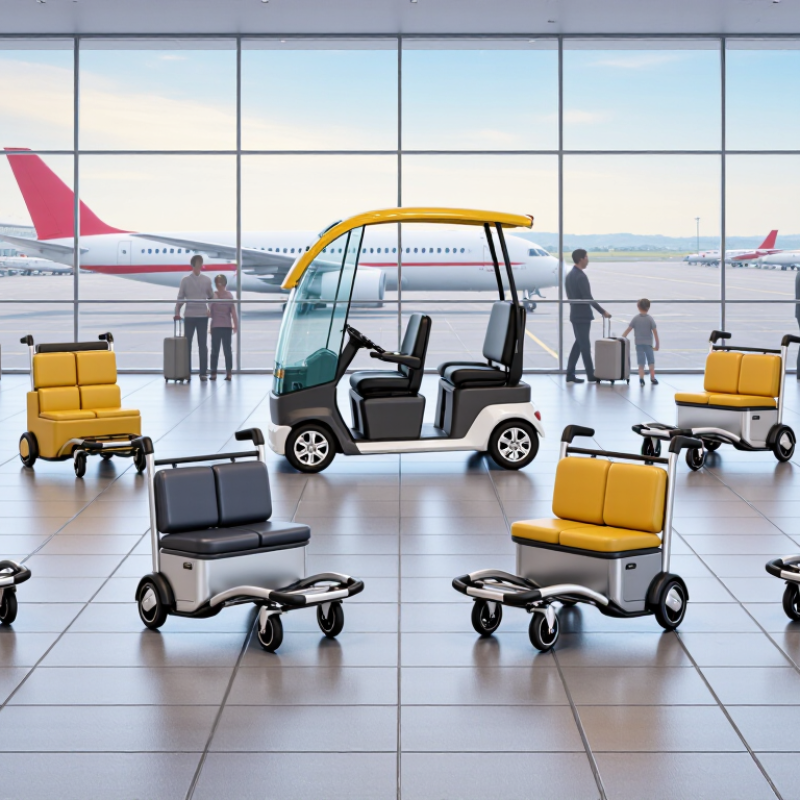
Airport passenger transport carts are small commercial vehicles designed to move travelers across large airport terminals. They reduce walking distances, support passengers with limited mobility, and connect gates, parking areas, lounges, and remote aircraft stands. Most models use electric power, quiet tires, and open or enclosed seating. Some carry six passengers, while larger units transport more than twenty.
The main cart types include open shuttle carts, enclosed carts, wheelchair-accessible carts, luggage carts, VIP transfer carts, staff transport carts, multi-row passenger carts, low-floor carts, all-weather carts, and towing passenger carriers. Each type solves a different operational problem. An open cart works well between nearby gates. An enclosed model offers better protection during rain or strong wind. A low-floor design helps older passengers step inside more safely. Buyers should check turning radius, charging time, seat height, visibility, and cleaning access before choosing a vehicle.
From practical airport operations, passenger flow matters more than appearance. A polished cart can still perform poorly if its aisle feels narrow or its battery weakens during peak hours. No cart is perfect. I have found that many buyers focus on seating capacity and overlook braking comfort, mirror placement, and emergency access. Test the cart with real luggage and different passenger needs. Ask operators to drive it through tight corners and crowded boarding areas. These details often reveal whether the cart is genuinely useful.
Top 10 Airport Passenger Transport Cart Types for Buyers - What Are Airport Passenger Transport Carts?
| Rank | Cart Type | Typical Passenger Capacity | Typical Overall Size | Typical Drive System | Typical Operating Range | Best Airport Application | Key Buyer Considerations |
|---|---|---|---|---|---|---|---|
| 1 | Open-Sided Electric Shuttle Cart | 8–14 passengers | 4.0–5.5 m long; 1.2–1.5 m wide | Battery-electric motor; rear-wheel drive | 60–120 km per charge, depending on load and route | Terminal transfers, parking areas, and airside passenger movement | Low operating noise, turning radius, weather protection, and charging facilities |
| 2 | Enclosed Electric Passenger Cart | 6–14 passengers | 3.5–5.5 m long; 1.2–1.6 m wide | Battery-electric motor; enclosed cabin | 50–100 km per charge | Cold, hot, rainy, or security-controlled airport environments | Cabin ventilation, door configuration, visibility, accessibility, and climate requirements |
| 3 | Low-Floor Accessible Passenger Cart | 6–12 passengers, including wheelchair positions | 3.8–5.5 m long; 1.3–1.6 m wide | Battery-electric motor; ramp or lift equipped | 50–100 km per charge | Passengers with reduced mobility and assisted boarding routes | Ramp slope, restraint systems, aisle width, floor height, and applicable accessibility regulations |
| 4 | Airport Passenger Train | 20–80 passengers per unit or connected train | 6–15 m long; 1.4–2.0 m wide | Electric tractor with one or more passenger trailers | Typically 50–100 km per charge for electric configurations | High-volume terminal, parking, rental-car, and remote-concourse routes | Passenger flow, trailer braking, train length, route width, and boarding time |
| 5 | Diesel or LPG Airport Shuttle Bus | 20–50 passengers | 7–12 m long; 2.3–2.6 m wide | Internal-combustion engine; automatic transmission common | Approximately 300–600 km per fuel tank, depending on configuration | Long-distance landside or airside shuttle routes with heavy passenger demand | Fuel storage, emissions, noise, maintenance access, operating permits, and total cost of ownership |
| 6 | Electric Minibus | 15–30 passengers | 6–9 m long; 2.0–2.5 m wide | Battery-electric drivetrain | 100–250 km per charge, influenced by climate and passenger load | Emission-restricted terminals, parking shuttles, and scheduled airport loops | Battery capacity, charging time, passenger-accessible doors, HVAC energy use, and route length |
| 7 | Utility Passenger Cart with Cargo Bed | 4–8 passengers | 3.0–4.5 m long; 1.2–1.5 m wide | Electric or internal-combustion drivetrain | 40–100 km per charge for electric versions | Passenger transport combined with small equipment or baggage movement | Payload rating, cargo-bed dimensions, load security, axle capacity, and separation of passengers from cargo |
| 8 | VIP or Executive Passenger Cart | 4–8 passengers | 3.0–4.5 m long; 1.2–1.5 m wide | Battery-electric motor is common | 50–120 km per charge | Premium passenger transfers, private terminals, and short-distance escort services | Seat comfort, cabin finish, noise level, luggage capacity, privacy, and maneuverability |
| 9 | Four-Wheel Mobility Passenger Cart | 1–4 passengers | 1.8–3.0 m long; 0.9–1.3 m wide | Compact battery-electric motor | 25–70 km per charge | Individual assistance, gate transfers, and narrow terminal corridors | Compact width, speed control, battery charging, passenger restraints, and indoor safety requirements |
| 10 | Towed Passenger Trailer | 12–30 passengers per trailer | 4.0–7.0 m long per trailer; 1.4–2.0 m wide | Pulled by an electric or combustion-powered tractor | Determined primarily by the towing tractor | Flexible high-capacity transport on planned airport routes | Towing capacity, articulation, braking, turning path, passenger access, and trailer storage |
Note: Specifications are typical market ranges for airport passenger transport carts and may vary according to vehicle layout, battery size, accessibility equipment, passenger load, terrain, climate, and local operating regulations.
FAQS
Electric shuttle carts work well across long concourses and repeated gate transfers. Check battery range, charging time, braking, and noise. Test ramps too.
Multi-seat shuttle carts carry groups between terminals, gates, or remote parking areas. Confirm aisle space and turning radius. Paper capacity can mislead.
Enclosed carts protect passengers from rain, wind, cold, and strong sunlight. They need clear windows, reliable ventilation, and easy-clean surfaces. Comfort still varies.
They should provide ramps, secure restraints, handrails, and wide turning space. Check the ramp angle with an actual wheelchair. Specifications alone are not enough.
Low floors reduce climbing effort and support more independent boarding. They suit passengers with limited mobility. Keep the entrance clear.
Family carts need safer handrails, comfortable seating, and room for small bags. Test the cart with coats and luggage. Crowding appears quickly.
No. Quieter cabins and stronger seats may improve comfort, but higher cost does not ensure reliability. Review service records and downtime history.
Compare energy use, tire replacement, maintenance access, spare parts, and charging schedules. Purchase price is only one part. Test it.
Towable cart trains can increase capacity during busy periods. Autonomous carts may support repetitive routes, but navigation needs real-world testing. That area is still developing.
Conclusion
An Airport Passenger Transport Cart is a specialized vehicle designed to move passengers efficiently and comfortably across large airport environments. This article explains how these carts are classified according to power source, seating capacity, body design, operating conditions, and intended use. It introduces ten common types, including electric passenger shuttles, enclosed carts, open-sided carts, luxury-style vehicles, wheelchair-accessible models, luggage-and-passenger combinations, and compact carts for narrow or busy areas.
Each type is reviewed through its key features, passenger capacity, maneuverability, comfort, safety equipment, charging or fueling needs, and typical applications. The guide also highlights how cart design can support terminal transfers, parking-area connections, staff-assisted travel, and special passenger services. For buyers, selecting the right Airport Passenger Transport Cart requires evaluating route length, passenger volume, terrain, weather protection, accessibility requirements, maintenance resources, operating costs, and available storage or charging space. A careful comparison of these factors helps organizations choose a practical, reliable, and efficient transport solution for their airport operations.