Mon–Sat 10:00–17:00 IST Bhiwani, Haryana 127306, India 1-Year On-Site Warranty
0%

A Vintage Electric Golf Cart is more than an old vehicle with faded paint and narrow tires. It combines a low-voltage battery system, electric motor, controller, charger, and mechanical drivetrain. Unlike gasoline models, it produces no exhaust while moving. Its quiet hum often reveals its condition better than appearance does.

The term “vintage” is not perfectly fixed. It usually describes an older golf cart with recognizable styling, simple controls, and repairable components. Many classic models use lead-acid batteries, while restored examples may receive modern lithium packs. Batteries store direct-current energy, and the controller regulates that power before it reaches the motor. The motor then turns the axle through gears or a differential. Pressing the accelerator sends a signal, not raw battery power, to the controller.

Small details matter.

A practical inspection should include battery age, cable corrosion, charger operation, brake response, tire condition, and frame rust. A clean body can hide weak batteries or cracked wiring. That assumption can be wrong. Battery voltage should be measured with suitable equipment, and charging instructions should match the exact system. Professional technicians can confirm faults that visual checks miss. Owners should also verify local requirements for roads, lighting, seat belts, and speed limits before using a cart beyond private property. This guide explains how a Vintage Electric Golf Cart works, what its major systems do, and why careful maintenance often matters more than cosmetic restoration. Some restorations look impressive, yet reliability is the real measure.
What Is a Vintage Electric Golf Cart and How Does It Work?

What Is a Vintage Electric Golf Cart?

A vintage electric golf cart is an older, battery-powered vehicle designed mainly for quiet, low-speed travel. “Vintage” usually describes its age, styling, and mechanical character, not one exact production year. Many models feature rounded body panels, simple dashboards, bench seating, and exposed hardware. Their charm is practical, too. You can often hear the motor hum before the cart moves.

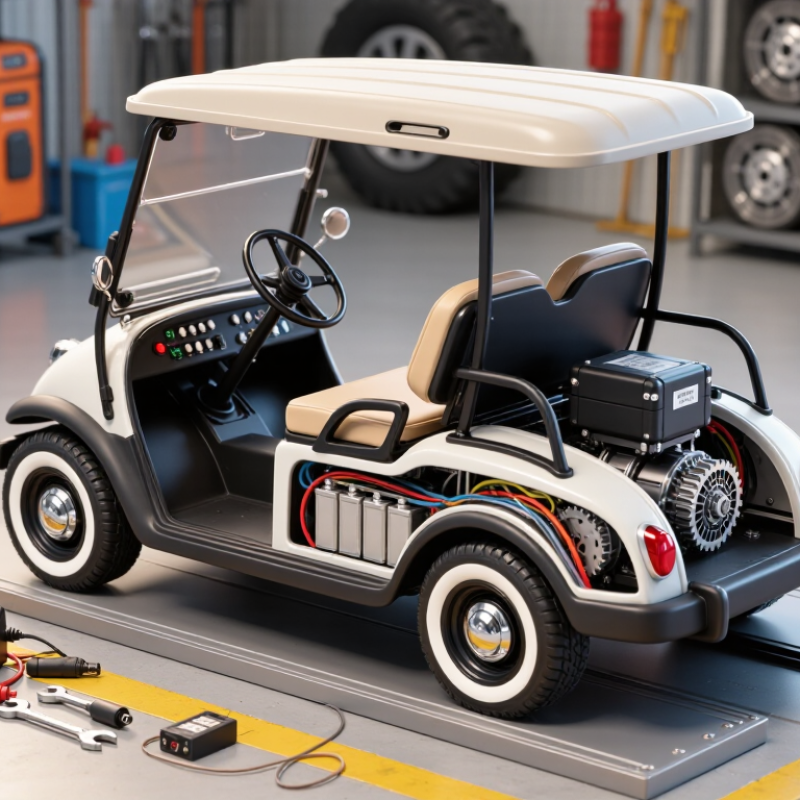
Most vintage carts use rechargeable batteries connected to an electric motor. A controller regulates power when you press the accelerator. The motor turns a drive system, which rotates the rear wheels. Older carts commonly use lead-acid batteries, although some owners install newer battery systems. A built-in charger restores energy after use. The process is straightforward, but age changes everything. Wiring may be brittle, and battery performance can become inconsistent. That definition feels imperfect, because restored carts often combine old frames with modern parts.

Tips: Inspect battery cables, terminals, tires, and brake response before driving. Keep charging areas dry and well ventilated. Check the battery date, because appearance can be misleading. A clean case does not prove strong capacity. During a test drive, listen for grinding, uneven acceleration, or unusual heat near the motor. Have a qualified technician review damaged wiring or weak brakes. Small repairs are easy to postpone, but electrical faults can become expensive and unsafe.

Key Components of a Vintage Electric Golf Cart

A vintage electric golf cart is a small, low-speed vehicle powered by stored electrical energy. Its key components are straightforward, but age changes every measurement. Most older carts use six 6-volt batteries or four 12-volt batteries, creating a 36- or 48-volt system. The U.S. Department of Energy reports that lithium-ion batteries can offer roughly three times the energy density of lead-acid batteries. That difference affects weight, charging time, and driving range. Battery condition matters more than appearance.

The battery pack sends power through heavy-gauge cables to a solenoid and electronic controller. The solenoid acts like a gate. The controller regulates current before it reaches the electric motor. The motor then turns a differential, which transfers torque to the rear wheels. A charger monitors voltage and replenishes the batteries after use. Simple, but easy to misunderstand. A weak connection can imitate motor failure. Corroded terminals can also create heat and power loss.

Brakes, wiring, fuses, suspension, and the frame complete the working system. During a practical inspection, I would check cable insulation, battery water levels, terminal temperature, and brake response. Do not trust a clean body alone. Grand View Research estimated the global golf cart market at approximately US$1.9 billion in 2023, reflecting continued interest in electric drivetrains and utility vehicles. Yet vintage systems remain less forgiving. Their older chargers and batteries often need careful testing, not guesswork.

How the Electric Drive System Works

A vintage electric golf cart uses a simple but carefully coordinated drive system. Rechargeable batteries store direct current, usually at a low voltage suitable for the cart’s motor and wiring. When the driver presses the accelerator, a sensor sends a signal to the controller. The controller then regulates electrical power rather than sending full current immediately. This creates a smoother launch and helps protect the motor.

The motor changes electrical energy into rotation. That rotation passes through a reduction gear and differential before reaching the rear wheels. The gearing increases turning force at low speed, which helps the cart climb gentle slopes and carry passengers. It is not designed for rapid acceleration. The controller also limits speed, while a built-in solenoid or contactor connects the battery circuit during operation.

Battery condition strongly affects performance. A cart may move normally on flat ground but lose power on a hill. That detail matters. Aging batteries can show a full charge, yet their voltage may drop quickly under load. Loose cable connections, corroded terminals, and underinflated tires create similar symptoms. Regular inspections should include water levels in serviceable batteries, cable tightness, brake operation, and charger function. Modern replacement components can improve reliability, but compatibility is easy to overlook. The motor, controller, battery voltage, and charger must work as one system. A small mismatch can produce heat, weak acceleration, or premature component failure. The drive system seems basic. Its balance is not.

How Power Is Stored, Controlled, and Delivered

What Is a Vintage Electric Golf Cart and How Does It Work?

How Power Is Stored, Controlled, and Delivered

A vintage electric golf cart usually stores energy in several deep-cycle lead-acid batteries. Each battery produces roughly two volts per cell. Connected together, they create a 36- or 48-volt system. The batteries supply direct current through thick cables, often beneath the seat. Their weight also helps keep the cart stable on uneven ground.

The accelerator does not usually send full power directly to the motor. Instead, it signals a controller through a pedal switch or variable resistor. The controller adjusts current in short electrical pulses. A contactor then connects the battery pack to the motor. More pedal movement usually means more current and stronger motor torque. The motor turns the axle through gears or a differential. It feels simple, but the controller carries the real responsibility.

Charging depends on a dedicated charger matched to the battery system. The charger raises voltage gradually and limits current as the batteries approach full charge. Older carts often lose capacity before showing obvious damage. A voltage reading can look normal after charging, yet the pack may collapse under load. That is why technicians test battery voltage while the cart accelerates. Corroded terminals, loose cables, and low electrolyte levels can also waste stored power. Small faults matter. I would not assume every vintage design follows the same wiring pattern. Age, repairs, and previous modifications can change how power is delivered.

What Is a Vintage Electric Golf Cart and How Does It Work? - How Power Is Stored, Controlled, and Delivered

System or Component What It Does Typical Vintage Specification How Power Moves Through It Important Operating Notes
Rechargeable Battery Pack Stores electrical energy as chemical energy and supplies direct current to the drive system. Usually a lead-acid pack made from six 8-volt batteries for a nominal 48-volt system, or six 6-volt batteries for a nominal 36-volt system. The batteries are connected in series, so their voltages add while the amp-hour capacity remains approximately that of one battery in the series string. Battery condition, temperature, age, state of charge, and cable resistance strongly affect driving range and acceleration.
Battery Charger Converts household alternating current into controlled direct current for recharging the battery pack. Commonly designed for a nominal 36- or 48-volt battery system and a standard single-phase supply. AC enters the charger; the charger rectifies and regulates it before sending DC through the charging receptacle to the series-connected batteries. A compatible charger must match the battery chemistry and pack voltage. Charging should occur in a ventilated area because flooded lead-acid batteries can release hydrogen gas.
Main Fuse or Circuit Protection Limits damage caused by a short circuit or severe electrical overload. The rating varies by vehicle design and controller current; it is commonly selected for high-current traction circuits rather than household appliance loads. It is placed in series with the high-current supply path so excessive current interrupts the circuit. The protection device should never be replaced with a higher-rated part without verifying the wiring and controller specifications.
Key Switch and Run/Stop Circuit Authorizes the vehicle to operate and helps prevent unintended movement. A low-current control circuit is typically used to energize a solenoid or enable an electronic controller. Turning the key and selecting the run position closes the control circuit; switching off removes the enable signal. The key switch is not normally intended to carry the full motor current. A separate service disconnect may be used during maintenance.
Forward/Reverse Selector Changes the direction of motor rotation so the cart can move forward or backward. Older systems may use high-current reversing contacts; later systems may command direction electronically through the controller. The selector changes the polarity or switching sequence applied to the motor circuit. Direction should be selected only when the cart is fully stopped to reduce contact and drivetrain stress.
Solenoid or Main Contactor Connects or disconnects the battery pack from the traction circuit using a low-current control signal. A heavy-duty electromechanical switch rated for the vehicle's battery voltage and traction current. The key switch and safety circuits energize a coil, which closes high-current contacts between the battery and motor-control system. Pitted contacts, coil failure, or loose terminals can cause clicking without movement, intermittent operation, or excessive heat.
Speed Controller or Resistor Control Regulates the amount of electrical power delivered to the motor and therefore controls speed and torque. Older carts may use a stepped resistor-and-contact system; later vintage carts commonly use solid-state pulse-width modulation. A controller rapidly switches battery current or selects resistance levels. Increasing effective motor current generally increases torque. Heat, corrosion, worn contacts, and incorrect calibration can reduce performance. Electronic controllers often provide smoother low-speed control than resistor systems.
Accelerator Pedal and Microswitch Translates pedal movement into a request for motor power and confirms that the pedal is in a safe position before startup. Mechanical carts may use a microswitch and resistor contacts; electronic systems may use a potentiometer or throttle sensor. Pedal movement closes the control sequence and sends a variable or stepped signal to the controller. A malfunctioning switch can cause delayed response, sudden engagement, or a no-run condition.
Traction Motor Converts electrical energy into rotational mechanical energy. Vintage carts commonly use a series-wound DC motor; nominal system voltage is often 36 or 48 volts. Current flowing through the armature and field windings creates magnetic forces that turn the motor shaft. Reversing the appropriate electrical connections reverses rotation. Series DC motors can produce strong starting torque, but prolonged overload or poor ventilation may cause overheating.
Motor Brushes and Commutator Transfer current to the rotating armature and switch the armature's magnetic polarity as it turns. Found in brushed DC motors; wear depends on load, operating hours, alignment, and commutator condition. Spring-loaded carbon brushes maintain sliding electrical contact with the segmented commutator. Excessive arcing, uneven brush wear, or a rough commutator can reduce power and indicate the need for inspection.
Gear Reduction and Differential Reduces motor speed, increases wheel torque, and distributes torque between the driven wheels. A fixed reduction gearset is typical; the exact ratio depends on the axle and vehicle design. The motor's high-speed rotation passes through reduction gears before reaching the axle shafts and wheels. Low gear-oil level, worn bearings, or damaged gears can produce noise, vibration, heat, or reduced efficiency.
Mechanical Brake System Converts vehicle motion into heat through friction and brings the cart to a stop. Vintage carts generally use mechanically actuated drum brakes at the wheels. Pedal force moves cables, rods, or linkages that press brake shoes against the inside of rotating drums. Brake adjustment, shoe thickness, drum condition, and cable integrity are essential because many vintage carts do not have modern hydraulic or regenerative braking.
Energy Delivery Sequence Summarizes how stored energy becomes vehicle motion. Battery pack → protection device → solenoid or contactor → controller or resistor network → motor → reduction gears → wheels. The controller meters current according to pedal demand, while the motor converts that current into torque. A weak battery, corroded connection, failing contactor, damaged controller, or worn motor can interrupt the sequence and reduce performance.

Common Uses, Maintenance, and Restoration Considerations

A vintage electric golf cart uses a battery pack, electric motor, controller, and basic drivetrain. Older models often rely on lead-acid batteries. The motor turns the rear axle through a simple gear system. Pressing the accelerator sends power through the controller. The cart then moves quietly at low speed.

Owners commonly use these carts on private properties, campgrounds, farms, and large gardens. They are useful for carrying tools, supplies, or several passengers over short distances.

Regular maintenance keeps small faults from becoming expensive repairs. Check battery water levels when required, clean corrosion from terminals, and inspect cables for cracks. Test the brakes, steering, tires, and suspension before every extended trip. Keep charging areas dry and well ventilated. Never ignore a damaged battery case.

Restoration requires patience and careful inspection. Start with the frame, because hidden rust can weaken mounting points. Then examine the wiring, charger, motor brushes, bearings, and brake linkage. Replacing every old part may reduce the cart’s original character. Keeping every original part may reduce reliability. That balance is difficult. I have found that a clean electrical connection often solves problems that seem much larger. Still, diagnosis can be imperfect. Record each repair, photograph wiring before removal, and use compatible replacement components. A fresh coat of paint cannot repair structural damage. Safety should guide appearance, not the reverse.

FAQS

What is a vintage electric golf cart?

It is an older, battery-powered vehicle for quiet, low-speed travel. Rounded panels, bench seats, and exposed hardware are common. The definition is not exact.

How does a vintage electric golf cart move?

Rechargeable batteries send direct current through thick cables. A controller regulates power from the accelerator. The motor turns the rear wheels through gears or a differential.

What batteries do these carts usually use?

Many use deep-cycle lead-acid batteries. Several batteries create a 36- or 48-volt system. Their weight can improve stability on uneven ground.

How does the accelerator control power?

The pedal sends a signal to the controller. The controller adjusts electrical current in short pulses. More pedal movement usually creates stronger motor torque.

How should I inspect one before driving?

Check battery cables, terminals, tires, and brake response. Look for brittle wiring or loose connections. During a test drive, listen for grinding and uneven acceleration.

Can a clean battery case prove good battery health?

No. A clean case can still hide weak capacity. Test voltage during acceleration, not only after charging.

What charging conditions are safest?

Use a charger matched to the battery system. Keep the charging area dry and well ventilated. Do not ignore unusual heat or damaged wiring.

Why can older carts become unreliable?

Age, repairs, and modifications may change the original wiring. Corroded terminals and low electrolyte levels waste stored power. Small faults are easy to postpone. That can be a mistake.

Conclusion

A Vintage Electric Golf Cart is a compact, battery-powered vehicle valued for its classic design, simple construction, and quiet operation. Unlike modern models with advanced digital systems, it typically uses a sturdy frame, electric motor, rechargeable battery pack, controller, charger, wheels, brakes, steering components, and basic electrical wiring. The drive system works by sending energy from the batteries to the controller, which regulates the power delivered to the motor. When the accelerator is pressed, the motor converts electrical energy into rotational force, turning the wheels and moving the cart forward.

Power is stored chemically in the batteries, controlled through the accelerator and controller, and delivered to the motor through cables and electrical connections. These carts are commonly used on private properties, recreational areas, and for short-distance transportation. Regular maintenance includes checking battery condition, charging connections, tire pressure, brakes, wiring, and fluid levels when applicable. Restoration may involve repairing worn components, preserving original features, improving safety, and replacing outdated electrical parts while maintaining the cart’s vintage character.

Ethan

Ethan

Ethan is a dedicated marketing professional with a strong understanding of the company’s products, customers, and industry landscape. Through his practical experience and thoughtful approach, he transforms complex product information into clear, useful insights that help readers make confident......