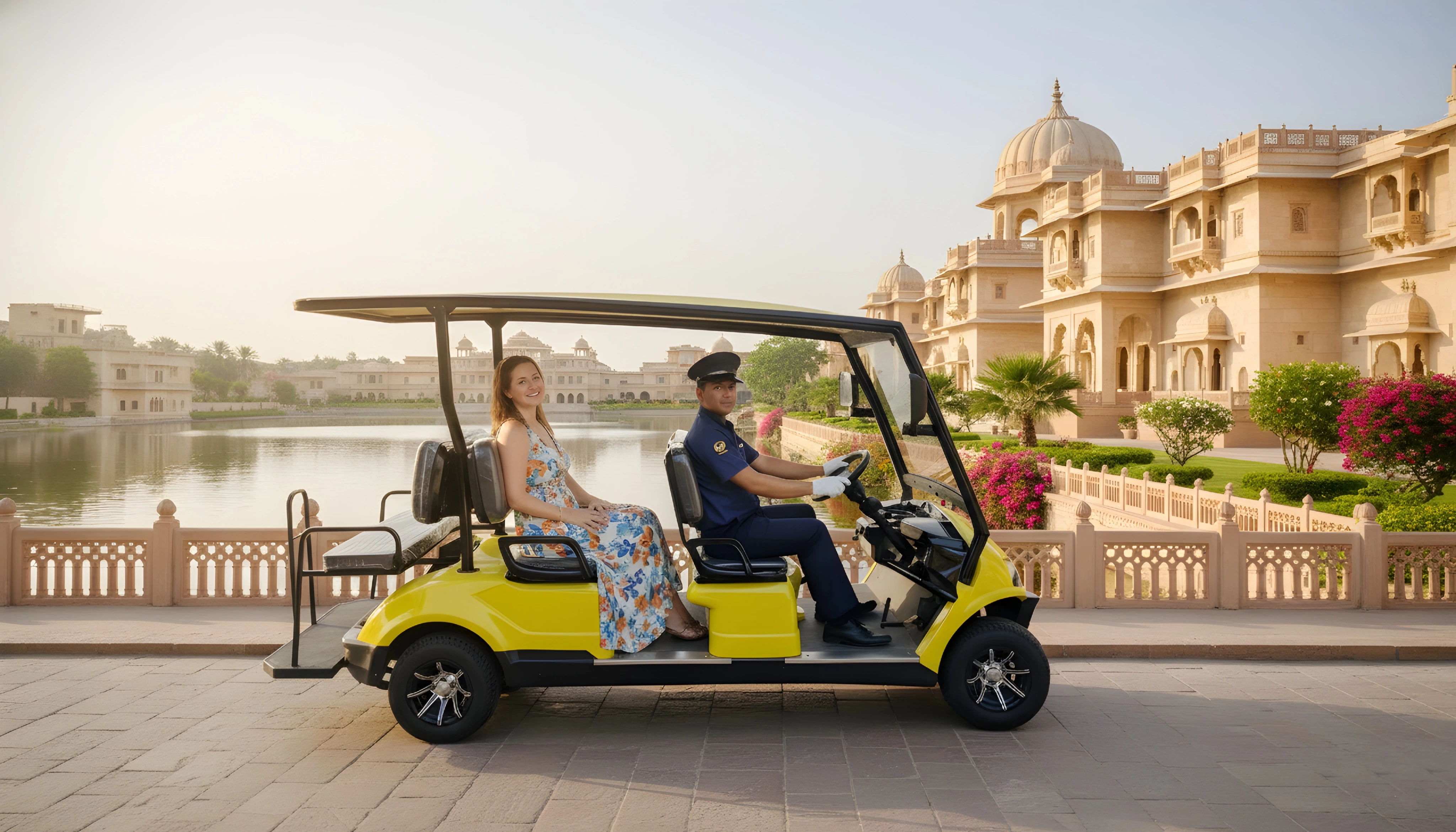
Procurement Strategy
Commercial Fleet Specification Overview
Selecting low-speed electric vehicles (LSEVs) for commercial operations—such as luxury resorts, golf courses, international airports, manufacturing plants, and university campuses—requires a strict evaluation of engineering parameters beyond cosmetic styling. Operating conditions in tropical, arid, or high-humidity regions subject vehicle chassis, battery packs, and electronics to continuous stress.
This technical guide outlines eight primary criteria for global B2B buyers to evaluate payload capacity, battery chemistry economics, AC motor efficiency, corrosion resistance, and Total Cost of Ownership (TCO) before placing volume purchase orders.
01
Determine Your Passenger & Payload Capacity
Matching vehicle wheelbase and seating capacity to duty cycle prevents structural frame fatigue and drivetrain overload. Commercial electric carts are built on distinct chassis platforms:
- 2-Seater / 4-Seater Carts: Ideal for luxury guest transfer, golf course fleet rentals, and supervisor movement. Standard seating configurations include forward-facing or 2+2 flip-seat arrangements for optional rear cargo space.
- 6-Seater / 8-Seater Resort Shuttles: Optimized for high-volume passenger transport across large hospitality properties, amusement parks, and gated communities. Requires reinforced multi-leaf spring rear suspension.
- 11-Seater / 14-Seater Electric Mini Buses: Purpose-built for airport terminal links, institutional campuses, and municipal sightseeing. Equipped with hydraulic power steering and dual-circuit braking systems.
- Utility & Cargo Carts: Configured with flatbeds, hydraulic tipping boxes, enclosed cargo pods, or housekeeping shelves to handle payloads from 400 kg to 1,000 kg.
Engineering Recommendation:
Always specify a 20% margin above maximum expected daily payload to ensure long-term leaf spring resilience and controller thermal stability under continuous peak loads.
02
Evaluate Battery Technology: LiFePO4 vs. Lead-Acid
Traction battery selection directly impacts daily operational range, downtime between shifts, maintenance labor, and multi-year replacement expenditure.
Technical comparison: Deep-Cycle Lead-Acid vs. Lithium Iron Phosphate (LiFePO4)
| Parameter |
Deep-Cycle Lead-Acid |
LiFePO4 (Lithium Iron Phosphate) |
| Expected Cycle Life (80% DOD) |
500 – 800 cycles (2–3 years) |
3,000 – 4,500 cycles (6–8+ years) |
| Charging Duration |
8 – 10 hours (Requires full cycle) |
2.5 – 4 hours (Supports opportunity charge) |
| Maintenance Requirement |
Bi-weekly distilled water top-ups |
Zero maintenance (Sealed BMS system) |
| Weight Impact |
Heavy (320–420 kg per pack) |
Lightweight (110–180 kg per pack) |
| Voltage Discharge Curve |
Voltage drops under load/hills |
Flat voltage curve until depleted |
For high-utilization commercial fleets operating multi-shift schedules, LiFePO4 chemistry provides a significantly lower cost-per-kilometer, despite the higher initial acquisition price, by eliminating battery maintenance labor and frequent replacement cycles.
03
Understand AC Powertrain & Controller Efficiency
Modern low-speed electric vehicles have transitioned from older DC brushed motors to brushless AC induction or permanent magnet synchronous motors (PMSM). Key advantages of brushless AC systems include:
- Higher Efficiency & Torque: 4 kW to 7.5 kW AC motors deliver superior continuous torque on gradients without thermal degradation.
- Regenerative Braking: Automatically recovers kinetic energy during deceleration and downhill descent, returning up to 15% charge back to the battery pack while minimizing brake shoe wear.
- Zero Brush Maintenance: Sealed IP65/IP67 motor enclosures protect internal windings from sand, dust, and rain ingress.
- Programmable Controllers: Industry-standard controllers (such as Curtis or Enpower) allow fleet managers to adjust acceleration curves, top speed limits (governed to 25 km/h for safety compliance), and electronic braking strength.
04
Analyze Real-World Range & Solar-Hybrid Integration
Advertised electric vehicle range often reflects ideal laboratory conditions. Real-world commercial range depends on passenger occupancy, rolling resistance, ambient temperature, elevation changes, and auxiliary lighting loads.
Optimizing Range for 24/7 Operations
A standard 48V 150Ah pack yields 60–80 km per charge under typical resort conditions. To extend operational availability, overseas buyers should consider:
- Solar-Hybrid Roof Systems: Monocrystalline roof-integrated PV panels (200W–400W) feed a constant trickle charge through an MPPT controller during daylight hours, extending single-charge range by 15–25 km.
- High-Voltage Platforms (72V System): Recommended for 11 to 14 seater mini buses carrying heavy passenger loads up sustained steep inclines.
05
Chassis Corrosion Protection & Terrain Suitability
Vehicle structural longevity is heavily determined by frame metallurgy. Coastal resorts, island properties, and chemical industrial sites subject chassis frames to intense salt spray and moisture.
Hot-Dip Galvanised Chassis Standard:
Unlike standard automotive spray paint or basic powder coating, hot-dip galvanising submerges steel frames in molten zinc, creating an alloy coating that protects against internal and external rust for over 10 years, passing 400+ hours of salt-spray laboratory testing.
Suspension & Ground Clearance Specification
Uneven terrain, cobblestone resort paths, and unpaved campus roads require independent front MacPherson strut or double A-arm suspension with heavy-duty hydraulic shock absorbers. A minimum ground clearance of 180 mm to 200 mm protects underbody battery trays from stone impact.
06
Fleet Customization & Corporate Branding
Commercial buggies frequently serve as mobile touchpoints for premium resort and corporate brands. Factory-level customisation options should be agreed upon during pre-production engineering design:
- Coachwork Aesthetics: Sleek contemporary styling for modern commercial hubs vs. vintage classic bodywork for heritage palace hotels and luxury golf clubs.
- Upholstery & Canopies: Marine-grade anti-UV vinyl seats, extended rain curtains, fold-down split windshields, and custom color-matched body panels.
- Commercial Accessories: Integrated onboard sound systems, digital speedometer displays, beacon lights, tow hitches, and customized logo badging.
07
International Logistics, Warranty & Spare Parts Supply
Overseas procurement demands reliable container packing logistics, documented technical manuals, and access to replacement wear-and-tear components.
- Container Loading Efficiency: A 40ft High-Cube (HQ) shipping container typically holds 4 to 6 units of 4-seater carts in semi-knocked-down (SKD) condition to minimize international freight cost per unit.
- Warranty Coverage: Commercial fleets should be backed by a comprehensive 1-year global warranty on primary components (motor, controller, charger, and frame).
- Spare Parts Availability: Ensure your supplier maintains a stocked inventory of wear items, including brake shoes, tie-rod ends, suspension bushes, solenoids, and key switches, shipped via express air freight when required.
08
Total Cost of Ownership (TCO) & ROI Calculation
Comparing electric carts to internal combustion engine (ICE) utility buggies demonstrates significant operational cost advantages. Electric buggies eliminate gasoline/diesel purchasing, oil filter changes, spark plug replacements, and exhaust system maintenance.
On average, a commercial electric golf cart operating 40 km daily recovers its initial capital expenditure within 18 to 24 months through fuel savings and reduced maintenance downtime, delivering up to 75% lower lifetime operating costs over a 5-year service period.
Request a Customized Fleet Quote & Specification Sheet
Speak directly with our export engineering team to model payload requirements, battery sizing, and shipping logistics for your commercial operation.
Send an Inquiry