Featured CE Certified Electric Buggies & Enclosed Carts
Engineered for high-duty commercial applications, luxury resorts, industrial sites, and urban shuttle operations. Fully customizable with advanced lithium traction batteries and high-torque AC powertrains.
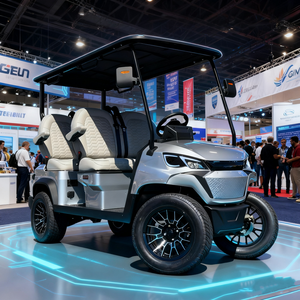 EEC Certified
72V EEC Certified Electric Golf Buggy with 5KW/7.5KW High Power Motor
- Voltage / Motor: 72V / 5kW - 7.5kW AC
- Chassis: High-Strength Steel
- Battery: Long-Life LiFePO4 / Lead-Acid
- Homologation: EEC / CE Compliant
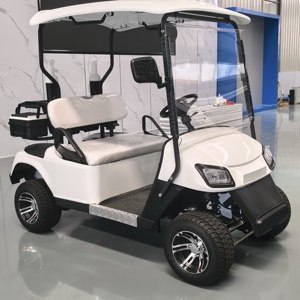 Off-Road Grade
New Electric Off-Road Golf Cart Buggy 3-4 Seats Steel 60V 5KW CE Certified
- Voltage / Motor: 60V / 5000W AC
- Capacity: 3-4 Passengers
- Suspension: Lifted Heavy-Duty
- Certification: CE Standard
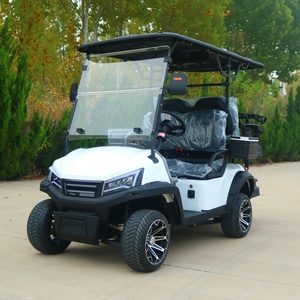 4WD Street Legal
Street Legal 4WD Electric Golf Cart 60/72V Lithium 6-Seater Sightseeing Club Car
- Drivetrain: 4WD Dual Motor System
- Seating: 6-Passenger Layout
- Battery: 60V/72V Lithium Pack
- Power: 5000W - 7500W Peak
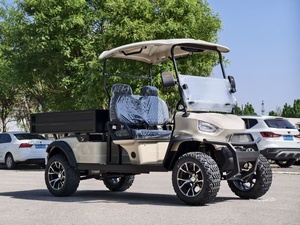 Farm & Beach
2 Seater Electric Golf Buggy Off Road Sporty Lifted Golf Cart for Farm & Beach
- Capacity: 2 Seats + Cargo Deck
- Tires: All-Terrain Off-Road
- Chassis: Galvanized Anti-Corrosion
- Use Case: Rugged & Coastal Duty
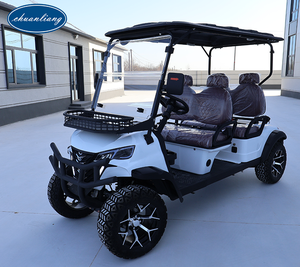 Resort Series
Professional Customized 4 Seater Electric Golf Buggy with Lithium Battery
- Capacity: 4 Passengers
- Battery Chemistry: LiFePO4 Lithium
- Customization: Colors, Trim, Lighting
- Application: Resorts & Communities
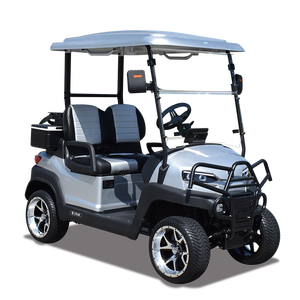 Premium Media
4 Wheel Electric Golf Cart 2 Seat Lithium Golf Buggy with Speakers & Lights
- Features: Bluetooth Sound System
- Lighting: Full LED Halo Headlights
- Range: Up to 80 km per charge
- Control: Smart AC Controller
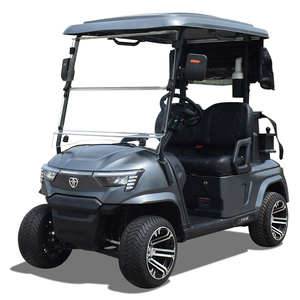 Heavy Cargo
Customizable 2-Seater Electric Utility Golf Cart with Aluminum Cargo Bed
- Payload: 500 kg Heavy Load
- Bed Design: Drop-Side Aluminum Deck
- Power: 48V / 72V AC Drivetrain
- Utility: Maintenance & Logistics
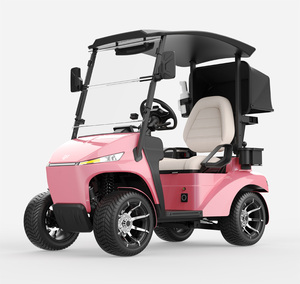 Quick Charge
Professional Design Single-Seat Quick-Charge CE Certified Electric Small Vehicle
- Design: Compact Single Occupant
- Charging: 2-Hour Rapid Charge
- Certification: CE Industrial Rating
- Agility: Ultra-Tight Turning Radius
Industrial-Grade Enclosed Electric Cart Engineering & Global Sourcing Standards
As the global commercial mobility sector transitions away from internal combustion engines toward zero-emission fleet architectures, international buyers, resort developers, municipal transit authorities, and industrial facility managers face complex engineering choices. Selecting commercial electric vehicles demands scrutiny far beyond superficial aesthetics. To ensure long-term Operational Expenditure (OpEx) minimization, fleet operators must evaluate chassis metallurgy, drivetrain efficiency, climate protection enclosures, and regulatory homologation frameworks such as European Economic Community (EEC) and Conformité Européenne (CE) certifications.
This comprehensive technical whitepaper analyzes the structural engineering, battery chemical dynamics, thermodynamic management, and future procurement paradigms that define modern CE certified enclosed electric carts and utility buggies. Built on decades of manufacturing expertise, our platforms bridge the gap between low-speed golf carts and full-scale automotive vehicles, providing robust, weather-sealed, and low-maintenance solutions for demanding multi-shift operations.
1. Structural Metallurgy: Hot-Dip Galvanized Frames vs. Traditional Tubular Steel
The operational lifespan of a commercial electric cart is fundamentally bounded by its structural backbone. In humid resort environments, coastal regions, or industrial sites exposed to chemical particulates, atmospheric oxidation poses the primary failure risk for fleet frames. Traditional low-cost golf carts utilize raw painted or basic powder-coated tubular steel frames, which inevitably suffer from internal oxidation within 24 to 36 months of deployment.
Our OEM manufacturing facility implements a rigorous multi-stage hot-dip galvanization process (ISO 1461 compliant) across every structural chassis frame:
- Chemical Degreasing & Acid Pickling: Raw high-tensile steel frames undergo chemical bath immersion to eliminate mill scale, surface oils, and oxides, ensuring absolute atomic purity before coating.
- Molten Zinc Submersion: Frames are fully submerged in a molten zinc bath at approximately 450°C (842°F). This creates a metallurgically bonded multi-layer zinc-iron alloy shell that provides passive barrier protection and active cathodic (sacrificial) protection.
- Salt Spray Endurance: Tested under ASTM B117 accelerated salt spray standards, our galvanised chassis structures exceed 1,500 hours of continuous exposure without red rust formation—delivering an expected chassis structural lifecycle exceeding 15 years.
Monocoque Cab Structure
Automotive-grade enclosed cab design engineered with high-impact ABS thermoformed body panels, aluminum structural pillars, and laminated automotive safety glass windshields.
High-Torque AC Drivetrain
Maintenance-free 72V Brushless AC Motors paired with Curtis or Sevcon Vector AC Controllers, delivering up to 25% gradeability under maximum gross vehicle weight.
LiFePO4 Power Packs
Integrated Lithium Iron Phosphate (LiFePO4) battery systems with smart Automotive BMS, featuring active cell balancing, thermal shutdown, and fast-charge capabilities.
2. Advanced Climate Enclosures & All-Weather Engineering
Standard golf buggies rely on soft vinyl rain covers that deteriorate rapidly under ultraviolet radiation and offer minimal insulation against extreme heat or ambient freezing temperatures. In contrast, modern commercial enclosed carts require structural cabins engineered for full environmental isolation.
Our enclosed cart architectures incorporate automotive-grade sealing protocols:
- EPDM Double-Lip Door Weatherstripping: Eliminates water ingress during high-pressure monsoon rains or automated vehicle washing cycles while suppressing ambient road noise.
- Impact-Resistant Safety Glass: Windshields utilize DOT-certified 3+3 mm laminated safety glass equipped with integrated electric defrosters and two-speed wiper/washer systems. Side and rear windows deploy high-clarity toughened safety glass or scratch-resistant polycarbonate.
- HVAC Thermal Comfort Integration: Optional 8,000 BTU 72V direct-drive electric air-conditioning units and PTC ceramic heating systems maintain cab temperatures between 20°C and 24°C across external operating environments ranging from -20°C to +50°C.
3. Technical Matrix: Technical Comparison Across Drivetrain Paradigms
To assist procurement committees in calculating Total Cost of Ownership (TCO) and operational payback metrics, the following data matrix compares our 72V Enclosed AC Electric Carts against conventional 48V Lead-Acid Carts and Small Gas Utility Vehicles:
| Performance / Engineering Parameter | 72V LiFePO4 Enclosed Cart (EAYS) | Legacy 48V Lead-Acid Cart | Small Gasoline Utility Vehicle |
|---|---|---|---|
| Battery / Engine Lifecycle | 3,500 - 5,000 Cycles (8-10 Years) | 500 - 800 Cycles (2-3 Years) | Engine Overhaul at 3,000 Hrs |
| Usable Daily Range | 100 km - 140 km per Charge | 40 km - 60 km per Charge | Depends on Fuel Tank (High Cost) |
| Energy Efficiency / TCO | < $0.02 per kilometer | ~ $0.06 per kilometer (Acid Degradation) | > $0.15 per kilometer |
| Maintenance Duty | Zero Engine Fluid Changes / Sealed Motors | Bi-Weekly Distilled Water Topping | Oil, Filters, Spark Plugs, Belts |
| Incline Gradeability | 25% Grade (Loaded 7.5kW AC) | 12% - 15% Grade | 18% - 20% Grade |
| Noise & Emissions Level | 0 dB Idle / Zero Tailpipe Emissions | 0 dB Idle / Zero Emissions | 78-85 dB / High Smog Emissions |
| Weather & Enclosure Rating | Fully Weather-Sealed Hardtop Cab (IP65) | Open Frame or Soft Vinyl Enclosure | Open Frame / Basic Canopy |
Future Global Procurement Trends in Commercial Electric Mobility (2025–2030)
Strategic purchasing managers must look beyond current vehicle specifications to ensure their acquired fleet remains fully compliant and operational over a ten-year horizon. Analysis of international procurement data highlights four dominant trends reshaping the commercial low-speed electric vehicle (LSEV) market:
1. Shift toward Modular Enclosed Cab Configurations
Enterprise buyers are rapidly replacing traditional open-frame buggies with convertible or modular enclosed cabin fleets. Facility managers recognize that employee productivity and guest satisfaction decline sharply when transport vehicles are constrained by rain, dust storms, or extreme heat. Modular platforms allow operators to remove doors during spring months and re-install sealed hardtop doors for winter or monsoon seasons, maximizing fleet utilization rates across 365 days a year.
2. Dominance of LiFePO4 Chemistry over NMC & Lead-Acid
While Nickel Manganese Cobalt (NMC) lithium chemistry remains common in high-speed passenger passenger cars, commercial utility fleets overwhelmingly favor Lithium Iron Phosphate (LiFePO4). The reasons are compelling:
- Thermal Safety: LiFePO4 features an extremely stable crystal structure that prevents thermal runaway even under mechanical puncture or ambient temperatures exceeding 60°C.
- Zero Memory Effect & Opportunity Charging: Fast-charging LiFePO4 packs allow "opportunity charging" during 30-minute lunch breaks without degrading battery cycle life, effectively enabling continuous 24/7 multi-shift operations.
- Elimination of Maintenance Labor: Eliminating lead-acid battery watering saves hundreds of labor hours annually across medium-to-large resort fleets while eliminating acid spill corrosion on chassis frames.
3. Stringent European Homologation (EEC L6e / L7e Certification)
As municipalities implement Low-Emission Zones (LEZ) and strict road safety rules for low-speed shuttles operating on public thoroughfares, uncertified golf carts are increasingly prohibited from public road transit. Achieving official European Economic Community (EEC) homologation under L6e (Light Quadricycles) or L7e (Heavy Quadricycles) demands rigorous safety engineering, including three-point E-mark certified seatbelts, hydraulic dual-circuit disc brakes, automotive safety glass, LED road lighting systems, and structural rollover protection (ROPS).
4. Telematics, IoT Fleet Management & Solar Assist Integration
Modern fleet operations require digital visibility. Next-generation enclosed carts now come equipped with integrated 4G IoT telematics modules that transmit real-time data to central fleet dashboards. Operations teams can monitor GPS location, battery State of Charge (SoC), cell voltage balance, controller thermal metrics, and automated collision alerts. Furthermore, roof-integrated mono-crystalline solar panels (180W to 360W output) continuously trickle-charge the high-voltage battery bank during daylight hours, extending total daily operating range by 15% to 20% and reducing grid electricity costs.
Product Development & Technological Trends in Enclosed Cart Manufacturing
At our engineering research facility, continuous innovation is driven by real-world field feedback from commercial operators. Several breakthrough technologies are currently being integrated across our standard production lines:
Regenerative Vector Braking Systems
Our proprietary AC motor controllers deploy smooth regenerative braking algorithms that convert kinetic energy back into electrical energy during deceleration and downhill descent. This system reduces friction brake wear by up to 70%, dramatically lowering maintenance costs while expanding single-charge driving range.
Smart BMS & Thermal Protection
Automotive-grade Battery Management Systems continuously monitor voltage, current, and cell temperature across every individual cell in the pack. Automated high-temperature throttling prevents cell degradation during demanding hill-climbing cycles in tropical climates.
In addition, our vehicle body panels are manufactured utilizing lightweight, high-impact ABS thermoformed polymers and aluminum alloy frame structures. This reduces gross vehicle tare weight without sacrificing structural rigidity, allowing for greater passenger and payload capacity per kilowatt-hour of battery storage.
Enterprise OEM/ODM Advantages & Global Supply Chain Reliability
As a leading specialized manufacturer of CE certified enclosed carts and custom electric buggies, our organization provides end-to-end manufacturing solutions tailored to the exacting demands of global B2B clients, distributor networks, and government entities.
1. Comprehensive Customization Capabilities (OEM & ODM)
Every commercial operation possesses unique functional requirements. Our engineering department supports full vehicle customization prior to mass production:
- Seating & Cabin Layouts: Configurable from 2-seat utility cargo buggies up to 14-seat enclosed resort shuttle buses.
- Chassis Wheelbase & Ground Clearance: Raised off-road heavy-duty suspension packages for agricultural, farm, and beach terrain, or low-profile setups for airport terminal passenger movement.
- Specialized Utility Bodies: Hydraulic tipping cargo beds, insulated food-service box bodies, ambulance/stretcher carriers, and housekeeping multi-tier storage modules.
- Corporate Identity Branding: Custom RAL color paint matching, premium marine-grade embroidered upholstery, and silk-screened corporate logo placement.
2. Quality Management Systems & Pre-Shipment Inspection
Operating under ISO 9001:2015 quality management protocols, every vehicle manufactured in our facility undergoes an exhaustive 50-point pre-delivery inspection (PDI):
- Water Ingress Flood Testing: Enclosed cabins are subjected to intense 360-degree high-pressure water spray booths to verify absolute seal integrity.
- Gradient & Brake Load Testing: Vehicles are loaded to 125% of rated capacity and tested on 25% incline ramps to verify parking brake hold dynamics and motor hill-start torque.
- Electrical Insulation & High-Voltage Safety Check: Dielectric resistance testing ensures complete isolation of high-voltage wiring harnesses from the steel chassis.
Frequently Asked Questions for B2B Fleet Buyers
Clear, technical answers to common questions regarding CE certification, shipping logistics, customization, and warranty support.
What does "CE Certification" and "EEC Homologation" mean for commercial electric carts?
CE Certification indicates that our vehicles comply with essential European health, safety, and environmental protection standards (such as Low Voltage Directive and Electromagnetic Compatibility). EEC Homologation (such as L6e/L7e classification) goes further by certifying that the vehicle meets official roadworthiness standards—including safety glass, lighting, mirrors, braking performance, and seatbelts—allowing the cart to be legally registered for operation on public roads in Europe and complying regions.
How many electric carts can fit into a 20ft and 40ft High Cube (HC) shipping container?
Container packing efficiency depends on the vehicle dimensions and canopy assembly. Typically, a standard 20ft container accommodates 2 to 4 compact units (SKD - Semi-Knocked Down packing). A 40ft High Cube container accommodates 8 to 12 standard golf buggies or 4 to 6 fully enclosed passenger shuttles. Our logistics team provides detailed CAD container loading layouts prior to shipment to minimize freight costs per unit.
What is the expected real-world driving range per charge on your enclosed lithium carts?
Equipped with our standard 72V 105Ah LiFePO4 battery pack, an enclosed cart achieves a real-world driving range of 80 km to 100 km under full payload conditions. Upgrading to a 72V 206Ah lithium pack expands the single-charge range to 140 km–160 km. Actual range varies based on terrain gradient, payload weight, ambient temperature, and continuous air-conditioning usage.
How does the warranty framework work for international distributor or fleet orders?
We provide a comprehensive 2-Year / 3,000-Hour factory warranty on structural chassis frames, motors, and controllers, and up to 5 Years pro-rated warranty on LiFePO4 battery packs. For international fleet orders, we supply a recommended "Fast-Moving Spare Parts Kit" (including brake pads, relays, switches, seals, and shock absorbers) along with direct video/telemetric technician support to ensure zero operational downtime.
Can the enclosed cabin be configured with heating and air conditioning for extreme climates?
Yes. Our enclosed carts can be customized with fully integrated 72V DC electric inverter air-conditioning units (cooling capacity up to 8,000 BTU) and high-efficiency PTC ceramic cab heaters. The cabin insulation is reinforced with thermal barrier roof headliners and tinted safety glass to minimize HVAC energy consumption.
What is the lead time for custom OEM bulk orders?
Standard production lead time for sample units or small custom orders (1–5 units) is 15 to 20 business days. Bulk container orders (20+ units) typically require 25 to 35 calendar days depending on custom feature requirements, paint specifications, and certification documentation.
Ready to Upgrade Your Commercial Vehicle Fleet?
Contact our engineering and export team today to receive detailed CAD technical drawings, custom specification options, and factory-direct volume pricing for our CE Certified Enclosed Carts.