Next-Generation Industrial Towing: Standards & Performance
High-Capacity Industrial Electric Towing & Utility Vehicles
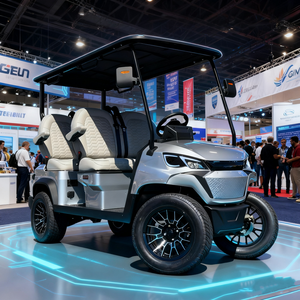
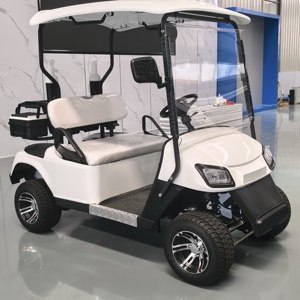
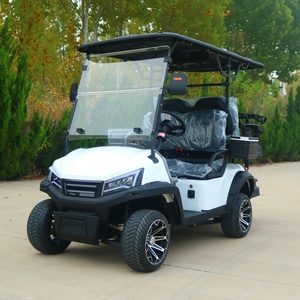
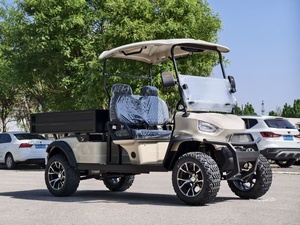
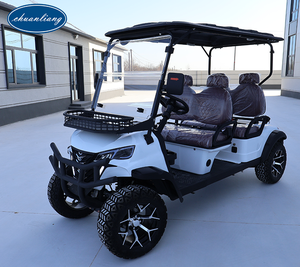
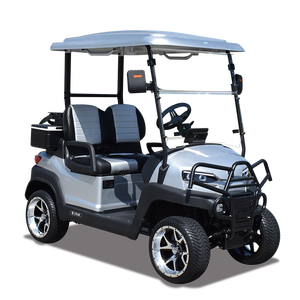
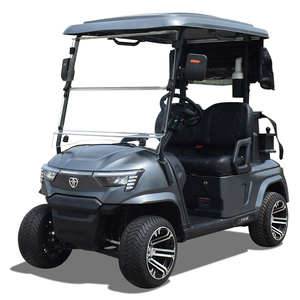
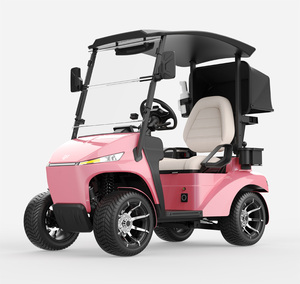
1. Mechanical Engineering Standards for Industrial CE Certified Tow Tractors
Selecting an industrial electric tow tractor requires rigorous evaluation beyond standard catalogue specifications. A CE certified tow tractor engineered for multi-shift logistics loops, automotive manufacturing plants, or airport apron operations must strictly adhere to the European Machinery Directive 2006/42/EC, alongside electrical safety specifications delineated in EN 1175:2020 and industrial truck safety standards under EN ISO 3691-1.
The mechanical core of a high-performance tow tractor relies on its chassis rigidity and axle geometry. Standard commercial carts utilize stamped steel ladder frames prone to torsional fatigue under dynamic hitch loading. In contrast, professional heavy-duty tuggers engineered by tier-1 original equipment manufacturers (OEMs) utilize hot-dip galvanized robotically welded box-section chassis. This structural framework resists flex during emergency evasive maneuvers while carrying trailing loads upwards of 15,000 kg.
Drawbar pull is the true measure of a tow tractor's hauling capacity. It is calculated taking into account rolling resistance ($\mu$), total gross trailing weight ($W$), and incline gradient ($\theta$):
Required DBP (N) = W (kg) × g (9.81 m/s²) × [ \mu × cos(\theta) + sin(\theta) ]
For smooth concrete factory floors ($\mu \approx 0.02$), pulling a 5,000 kg trolley train on a 5% grade requires a minimum continuous drawbar pull of 3,430 N, with peak breakaway torque exceeding 7,500 N. CE certified controllers must regulate current to prevent wheel slip during initial acceleration.
Furthermore, thermal dissipation within the drivetrain is a critical factor governing uptime. Electric tuggers equipped with brushless AC induction or permanent magnet synchronous motors (PMSM) offer IP65 enclosure ratings, shielding critical windings from metallic dust, ambient humidity, and chemical spills. Paired with programmable Curtis or Zapi vector-control AC controllers, modern tow tractors dynamically manage regenerative braking efficiency—recovering up to 18% of kinetic energy back into the battery bank during deceleration and slope descent.
Future Procurement Trends in Material Handling Towing
1. LiFePO4 Transition & Opportunity Charging
Legacy lead-acid traction batteries are rapidly being phased out due to acid-topping maintenance, long 8-hour charge cycles, and thermal degradation. Modern procurement prioritizes Lithium Iron Phosphate (LiFePO4) packs with Integrated Battery Management Systems (BMS), enabling 1-hour fast opportunity charging during worker shift breaks without battery swapping.
2. AGV/AMR Autonomous Towing Conversion
Manual tugger operations are giving way to hybrid architectures. Enterprise factories require manual-override tow tractors pre-wired for LiDAR, 3D Slam navigation, and CAN-bus telemetry, allowing seamless retrofitting into Autonomous Guided Vehicles (AGV) or Autonomous Mobile Robots (AMR).
3. ISO 3691-1 Functional Safety Focus
Safety parameters now extend beyond basic horn and lighting. European safety audits require automatic speed reduction during cornering, dual-circuit hydraulic disc braking, electro-magnetic automatic parking brakes, and emergency belly-button anti-crush switches on pedestrian-operated tow tuggers.
4. Modular Hitching & Load Coupling
Standard pin hitches are insufficient for lean tugger trains. Procurement specs demand automated hydraulic or pneumatic pin couplers operated directly from the driver cabin, reducing operator strain and shortening cycle times in just-in-time (JIT) material delivery loops.
5. Fleet Telemetry & Cloud Diagnostics
Enterprise buyers mandate IoT remote monitoring modules integrated via 4G/CAN-bus gateways. Fleet managers track state of charge (SoC), impact detection, driver authorization via RFID, and predictive maintenance alerts in real time across multi-facility plants.
6. Total Cost of Ownership (TCO) Sourcing
Capital expenditure (CapEx) is no longer the sole metric. Procurement evaluations calculate 5-year operational expenditure (OpEx), factoring in energy conversion efficiency, tire wear coefficients, zero-maintenance brushless motors, and guaranteed manufacturer spare-parts availability.
2. Technical Platform Benchmark: Electric Tow Tractors vs. Utility Carriers
To assist industrial engineers and fleet buyers in matching specific operational duties to vehicle architecture, the following matrix compares core mechanical characteristics across standard CE-certified models:
| Vehicle Type | Motor Rating | Max Towing Capacity | Braking Systems | Optimal Duty Cycle |
|---|---|---|---|---|
| Compact Pedestrian Tugger | 1.5kW – 3.0kW AC | 1,000 kg – 3,500 kg | Electromagnetic + Regenerative | Narrow aisle indoor factory material handling |
| Sit-Down Industrial Tow Tractor | 5.0kW – 10.0kW AC | 5,000 kg – 15,000 kg | Hydraulic Disc + Automatic Park | Heavy manufacturing, airport baggage loops |
| Heavy-Duty Utility Cargo Tugger | 5.0kW – 7.5kW AC | 3,000 kg + 1,000 kg Bed | 4-Wheel Hydraulic Drum/Disc | Resort maintenance, plant logistics & flatbed cargo |
| 4WD Off-Road Towing Vehicle | 7.5kW – 15.0kW AC Dual | 4,000 kg – 8,000 kg | Dual Circuit Hydraulic Disc | Agriculture, rough terrain, outdoor industrial sites |
Why Enterprise Buyers Partner with Our Factory
Full Structural Galvanization
Every vehicle chassis undergoes a multi-stage hot-dip galvanization process or premium zinc-phosphate anti-corrosion coating. This protects structural integrity against moisture, salt breeze in coastal resorts, and corrosive airborne chemicals in industrial chemical plants.
Tier-1 Component Integration
We do not compromise on drivetrain components. Vehicles feature genuine Curtis (USA) or Zapi (Italy) AC controllers, KDS AC motors, premium Trojan or CATL LiFePO4 cells, and Albright contactors, ensuring globally accessible replacement parts.
Rigorous CE & EN Compliance Testing
Production units undergo mandatory dynamic braking distance validation, 20% gradient hill-hold safety checks, electromagnetic compatibility (EMC) testing, and continuous full-load drawbar pull verification prior to container packing.
End-to-End Fleet Customization
From custom drawbar hitch heights (manual, automatic, multi-clevis) to specialized cabin enclosures, climate control, solar auxiliary roofs, and custom RAL color branding, our engineering team provides complete pre-production CAD approval drawings.
Common Technical Questions from Fleet Buyers
Request Technical Specifications & Fleet Pricing
Consult with our vehicle engineering team to configure drawbar pull requirements, battery sizing, hitch mechanisms, and OEM/ODM custom specifications tailored to your industrial facility.