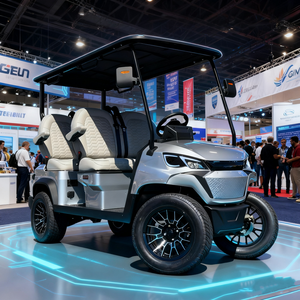
 EEC Certified
72V EEC Certified Electric Golf Buggy (5KW / 7.5KW High Power Motor)
- Powertrain: 72V 5kW/7.5kW AC Motor
- Chassis: Galvanized High-Tensile Steel
- Capacity: 2-4 Seater Options
- Battery: Long-Life LiFePO4 / Lead-Acid
Engineered for extreme ambient heat, heavy passenger duty cycles, and rugged terrain. Certified under international EEC, CE, and ISO standards for commercial operations worldwide.
EEC Certified
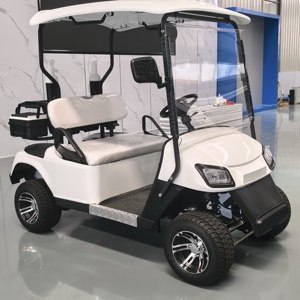 Off-Road Series
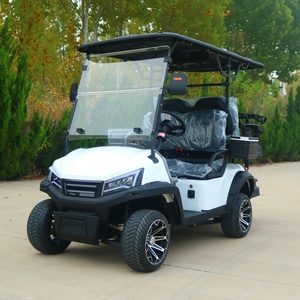 4WD Street Legal
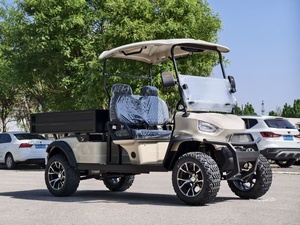 Utility & Farm
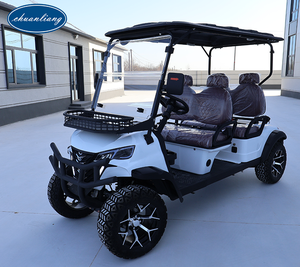 Resort Luxury
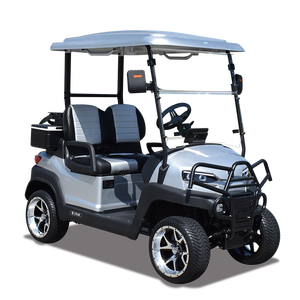 Smart Audio
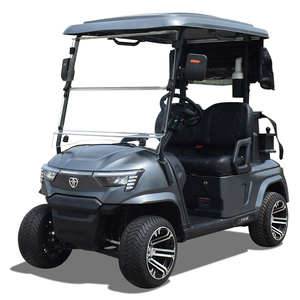 Cargo Transporter
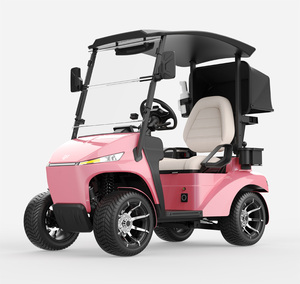 Compact Single
An authoritative technical analysis of structural frame metallurgy, AC asynchronous power systems, high-efficiency lithium traction packs, and quality control systems defining China's export-grade electric transporters.
To withstand severe coastal saltwater fog, high humidity, and intensive daily utilization, leading Chinese manufacturers employ hot-dip galvanized robotically welded tubular steel frames. The multi-stage cathodic electrophoretic coating (ED paint process) ensures over 15 years of structural integrity without sub-surface oxidation.
Transitioning away from legacy brushed DC motors, modern 48V, 60V, and 72V electric transporters utilize maintenance-free AC asynchronous or Permanent Magnet Synchronous Motors (PMSM). Coupled with programmable Curtis or Enpower vector controllers, these drivetrains yield over 92% system efficiency and hill-climbing torque up to 30% incline.
Lithium Iron Phosphate (LiFePO4) has established itself as the commercial standard due to thermal stability and long lifecycle capability. Integrated Smart Battery Management Systems (BMS) monitor cell voltage, thermal equilibrium, and state of charge (SoC), preventing thermal runaway and allowing opportunity fast-charging without memory degradation.
A comparative operational cost breakdown showing why fleet managers are replacing legacy internal combustion engine (ICE) utility buggies and lead-acid golf fleets with high-voltage Chinese electric transporter platforms.
| Evaluation Vector | Legacy Lead-Acid Transporter | Gasoline (ICE) Utility Transporter | Modern China LiFePO4 Transporter |
|---|---|---|---|
| Initial Capital Expenditure (CapEx) | Moderate ($4,000 - $6,500) | High ($7,500 - $11,000) | Optimal ($5,000 - $8,000) |
| Usable Lifecycle (Years / Cycles) | 2–3 Years (600–800 Cycles) | 5–7 Years (Engine Overhauls) | 8–10 Years (3,500+ Cycles) |
| Energy Cost per 100 km | $2.80 - $3.50 (Grid Charge) | $9.50 - $14.00 (Fuel Consumption) | $1.20 - $1.80 (Solar Hybrid Option) |
| Scheduled Maintenance | High (Water topping, terminal cleaning) | Very High (Oil, filters, spark plugs, belts) | Near-Zero (Sealed motor & battery) |
| Thermal & Ambient Tolerance | Poor capacity drop > 40°C | Overheating risk under idling | Active BMS Cooling (-20°C to +55°C) |
| 5-Year Fleet TCO Savings | Baseline Reference | - 28% (High fuel & repair costs) | + 58% Net Operational Profit |
Key innovation pillars driving the next generation of industrial electric passenger shuttles, resort buggies, and heavy-duty cargo transport units.
Integrated roof-mounted flexible monocrystalline photovoltaic (PV) solar panels deliver steady trickling charge during daylight operations. This tech extends daily operating range by 15-25 km, significantly reducing grid dependence for continuous shift applications in resorts, airports, and industrial complexes.
Modern export electric transporters feature embedded GPS/4G IoT modules. Fleet administrators can remotely monitor vehicle location, geofence operating zones, track real-time battery SoC, diagnose fault codes over-the-air (OTA), and prevent unauthorized operation through digital RFID/app access controls.
Manufacturers are standardizing modular vehicle platforms. A single chassis baseline can be quickly reconfigured from a 4-passenger resort buggy into a 2-passenger cargo box carrier or ambulance unit via quick-release rear bed accessories, lowering operational spare parts inventories for enterprise buyers.
Built on robust automotive manufacturing lineages, our production facilities combine precision robotics, stringent testing protocols, and complete export supply chain management.
Our vehicles undergo rigorous compliance testing to meet European Homologation (EEC L6e/L7e street legal certifications), CE safety requirements, and ISO 9001 factory production control standards, enabling seamless international registration.
From custom body paint colors and corporate brand logo silk-screening to specialized upholstery, elevated chassis suspension kits, enclosed weather curtains, and custom tray dimensions—we tailor every detail to client project specifications.
Our specialized SKD (Semi-Knocked Down) and CKD (Completely Knocked Down) packaging designs allow up to 8-12 units to be safely secured inside a single 40ft High Cube container, dramatically reducing per-unit ocean freight costs for overseas distributors.
We provide long-term operational peace of mind with 1-3 year comprehensive warranties, direct factory replacement parts dispatch within 48 hours, technical video tutorials, and dedicated engineering consultation for fleet maintenance crews.
Expert answers addressing common technical, regulatory, and logistics queries encountered during international purchasing of electric transporters.
Real-world range varies depending on battery chemistry, payload, ambient temperature, and terrain gradient. Standard 48V Lead-Acid configurations yield approximately 60–80 km per charge on flat paths with nominal passenger load. Upgrading to high-density 72V LiFePO4 lithium battery packs yields 100–130 km of continuous operation. Auxiliary solar panel options add an incremental 15–20% daily operational range under sunny ambient conditions.
Yes. We manufacture models specifically compliant with EEC (L6e/L7e category) standards for European street registration, complete with VIN plates, three-point seatbelts, e-mark certified shatterproof glass windshields, LED headlights, turning signals, side mirrors, and hydraulic dual-circuit brakes. For the USA market, vehicles can be tailored to conform to DOT Low-Speed Vehicle (LSV) guidelines.
Container capacity depends on whether vehicles are shipped Fully Assembled (CBU) or Semi-Knocked Down (SKD). In CBU mode, a standard 40ft High Cube (40HQ) container fits 4 to 6 units depending on chassis length (e.g., 2-seater vs 6-seater). In SKD mode—where roofs, windshields, and front wheels are packed compactly—a 40HQ container can accommodate up to 8–12 units, reducing per-unit freight costs by over 40%.
For low-frequency, seasonal, or budget-restricted operations, maintenance-free AGM lead-acid batteries offer a lower initial purchase cost (CapEx). However, for intensive commercial operations (hotels, resorts, factory logistics, public transit), Lithium LiFePO4 is vastly superior. LiFePO4 delivers 3,500+ charge cycles (vs. 600 cycles for lead-acid), weighs 60% less, supports fast opportunity charging during operator lunch shifts, requires zero watering maintenance, and dramatically lowers long-term Total Cost of Ownership (TCO).
We back our vehicles with a standard 1-year comprehensive warranty on motor, controller, frame, and electrical systems, and up to a 3 to 5-year warranty on Lithium LiFePO4 battery modules. We maintain a full inventory of replacement parts (controllers, solenoids, brake pads, body panels) ready for express air courier dispatch. Fast-moving wearable spare kits can also be bundled directly inside your container shipment.
Absolutely. As a direct manufacturer, OEM and ODM customization is our core strength. You can select exact RAL color codes for paint finishes, select custom seats (two-tone leather, weather-proof marine vinyl), add corporate logo decals, install custom cargo beds, enclosures, tow hitches, elevated off-road suspension kits, or integrated Bluetooth sound systems.
Contact our engineering export sales department today for technical datasheets, full product catalog pricing, container shipping estimates, and custom OEM/ODM consultations.
Get Catalog