Featured Commercial & Security Buggy Fleet
High-torque, zero-emission electric utility carts certified with CE & EEC standards for security, resort, and industrial operations.
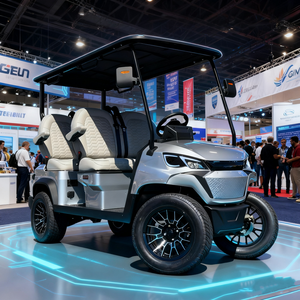
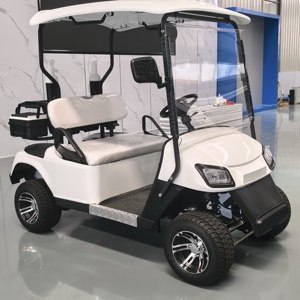
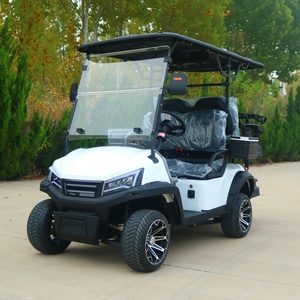
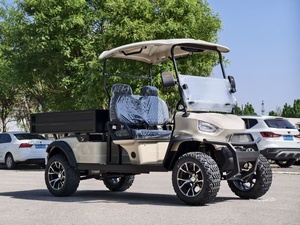
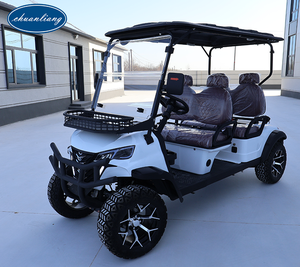
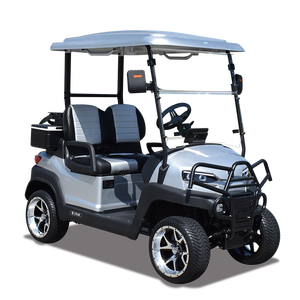
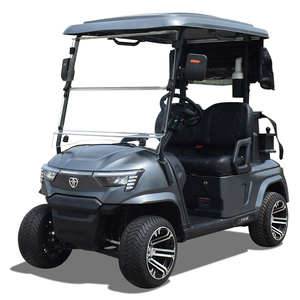
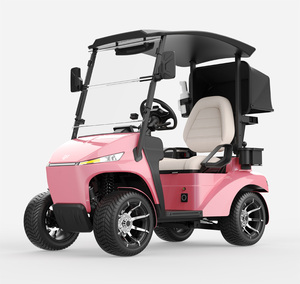
Engineering Excellence: Why Leading Global Enterprises Partner with China's Premier Security Buggy Manufacturers
In modern industrial parks, luxury coastal resorts, military bases, gated residential communities, and commercial airports, low-speed security patrol buggies serve as the primary operational backbone for physical safety and rapid emergency response. Sourcing commercial-grade security vehicles requires moving beyond standard recreational golf carts. Commercial security operations demand heavy-duty chassis structures, continuous-duty powertrains, high thermal resilience, and full integration with warning systems and communication accessories.
As a specialized manufacturer in China, our production philosophy centers on rigorous structural integrity and modular customizability. By combining advanced AC asynchronous motor technology with long-life Lithium Iron Phosphate (LiFePO4) battery chemistry and marine-grade anti-corrosion chassis designs, we build security vehicles engineered for 24/7 continuous operational availability in high-stress thermal and physical environments.
Information Gain Insight: Unlike standard golf carts that rely on thin stamped steel frames designed for 18-hole recreational play, professional security buggies require an engineered hot-dip galvanised ladder chassis capable of enduring continuous 24-hour shift rotations with payloads exceeding 600kg on steep gradients.
Galvanised Anti-Corrosion Chassis
Every vehicle utilizes a heavy-gauge tubular steel frame treated with full hot-dip galvanization inside and out. Designed specifically to resist salt spray in coastal resorts and atmospheric humidity in tropical climates without structural fatigue or rusting.
Brushless AC Powertrain (5KW–7.5KW)
Equipped with high-efficiency maintenance-free AC motors paired with intelligent Curtis or KDS controllers. Delivers immediate low-end torque for climbing steep 30% inclines while preserving electrical energy through smooth regenerative braking recovery.
Smart LiFePO4 Battery Systems
Integrated Automotive-grade Lithium Iron Phosphate battery packs featuring smart BMS protection against thermal runaway, cell imbalances, and over-discharging. Supports fast charging (up to 80% charge in 2 hours) for multi-shift patrol usage.
Future Technology Trends in Electric Security Buggy Manufacturing
The global security landscape is rapidly shifting toward autonomous monitoring, high-efficiency fleets, and zero-carbon footprints. When procuring security buggies from China, forward-looking fleet managers must align with key technological developments currently transforming the industry:
1. Solar-Hybrid Auxiliary Charging Technology
Integrating high-efficiency monocrystalline solar panels onto the vehicle canopy roof provides continuous trickle-charging during daylight shifts. While solar power does not replace primary mains charging, it extends shift endurance by 15% to 25%, offsets auxiliary loads (such as LED lightbars, sirens, radio equipment, and thermal cameras), and prevents deep-battery discharge cycles during idle monitoring.
2. Smart Telematics, GPS Fleet Tracking & Geofencing
Modern security buggies are moving beyond basic transportation to become connected mobile security nodes. Embedded IoT controllers transmit real-time telemetry including vehicle location, speed, battery state-of-charge (SoC), driver behavior metrics, and automated fault codes directly to central security control rooms. Geofencing capabilities allow operators to set automated speed limits in pedestrian-dense resort areas or auto-lock vehicles if they exit designated patrol zones.
3. Street-Legal Certification Compliance (EEC L7e / DOT)
International buyers increasingly require security buggies that can cross public roads connecting private industrial zones, university campuses, or hotel complexes. Leading Chinese manufacturers are engineering vehicles that conform fully to European EEC L7e road-homologation standards and US DOT regulations—incorporating three-point seatbelts, hydraulic 4-wheel disc brakes, laminated safety glass windshields with wipers, automotive E-mark LED lighting, and side mirrors.
Future Procurement Trends & Total Cost of Ownership (TCO) Sourcing Guide
Procurement teams must shift evaluation frameworks from Initial Purchase Price (CapEx) to Total Cost of Ownership (TCO) across a 5-to-8-year asset lifecycle. Buying low-cost vehicles with lead-acid batteries and ungalvanised steel frames often leads to severe financial drag within 24 months due to battery degradation, chassis corrosion, and frequent mechanical failures.
| Evaluation Parameter | Standard Lead-Acid Golf Cart | Commercial Security LiFePO4 Buggy (EAYS Standard) | Fleet Operational Impact |
|---|---|---|---|
| Chassis Lifecycle | 2–4 Years (Stamped Steel/Paint) | 10+ Years (Hot-Dip Galvanised Tubular Frame) | Prevents frame snapping under heavy payloads and high moisture. |
| Battery Lifespan | 500–800 Cycles (1.5–2 Years) | 3,500+ Cycles (7–10 Years) | Eliminates 3 battery replacement cycles over vehicle lifetime. |
| Maintenance Duty | Bi-weekly distilled water topping | Zero maintenance (Sealed LiFePO4 BMS) | Reduces labor maintenance costs by over 80%. |
| Shift Capability | Single 6-hour shift (8-hour recharge) | Continuous 24-hour shift capability via fast charging | Reduces total fleet sizing requirements by 30%. |
| Braking System | Rear Mechanical Drum Brakes | 4-Wheel Hydraulic Disc + Electromagnetic Auto-Park | Ensures short stopping distances during emergency responses. |
Tailored OEM/ODM Customization Capabilities for Security Operations
Every commercial facility presents distinct operational requirements. China's leading security vehicle manufacturers distinguish themselves through deep modular customization rather than rigid off-the-shelf offerings:
- Enclosed All-Weather Cabins: Removable heavy-duty transparent canvas enclosures or solid polycarbonate/ABS doors with sliding glass windows for rainy, dusty, or extreme cold climates.
- Tactical & Emergency Lighting: Roof-mounted multi-color LED warning lightbars (red/blue/amber), directional spotlights, public address (PA) speakers, and high-decibel sirens.
- Custom Cargo & Equipment Decks: Rear-convertible flip seats that transform into heavy-duty flatbed cargo decks for carrying medical stretchers, fire extinguishers, security cones, or security canine units.
- 4WD Off-Road Suspensions: Raised ground clearance (lifted kits), heavy-duty independent double A-arm front suspension, and 12-inch off-road tires for perimeter patrols along unpaved beach lines or rough terrain.
Essential Procurement FAQs for Security Buggy Importing
Build Your Custom Security & Utility Buggy Fleet Today
Connect with our technical engineering team to receive detailed CAD drawings, custom specification sheets, factory-direct wholesale pricing, and full shipping calculations for your facility.