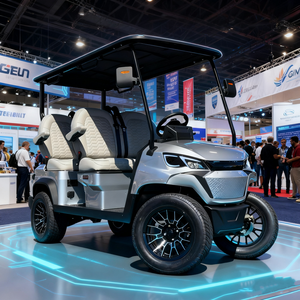
 EEC Certified
72V EEC Certified Electric Golf Buggy with 5KW/7.5KW High Power Motor
Motor Power:5.0kW / 7.5kW AC
System Voltage:72V High-Torque
Structure:Heavy Steel Frame
Engineered for golf courses, luxury resorts, industrial complexes, and municipal transit. Explore our certified 2-to-14 seat platforms.
EEC Certified
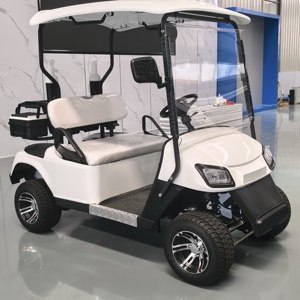 CE Certified
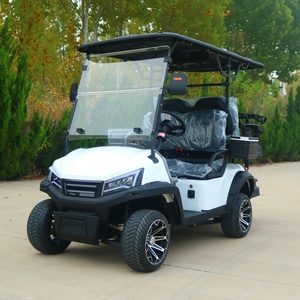 4WD Drive
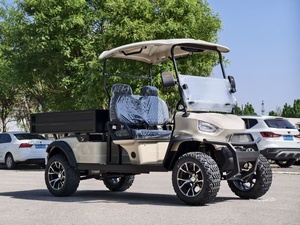 All-Terrain
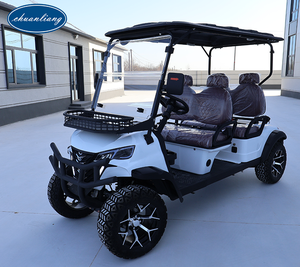 Resort Edition
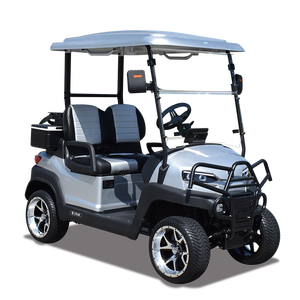 Luxury Package
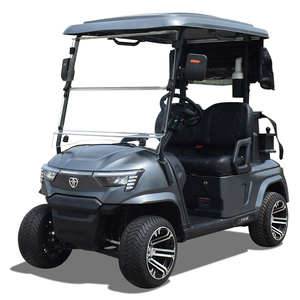 Utility Deck
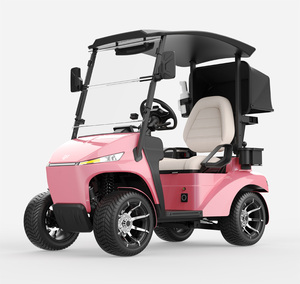 Single Seater
The global low-speed vehicle (LSV) and electric utility cart sector has undergone a fundamental architectural shift. As international commercial buyers, resort developers, and fleet management enterprises evaluate procurement options from China Best Transport Buggy Manufacturers & Factory networks, the criteria for selection have evolved from basic purchase cost to rigorous Total Cost of Ownership (TCO), frame longevity under aggressive atmospheric conditions, and high-voltage energy storage efficiency.
China's premier transport buggy manufacturing facilities have integrated automotive-grade robotics, hot-dip galvanization dipping processes compliant with ASTM A123 / ISO 1461 standards, and advanced CAN-bus electric powertrain integration. This technical transition eliminates historical vulnerabilities such as frame corrosion in coastal saltwater resorts, premature suspension bushing failure, and thermal degradation of battery strings under tropical ambient heat.
Key Technical Insight: Modern OEM electric buggies built by tier-1 Chinese factories utilize 48V to 72V Brushless AC (Alternating Current) induction motors coupled with Curtis or Toyota controllers. Compared to legacy DC brushed motors, AC systems yield up to 22% higher energy conversion efficiency, fully regenerative braking algorithms, and zero brush replacement maintenance across a 10-year operational lifecycle.
Robotic-welded high-tensile steel frames subjected to multi-stage acid pickling and molten zinc immersion, ensuring total internal and external corrosion resistance in marine environments.
Integrated Lithium Iron Phosphate battery modules with active BMS thermal monitoring. Capable of 3,500+ deep discharge cycles at 80% Depth of Discharge (DoD).
Intelligent kinetic energy recovery controllers convert downhill deceleration into usable amp-hours, reducing friction brake pad wear by up to 65% on hilly golf courses.
When sourcing fleet buggies at scale, procurement managers must analyze the trade-offs between system operating voltages, motor output ratings, and chassis suspension topologies. Below is an engineering comparison matrix codified by our senior mobility designers:
| Specification Vector | Standard Commercial Grade | Heavy-Duty Industrial Grade | Resort & Passenger Premium |
|---|---|---|---|
| Operating Voltage | 48V DC / AC System | 60V - 72V High Torque AC | 72V Synchronous AC |
| Motor Output Rating | 3.7 kW - 4.0 kW AC | 5.0 kW - 7.5 kW AC Brushless | 7.5 kW Heavy Duty Peak |
| Battery Architecture | Deep-Cycle Flooded Lead-Acid | LiFePO4 Pack w/ Active BMS | LiFePO4 w/ Solar Hybrid Deck |
| Frame Construction | Tubular Carbon Steel (Powder Coated) | Hot-Dip Galvanized Automotive Frame | Aluminum-Magnesium Alloy Monocoque |
| Front Suspension | Leaf Spring w/ Shock Absorber | Independent MacPherson Strut | Double A-Arm Independent Wishbone |
| Compliance Standard | CE Ingress Rated | EEC L7e Street Legal / DOT | EEC / CE / ISO9001 Homologated |
As sustainability mandates tighten across global hospitality brands, municipal districts, and airport authorities, the demand for smart, zero-emission ground transport vehicles is accelerating. Procurement directors are no longer purchasing isolated carts; they are investing in connected, scalable transport ecosystems.
Integrating high-efficiency monocrystalline solar panels directly into the buggies' lightweight polycarbonate roofs provides a continuous trickle-charge during daylight operations. Field testing demonstrates that solar-supplemented 48V/72V systems gain an additional 15 km to 25 km of operational range per shift, effectively eliminating midday plug-in downtime for high-occupancy resort shuttles.
Next-generation transport buggies coming off Chinese factory lines feature built-in 4G/GPS telematics modules connected via CAN-bus to cloud dashboard systems. Fleet operators can monitor real-time battery pack State of Health (SoH), track vehicle geofencing boundaries, evaluate driver braking patterns, and receive automated diagnostic alerts before component failure occurs.
Modern enterprise buyers require versatile vehicles. Leading factories now engineer universal chassis architectures capable of swapping rear modules within 30 minutes—converting a 4-passenger guest transport cart into a flatbed housekeeping utility buggy or an enclosed security patrol vehicle.
Direct manufacturing advantages refined over thousands of commercial vehicle deliveries across North America, Europe, the Middle East, and Southeast Asia.
Unlike low-tier manufacturers utilizing standard painted iron tubes, our chassis undergo hot-dip zinc galvanization. This process delivers impenetrable protection against moisture, sand, chemical fertilizers, and salt-air corrosion, ensuring decades of structural safety.
We pair high-efficiency AC motors (ranging from 4kW to 7.5kW) with automotive-grade LiFePO4 battery cells. Featuring zero maintenance, rapid charging, and zero memory effect, our power units cut electricity and maintenance expenditures by up to 40%.
From custom RAL color matching, tailored seating layouts (2 to 14 seats), lifted off-road suspensions, and custom cargo decks, to brand logo integration—every specification sheet is custom-drawn and pre-approved by our engineering team prior to production.
Our buggies strictly adhere to international safety standards. With full CE certification and EEC L7e road-legal homologation packages available, our vehicles seamlessly satisfy public road and private estate regulatory requirements worldwide.
We optimize shipping volume. A standard 40ft High Cube container cleanly accommodates 4 to 6 units of 4-seater buggies through specialized SKD/CKD steel frame rack packaging, significantly reducing per-unit international freight costs.
Every buggy order is backed by a 1-year comprehensive warranty, documented maintenance schedules, factory-direct spare parts dispatches, and 24/7 video diagnostic support from our chief electrical engineers.
Essential answers for fleet managers, hotel directors, and industrial buyers evaluating China transport buggy factories.
Real-world operational range depends on vehicle load, gradient, ambient temperature, and battery configuration. A standard 48V flooded lead-acid pack returns 60–80 km on flat paved terrain. Upgrading to our 72V LiFePO4 lithium battery pack provides 80–110 km of usable range under full passenger load, with minimal voltage drop on steep slopes.
Standard production lead time for customized fleet orders (1 to 20 units) is typically 15 to 25 business days following technical drawing sign-off. High-volume batch orders (up to 50+ units) are completed within 30 to 40 days. Ocean freight shipping schedules vary by destination port (e.g., 15 days to US West Coast, 28 days to European main ports).
While lead-acid offers a lower initial capital outlay (CAPEX), LiFePO4 lithium technology delivers vastly superior Total Cost of Ownership (OPEX). Lithium packs weigh 60% less, accept opportunity fast-charging (full charge in 2–3 hours), eliminate distilled water replenishment labor, and provide over 3,500 charging cycles compared to ~600 cycles for lead-acid.
In a 20ft container, we typically load 2 units of 4-seater buggies in SKD (Semi-Knocked Down) packaging. In a 40ft High Cube container, specialized double-deck steel framing allows us to fit 4 to 6 units of 4-seater buggies or 2 to 3 units of 11-seater electric shuttle buses, depending on roof canopy disassemble options.
Yes. We manufacture specific configurations engineered with EEC L7e approval for the European Union and DOT/LSV compliance features (such as 17-digit VIN numbers, glass windshields with wipers, seatbelts, hydraulic disc brakes, high-beam LED headlights, and side mirrors) required for street-legal registration in North America.
Maintenance requirements are remarkably straightforward: monthly inspection of tire inflation pressure and terminal cleanliness; quarterly lubrication of steering tie-rods and suspension joints; and bi-annual brake fluid checks. Lithium models require zero battery electrolyte monitoring.