Featured Commercial Electric Carriers & Utility Fleets
Engineered for heavy payload capacities, steep hill gradeability, extended LiFePO4 battery life, and international EEC/CE compliance across demanding operating environments.
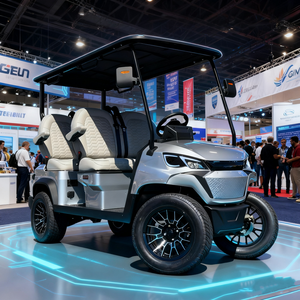 EEC Certified
72V EEC Certified Electric Golf Buggy 5KW/7.5KW High Power Motor
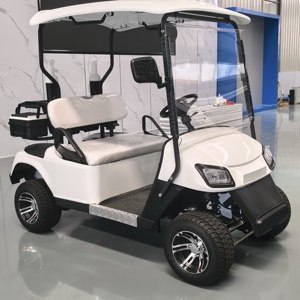 Off-Road Lifted
New Electric Off-Road Golf Cart Buggy 3-4 Seats 60V 5KW CE Certified
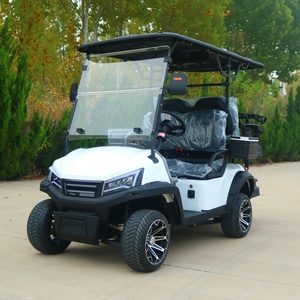 4WD Drive
Street Legal 4WD Electric Golf Cart 60/72V Lithium 6-Seater Shuttle
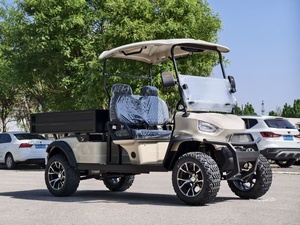 Heavy Duty
New Arrival 2 Seater Electric Golf Buggy Off-Road Lifted for Farm & Beach
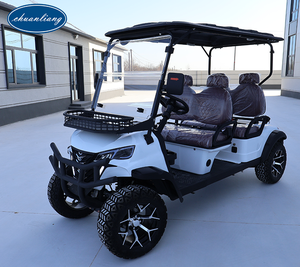 Custom OEM
Professional Customized 4 Seater Electric Golf Buggy Lithium Powered
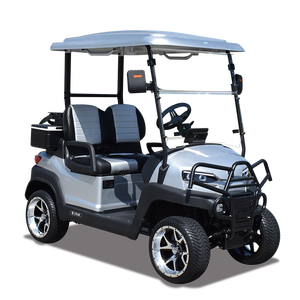 Luxury Sound
4 Wheel Electric Golf Cart 2 Seat Lithium Buggy Integrated Bluetooth & Lights
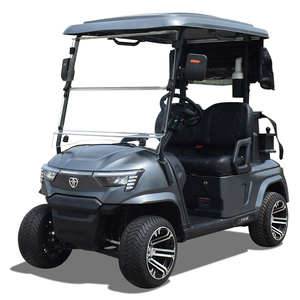 Utility Cargo
Customizable 2-Seater Electric Utility Golf Cart Cargo Bed Exporter
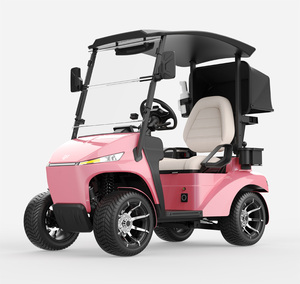 Quick-Charge
Professional Single-Seat Quick-Charge Electric Golf Cart CE Certified
Technical Whitepaper: Engineering Next-Generation Commercial Electric Carriers
As global hospitality enterprises, industrial complexes, smart campuses, and municipal infrastructures transition toward zero-emission operational transport, the demand for high-performance, heavy-payload electric carriers has shifted from basic personal transport to specialized, low-speed vehicle (LSV) engineering. China's manufacturing ecosystem leads this transformation through robust supply chain vertical integration, state-of-the-art battery management technologies, and stringent structural testing protocols.
Evaluating commercial-grade electric buggies and utility carriers requires understanding critical architectural components: drivetrain efficiency, chassis anti-corrosion metallurgy, smart lithium BMS safety protocols, and certified street-legal compliance standards (including EEC L7e, CE, and DOT specs).
1. Structural Metallurgy: Hot-Dip Galvanized Chassis vs. Standard Painted Frames
Coastal resorts, humid industrial environments, and high-salinity agricultural sites present harsh corrosive challenges for commercial low-speed vehicles. Standard painted steel frames suffer from internal tube rust, leading to structural failures within 24 to 36 months of continuous service.
Leading Chinese exporters utilize full hot-dip galvanization processes. By submerging the entire welded structural chassis into molten zinc at 450°C, both interior and exterior frame walls receive a bonded iron-zinc alloy protective coating. This metallurgy delivers exceptional resistance during rigorous salt spray tests (ISO 9227 compliant exceeding 1,500 hours), extending chassis structural lifespans beyond 10–15 years under high-ambient humidity.
2. Advanced Drivetrain Dynamics: Brushless AC Powertrain vs. Traditional DC Motors
Industrial commercial carriers require high torque under heavy payloads (ranging from 400kg to over 1,500kg) while operating reliably across steep incline gradients. Older DC motor configurations exhibit rapid brush wear, excessive thermal output, and limited energy recuperation performance.
Modern commercial carriers adopt high-efficiency, sealed Brushless AC Motors (48V / 60V / 72V rated at 5kW to 10kW) paired with programmable Curtis or Sevcon AC controllers. Key performance advantages include:
- Thermal Dissipation Efficiency: Sealed aluminum heat-sink housings eliminate carbon brush wear and reduce operating temperatures during sustained hill climbs.
- Regenerative Energy Braking: Advanced AC controllers automatically convert kinetic braking force back into stored electrical energy, reducing mechanical brake shoe wear by up to 60% while extending shift operating ranges by 15–20%.
- Precise Torque Vectoring: Electronic torque control prevents wheel spinning on soft turf, sand, or wet resort driveways.
3. Battery Chemistry Optimization: LiFePO4 vs. Deep-Cycle Lead-Acid TCO
The total cost of ownership (TCO) for commercial carrier fleets hinges heavily on battery selection. While traditional lead-acid batteries feature lower upfront capital expenditure, their low cycle life (500–700 cycles), high weight, and mandatory maintenance (distilled water topping) increase operational costs over time.
| Evaluation Parameter | Deep-Cycle Lead-Acid Pack | LiFePO4 Lithium Module (EAYS OEM) | Operational Impact |
|---|---|---|---|
| Cycle Life (80% DoD) | 500 – 700 Cycles | 3,500 – 5,000+ Cycles | 7x longer service lifespan |
| Pack Weight Ratio | 100% (Heavy weight) | 35% - 40% (Lightweight) | Reduces tire/brake wear & increases range |
| Opportunity Fast Charging | Not Recommended (8-10 hrs) | Supported (2-3 hrs full charge) | Enables continuous multi-shift operations |
| Maintenance Requirement | Bi-weekly watering required | Zero Maintenance (BMS Managed) | Eliminates labor overhead completely |
| 5-Year Fleet Total Cost (TCO) | High (Multiple replacements) | 35% Lower Total TCO | Maximum return on capital investment |
Future Procurement & Strategic Trends in Commercial Electric Carriers
As commercial fleet buyers, procurement officers, and resort developers evaluate long-term capital investments, four critical engineering trends are shaping the future of global low-speed electric transport:
1. Telematics, IoT Diagnostics, & Fleet Geofencing Integration
Global fleet operations require real-time visibility over asset location, battery state-of-charge (SoC), operational health, and maintenance schedules. Modern electric carrier platforms integrate 4G/GPS telematics units capable of sending remote CAN-bus diagnostic data directly to cloud dashboards. Fleet managers can enforce digital geofencing to restrict vehicle speeds automatically in crowded pedestrian zones or prevent unauthorized off-site transport.
2. Roof-Integrated Solar-Hybrid Range Extension
Auxiliary continuous charging is becoming standard for sunny environments such as tropical resorts, desert retreats, and expansive agricultural installations. Monocrystalline photovoltaic (PV) solar panels seamlessly integrated into vehicle canopy roofs generate continuous power (180W to 360W peak output). This solar input offsets ambient power draw from onboard accessories (infotainment, lights, fans), extending daily operational shift ranges by up to 15-25 km without grid plug-in dependence.
3. Modular Platform Architecture for Quick Cargo Conversion
Procurement efficiency favors multi-role vehicle platforms. Modular rear-chassis engineering allows operators to interchange rear seating modules into flatbed cargo decks, enclosed housekeeping boxes, ambient food service modules, or emergency medical transport units within 15 minutes using quick-release mounting assemblies.
4. High-Voltage 72V Architecture & Rapid Charging
Industrial logistics hubs and hilly resort topographies are shifting away from traditional 48V electrical architecture toward high-voltage 72V and 96V systems. Higher operating voltages reduce current amperage draw under heavy load, minimizing thermal dissipation in wiring harnesses, boosting climb performance, and permitting rapid 1-hour to 2-hour DC fast charging cycles.
Why Sourcing from China's Premier Electric Carrier Factory Yields Competitive Advantage
Partnering directly with premier Chinese manufacturing facilities offers international buyers unmatched structural design flexibility, rigorous quality assurance, and superior scale economics.
From initial 3D CAD modeling and prototype structural stress analysis to automated robotic chassis welding and final off-road track testing, direct factory collaboration guarantees that every electric carrier meets exact operational specifications before international export shipment.
Commercial Electric Carrier Sourcing & Procurement FAQ
Essential insights for procurement managers, resort developers, and fleet directors evaluating Chinese electric utility carriers and golf buggy exports.
What is the verifiable operational range of a 72V lithium electric carrier under full load?
A 72V system equipped with a 105Ah to 150Ah LiFePO4 lithium battery pack delivers a real-world operating range of 80 km to 110 km on flat paved terrain with 4-6 passengers or 600kg cargo load. On steep inclines (up to 25% gradient) or unpaved off-road paths, range adjusts to roughly 65 km to 80 km per single charge. Range can be augmented further with an integrated roof-mounted solar hybrid panel system.
How are vehicles packaged to maximize 40ft HQ container shipping efficiency?
Vehicles are shipped using engineered SKD (Semi-Knocked-Down) or CKD (Completely-Knocked-Down) steel rack packaging frames. By removing roofs, windshields, and lifted tire assemblies during packing, a standard 40ft High-Cube container typically accommodates 4 to 6 units of 4-seater/6-seater carts or up to 8-10 units of compact single/two-seater utility buggies, drastically lowering per-unit ocean freight costs.
Are your electric carriers certified for European and North American street-legal deployment?
Yes. Select models feature complete EEC (L7e/L6e European Heavy Quadricycle) certification packages, including certified DOT safety glass windshields, E-mark LED headlights, side mirrors, hydraulic 4-wheel disc brakes, three-point safety seatbelts, and VIN vehicle identification numbers required for public road registration.
What maintenance schedule is recommended for commercial electric carrier fleets?
LiFePO4 lithium platforms require zero battery electrolyte maintenance. Scheduled fleet maintenance involves quarterly checks of hydraulic brake fluid levels, tire pressure and tread wear, steering knuckle lubrication, chassis bolt torque re-tightening, and suspension bush inspections. Routine maintenance schedules are supported by comprehensive factory spare-parts kits and digital diagnostic guidebooks.
Can vehicles be customized with custom corporate branding, colors, and accessories?
Absolutely. Factory direct OEM/ODM customization options include custom RAL color matching (metallic or matte finishes), weather-resistant marine-grade vinyl seating upholstery with custom logo embroidery, enclosed rain curtains, custom aluminum cargo beds, lockable glove compartments, integrated Bluetooth soundbars, and lifted off-road suspension packages.
How does the factory handle international spare parts supply and warranty claims?
Factory direct exports include a standard 1-year to 3-year warranty covering the frame, motor, controller, and lithium battery pack. Fast-moving replacement parts (brake pads, relays, switches, light assemblies) are included with bulk container shipments, while emergency components can be dispatched globally via fast air courier service with remote engineering technical assistance.
Transform Your Transport Fleet with China's Premier Electric Carrier Manufacturer
Contact our senior engineering team to request full product technical specification sheets, 3D CAD layout drawings, factory pricing matrices, and custom fleet production schedules.