Featured Airport Baggage & Service Trolleys
Factory-direct wholesale solutions engineered for high-traffic international departure halls, apron operations, and passenger logistics.
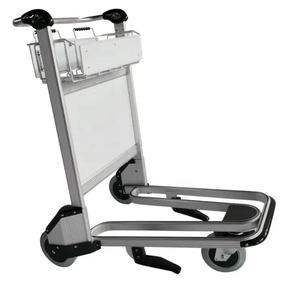
Airport Passenger Trolley Hand Brake Aluminum Alloy Cart
- ✔ High-Grade Aluminum Alloy Frame
- ✔ Automatic Deadman Hand Brake
- ✔ Load Capacity: 250kg / Nesting Space: 270mm
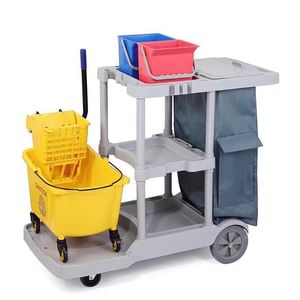
Factory Direct Wholesale 3-Tier Plastic Cleaning Trolley Janitorial Cart for Airport Terminal Cleaning Service
- ✔ Ultra-Quiet Non-Marking Castors
- ✔ High-Impact PP Material Construction
- ✔ Integrated Waste Bag & Tool Organizers
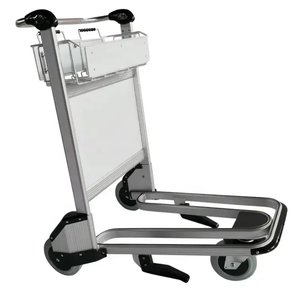
Airport Luggage Handcart Aluminum Alloy Trolley
- ✔ Corrosion-Resistant Anodized Finish
- ✔ Ergonomic Push-Handle Architecture
- ✔ Basket Capacity: 200kg + Top Handbag Tray
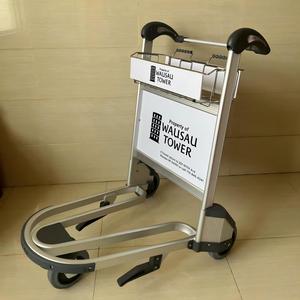
Airport Passenger Trolley Airport Luggage Cart for Departure Hall - Corrosion-resistant Frame
- ✔ All-Weather Stainless Steel / Alloy Frame
- ✔ Self-Adjusting Brake Pad System
- ✔ Heavy-Duty Front Swivel Castors
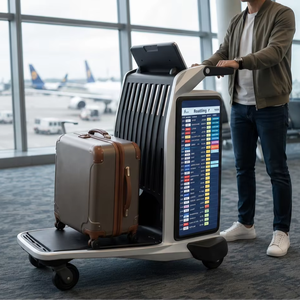
Intelligent Airport Baggage Cart with AI Navigation & Advertising Functions
- ✔ Autonomous Following & GPS Geofencing
- ✔ HD Digital Media Advertising Screen
- ✔ Real-Time Fleet Telemetry & Auto-Return
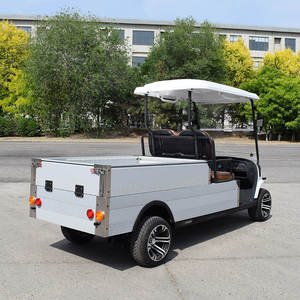
Luxury Powerful Efficient Reliable Versatile Professional Grade Airport Electric Golf Cart
- ✔ 48V AC Brushless Motor Powertrain
- ✔ Seating Capacity: 2 - 14 Passengers
- ✔ LiFePO4 Lithium Battery with Rapid Charge
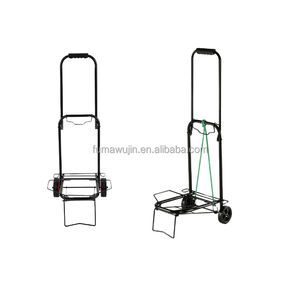
Professional Manufacturer Light Weight Barrow Airport Luggage Cart Outdoor Truck Cart
- ✔ Reinforced Tubular Steel / Alloy Skeleton
- ✔ All-Terrain Pneumatic Rear Wheels
- ✔ Ideal for Heavy Freight & Apron Transfer
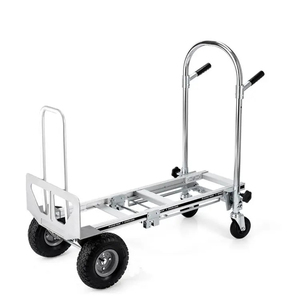
Multi-Function Foldable Trolley Luggage Trolley with Handle Convenient for Airport and Hotel Use
- ✔ Compact Collapsible Space-Saving Design
- ✔ Heavy-Duty Telescopic Handle Mechanism
- ✔ Dual-Purpose Airport & Hotel Porter Duty
Direct-Factory OEM/ODM Authority in Airport Mobility
Backed by decades of industrial manufacturing, state-of-the-art robotic welding, metallurgical innovation, and rigorous international quality compliance.
Advanced Aluminum Alloy 6063-T6 Metallurgy
Our passenger trolleys utilize aircraft-grade extruded aluminum alloy (6063-T6) treated with anodized oxidation. This offers a superior strength-to-weight ratio, ensuring each 19kg trolley can easily handle static loads exceeding 250kg while resisting scratching and chemical oxidation from terminal floor detergents.
Patented Self-Adjusting Deadman Brake Mechanics
Safety on terminal escalators and inclines is non-negotiable. Our internal self-adjusting rod linkage brake automatically locks the rear wheels when the handle is released. Engineered with high-friction rubber pads, our braking systems maintain holding efficiency over 500,000 continuous push-release cycles without manual adjustment.
Ultra-Quiet Polyurethane Castor Engineering
Terminal acoustic control directly influences passenger comfort metrics. We design non-marking thermoplastic polyurethane (TPU) and high-elasticity rubber wheels equipped with precision-sealed stainless steel ball bearings. Operational ambient noise levels remain below 48 dB, eliminating floor vibration and wheel flutter.
Space-Optimized Nesting Design
Floor space in arrival and departure zones commands high commercial value. Our luggage trolleys feature an engineered tapering profile allowing tight nesting with a pitch as low as 270mm per unit. A row of 100 trolleys requires under 28 meters of length, saving up to 35% more space than standard market designs.
Integrated Advertising Monetization Panels
Airport authorities and terminal concessionaires can maximize ad revenue via integrated front, side, and basket panel mounts. Made from high-impact PC or tempered acrylic, our frame panels support static print wraps or smart LED digital media interfaces engineered for rapid graphic replacement.
Complete Fleet Electrification & Utility Vehicles
Beyond manual handcarts, our manufacturing facility produces heavy-duty 2 to 14-seater electric passenger golf buggies, resort shuttles, and motorized cargo tugs. Powered by high-efficiency AC powertrains and BMS-managed LiFePO4 batteries, our electric fleets bridge the gap between terminal transport and airside logistics.
Industry White-Paper: Future Trends in Airport Cart Procurement & Technology
An authoritative analysis on how smart airport ecosystems, total cost of ownership (TCO) metrics, and green sustainability directives are reshaping global aviation ground support equipment (GSE).
1. The Shift from Initial Capital Expenditure (CAPEX) to TCO Optimization
Historically, airport procurement teams evaluated luggage trolley bids primarily on initial unit cost. However, high-volume hubs handling upwards of 30 million passengers annually are discovering that maintenance, castor replacement, brake recalibration, and premature frame corrosion account for over 65% of the total life-cycle expense over a 10-year period.
Modern airport procurement specs now demand structural durability guarantees backed by finite element analysis (FEA) testing. Premium aluminum alloys (6063-T6) and 304 stainless steel frameworks are systematically replacing low-grade chrome-plated mild steels. By investing in corrosion-proof materials and self-adjusting mechanical brake systems, terminal operators reduce ongoing labor costs, eliminate unexpected wheel lock-ups, and extend equipment operational lifespans from 3 years to over 8–12 years.
2. Autonomous Navigation, IoT Fleet Tracking & AI Retrieval Systems
The global aviation sector is rapidly adopting Industry 4.0 automation to combat labor shortages and operational bottlenecks. Traditional manual collection of scattered luggage carts across multi-level parking structures and arrival concourses requires extensive manpower and causes terminal congestion.
- IoT Geofencing & Telemetry: Next-generation airport carts are integrated with BLE (Bluetooth Low Energy) and RFID tracking chips. Terminal management software monitors cart density in real time, alerting ground crews when departure zones drop below baseline inventory thresholds.
- AI Autonomous Following Carts: Robotic passenger carts equipped with LiDAR, ultrasonic obstacle avoidance, and visual SLAM (Simultaneous Localization and Mapping) permit elderly passengers or families to transport heavy luggage hands-free. These smart units automatically navigate terminal checkpoints and return to automated docking hubs after use.
- Motorized Electric Retrieval Tugs: To streamline cart collection, specialized motorized tugs capable of hauling strings of 50 to 80 nested trolleys on ramps are becoming mandatory GSE assets for Tier-1 international hubs.
3. Green Terminal Directives & Circular Economy Manufacturing
In accordance with IATA's net-zero carbon initiatives and global ESG compliance frameworks, airport authorities are auditing the carbon footprint of their entire vendor supply chain. Equipment manufacturers must demonstrate sustainable material sourcing, low-VOC manufacturing processes, and 100% recyclability at end-of-life.
Our manufacturing facility leads this green transformation by utilizing 100% recyclable aluminum alloys, solvent-free electrostatic powder coating lines, and solar-assisted manufacturing processes. Furthermore, our electric service buggies utilize non-hazardous Lithium Iron Phosphate (LiFePO4) chemistry, providing 3,500+ charge cycles without toxic heavy-metal contamination.
4. Technical Specification & Performance Matrix
To assist airport procurement officers, project engineers, and GSE fleet directors in making data-driven purchasing decisions, the following table compares key technical parameters across major airport cart platforms:
| Cart Type / Category | Primary Material | Brake Technology | Load Capacity | Nesting Pitch | Target Duty Cycle |
|---|---|---|---|---|---|
| Aluminum Passenger Trolley | Aluminum Alloy 6063-T6 | Automatic Deadman Pressure Brake | 250 kg | 270 mm | High-Density Passenger Departure & Arrival Halls |
| Stainless Steel Express Cart | AISI 304 Stainless Steel | Linkage Rod Rear Brake | 300 kg | 290 mm | Heavy Luggage & Outdoor Apron Operations |
| Smart AI Autonomous Cart | Alloy Chassis + ABS Shell | Electromagnetic Dynamic Brake | 150 kg | N/A (Auto-Dock) | VIP Lounges & Assisted Passenger Terminals |
| Janitorial Service Cart | High-Impact Polypropylene | Dual Foot-Pedal Wheel Locks | 120 kg | N/A | Terminal Cleaning & Housekeeping Duty |
| Electric Passenger Buggy | Welded Steel / Aluminum Monocoque | 4-Wheel Hydraulic Disc + Regenerative | 800–1500 kg | N/A | Long-Distance Gate Transport & VIP Shuttle |
Frequently Asked Questions (FAQ) for B2B Procurement
Detailed technical and commercial answers for airport managers, GSE distributors, and international procurement agencies.
Our standard Minimum Order Quantity (MOQ) for custom-branded aluminum airport passenger trolleys is 100 units. For standard stock configurations, smaller trial shipments starting at 50 units can be accommodated. Lead times typically range from 20 to 30 calendar days for a full 40ft High Cube container (approx. 120–140 nested trolleys depending on the specific frame model).
Airport trolleys are shipped semi-knocked-down (SKD) or fully nested in custom steel crates to protect handles, brake rods, and baskets during ocean transit. By nesting the main frames and packing baskets and castors in specialized stackable cartons, we optimize volume efficiency, lowering shipping cost per unit by up to 30% for international buyers.
Yes. We offer complete OEM/ODM customization. You can specify exact RAL powder-coating colors, customized laser-engraved airport logos on handle bars, customized plastic basket dimensions, and bespoke ad-panel frame sizing (A3, A4, or custom dimensions) constructed from UV-resistant PC or acrylic materials.
Our manufacturing plant operates under ISO 9001:2015 (Quality Management) and ISO 14001:2015 (Environmental Management) certifications. Our passenger trolley lines comply with European Standard EN 1929-1 and EN 1929-2 for shopping and luggage transport carts, as well as CE compliance for automated/electric mobility models.
Our deadman braking system is engineered with high-tension internal steel springs and wear-resistant rubber contact pads that engage directly against the rear castors when the passenger handle is released. The system is tested to securely hold a fully loaded trolley (250 kg) on ramp slopes up to 15 degrees without slipping.
We provide a comprehensive 3-year structural warranty on aluminum and stainless steel chassis frames and a 1-year warranty on wearable items (castors, rubber bumpers, brake pads). We supply dedicated spare-part kits with every bulk order, containing replacement bearings, castor assemblies, and brake pads to ensure zero operational downtime.
Aluminum alloy trolleys are roughly 25% to 30% lighter than stainless steel counterparts (approx. 18–20 kg vs. 26–28 kg). This lower weight makes them significantly easier for passengers to maneuver and reduces physical strain on terminal collection staff. Aluminum anodization also provides exceptional resistance to oxidation without the risk of surface rust found on low-grade steels.
Our castors feature dual precision ball bearings encased within dust-sealed aluminum or nylon hubs. The outer tread uses high-grade polyurethane (PU) with aShore A durometer rating optimized to absorb impact on expansion joints, concrete pavers, and asphalt parking zones without tearing or flat-spotting.
Partner with China's Premier Airport Cart Factory
Streamline your terminal operations, upgrade passenger mobility experience, and reduce total cost of ownership with custom-engineered GSE solutions.
Get a Quote