Featured Utility Buggy & Electric Cart Platforms
Direct-from-factory commercial solutions engineered for resort hospitality, golf courses, industrial campuses, and off-road transport.
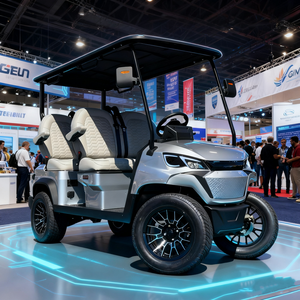
72V EEC Certified Electric Golf Buggy with 5KW 7.5KW High Power Motor
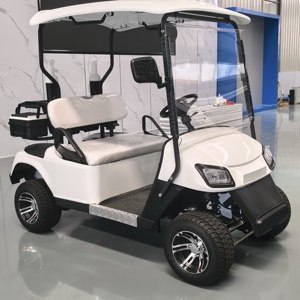
New Electric Off-Road Golf Cart Buggy 3-4 Seats Steel 60V 5KW CE Certified
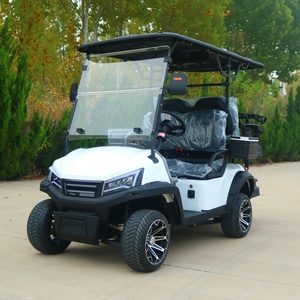
Street Legal 4WD Electric Golf Cart 60/72V Lithium 6-Seater Sightseeing Cart
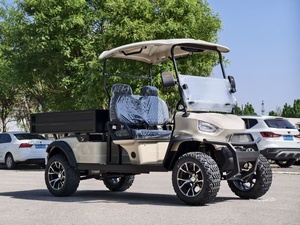
2 Seater Electric Golf Buggy Off Road Sporty Lifted Cart for Farm & Beach
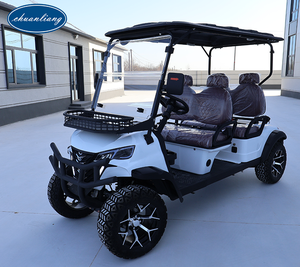
Customized 4 Seater Electric Golf Buggy Lithium Powered for Resort & Community
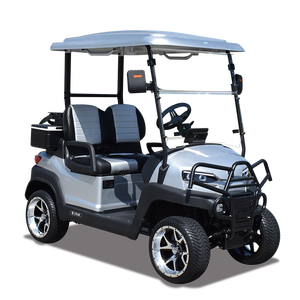
4 Wheel Electric Golf Cart 2 Seat Lithium Buggy with Integrated Speakers & Lights
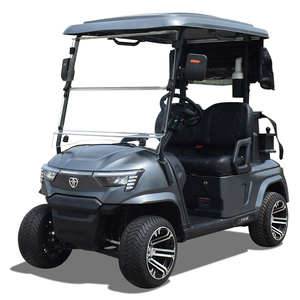
Customizable 2-Seater Electric Utility Golf Cart with Rear Cargo Box
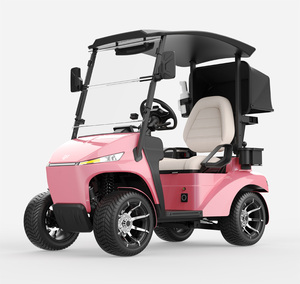
Single-Seat Quick-Charge Electric Golf Cart CE Certified Compact Utility Vehicle
Executive Procurement Overview: Sourcing Chinese Electric Utility Buggies
The global transition toward zero-emission low-speed vehicles (LSVs) and commercial utility buggies has fundamentally altered procurement strategies across hospitality, logistics, municipal services, and agricultural sectors. As global fleet operators seek high-durability, cost-effective vehicles, China wholesale utility buggy manufacturers & factories have consolidated their position as primary innovators and supply chain leaders. Modern Chinese manufacturing hubs leverage advanced automated welding, robotic dip galvanizing, and integrated lithium-ion battery management systems (BMS) to produce utility carts that comply with European Union EEC (L6e/L7e) standards, US DOT regulations, and international CE quality frameworks.
This technical whitepaper delivers an exhaustive analysis of electric utility cart architecture, powertrain advancements, total cost of ownership (TCO) benchmarks, future procurement trends, and OEM customization capabilities. It serves as an authoritative evaluation guide for enterprise procurement directors, resort mobility managers, industrial facility operators, and commercial distributors.
Key Takeaway for B2B Purchasing Officers: Procurement decisions must extend beyond upfront unit cost. Evaluating structural frame anti-corrosion treatments, AC motor continuous vs peak wattage ratings, BMS balancing algorithms, and container cubic space utilization is essential for reducing 5-year operational expenditure (OpEx).
Structural Engineering & Chassis Integrity Standards
The operational lifespan of a commercial utility buggy deployed in harsh coastal resorts, high-humidity agricultural farms, or heavy industrial plants is dictated by frame geometry and metallurgical protection. Premium Chinese OEMs have phased out traditional painted mild steel frames in favor of high-tensile hot-dip galvanized steel tubular chassis and monocoque aluminum alloy structures.
1. Corrosion Resistance & Galvanization Science
In environments with high salinity (coastal hotels, beach venues) or exposure to chemical fertilizers (agricultural estates, golf courses), non-galvanized frames experience structural degradation within 24 to 36 months. High-end Chinese manufacturing facilities utilize an 8-stage immersion dipping process:
- Alkaline Degreasing & Acid Pickling: Removes mill scale, oils, and oxides from tubular steel joints.
- Flux Application & Molten Zinc Dipping: Immersion in 450°C molten zinc bonds a protective zinc-iron alloy layer inside and outside every structural tube.
- Electrostatic Powder Coating: A secondary UV-resistant thermosetting epoxy coat provides dual-layer defense against mechanical abrasion and atmospheric oxidation.
2. Suspension Geometry & Load Distribution
Utility carts require dynamic suspension engineering to manage varied payloads—from light passenger transport to carrying 500kg+ cargo loads over uneven terrain. Modern utility buggies feature Independent Double A-Arm Hydraulic Front Suspension combined with leaf-spring or coil-over shock rear axles. This geometry maintains tire contact patch integrity, prevents rollover risks on gradients up to 30%, and minimizes driver fatigue during multi-shift operations.
Powertrain Breakthroughs: 72V/60V AC Motors vs. Legacy DC Systems
The low-speed vehicle industry has undergone a technological shift from brushed DC motors to brushless AC (Alternating Current) induction motors and Permanent Magnet Synchronous Motors (PMSM). Chinese manufacturing leaders now standardize high-efficiency AC powertrains across 48V, 60V, and 72V platforms.
| Architecture Feature | Legacy 48V Brushed DC System | Modern 60V/72V AC Brushless System | Impact on Enterprise Fleet Operations |
|---|---|---|---|
| Energy Efficiency | 70% - 78% Conversion Efficiency | 90% - 95% Conversion Efficiency | Extends single-charge range by 18-25% under full load. |
| Maintenance Requirements | High (Carbon brush replacement every 12 mos) | Zero Maintenance (Sealed IP67 Housing) | Eliminates drivetrain downtime & routine motor servicing. |
| Torque on Gradients | Torque drops significantly under load/hills | Flat torque curve; instant peak power output | Seamlessly climbs 25%-30% inclines without overheating. |
| Regenerative Braking | Basic or Non-existent | Advanced Multi-Stage AC Regenerative Braking | Recovers 10-15% kinetic energy; reduces brake pad wear by 60%. |
Battery Chemistry Evolution: LiFePO4 vs. Flooded Lead-Acid
Battery technology represents 30% to 40% of the total vehicle bill of materials (BOM). When purchasing from China wholesale manufacturers, enterprise buyers must select between traditional deep-cycle flooded/AGM lead-acid batteries and advanced Lithium Iron Phosphate (LiFePO4) packs.
Lithium Iron Phosphate (LiFePO4) Advantage
While lead-acid options remain popular for low-capital budget orders, LiFePO4 chemistry has become the industry standard for high-duty commercial fleets due to the following operational benefits:
- Cycle Life Superiority: LiFePO4 delivers 3,500 to 5,000 charge cycles at 80% Depth of Discharge (DoD), compared to 600–800 cycles for lead-acid batteries.
- Weight Reduction & Payload Expansion: A 72V 100Ah LiFePO4 pack weighs approximately 45kg, whereas an equivalent lead-acid bank weighs upwards of 180kg. This 135kg reduction directly increases usable cargo payload capacity and reduces suspension wear.
- Opportunity Fast Charging: Lithium packs support 0.5C to 1C rapid charging, enabling full recharges in 1.5 to 2.5 hours. Operations can execute opportunity charges during meal breaks, enabling continuous 24/7 multi-shift utilization.
- Integrated Smart BMS: Modern Chinese buggies incorporate CAN-bus integrated Battery Management Systems that actively monitor cell voltage, temperature, balance state, and current draw. The BMS communicates directly with the motor controller to prevent thermal runaway, over-discharge, and short-circuit faults.
Global Industry Development Trends (2025–2030)
To stay competitive, China’s tier-1 utility cart factories are integrating advanced technology trends to meet strict international standards and environmental mandates:
1. Photovoltaic Solar Canopy Integration
Monocrystalline flexible solar panels embedded into cart hardtop canopies provide 200W–400W continuous trickling charge during daylight. This solar supplement adds 10–15km of daily operational range, reduces grid power draw, and extends total battery pack lifespan by maintaining higher average state-of-charge (SoC).
2. IoT Fleet Telematics & Remote Diagnostics
Commercial fleets are adopting 4G/GPS telematics modules integrated into cart controllers. Fleet managers can monitor real-time vehicle location, battery health, speed limits, geofencing breaches, and driver performance via centralized cloud dashboards, enabling proactive maintenance scheduling.
3. Street-Legal Certification Frameworks
Demand is surging for utility carts certified under European EEC (L6e/L7e) regulations and US DOT Low-Speed Vehicle (LSV) guidelines. Features like three-point seatbelts, LED headlights/turn signals, hydraulic disc brakes, laminated safety glass windshields, and VIN numbers enable operation on public roads with speed limits up to 45km/h.
4. Modular Cargo & Seating Layouts
OEM factories are standardizing modular rear chassis designs. A single base vehicle can switch between a 4-passenger flip-seat setup, an extended aluminum cargo box, a hydraulic tipping bed, or housekeeping trash collection modules, maximizing fleet versatility.
Enterprise Advantage & Factory OEM/ODM Capabilities
Sourcing directly from established Chinese manufacturers provides significant strategic advantages over buying through regional intermediaries. Leading manufacturing facilities offer comprehensive OEM/ODM engineering customization tailored to specific client duty cycles:
1. Automated Quality Assurance & Testing Rigor
Premier factories operate dedicated testing facilities where every utility cart undergoes strict quality checkpoints before container loading:
- 30% Gradient Hill Climb Testing: Verifies parking brake hold capability and continuous motor torque under 100% rated payload.
- Water Ingress Rain Booth Testing: Exposes the vehicle, wire harness connectors, and electrical enclosure to high-pressure water spray to ensure IP65/IP67 weatherproofing.
- Dynamic Suspension Vibration Rigs: Simulates rough off-road terrain to identify structural stress points and fast-track quality verification.
2. Optimized Container Logistics & KD/SKD Shipping
International freight costs require optimized container packing. Top factories offer Complete Knock-Down (CKD) and Semi-Knock-Down (SKD) packing options. By disassembling canopies, windshields, and wheels into custom steel shipping frames, a 40ft High Cube (HQ) container can transport up to 12-18 units (SKD) compared to only 4-6 fully assembled units (CBU), reducing per-unit ocean freight costs by up to 65%.
Frequently Asked Procurement Questions
Answers to common operational, technical, and importing questions from enterprise buyers and fleet managers.
Partner with China's Premier Utility Buggy Manufacturer
Whether expanding a resort passenger fleet, outfitting an industrial warehouse facility, or establishing local dealership distribution, our engineering team is ready to deliver tailored OEM/ODM solutions.
Send an Inquiry