1. The Architecture of Commercial OEM Cargo Mobility
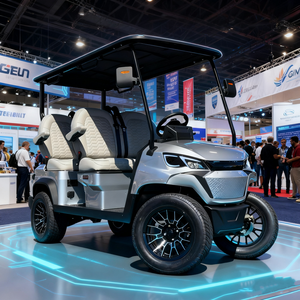
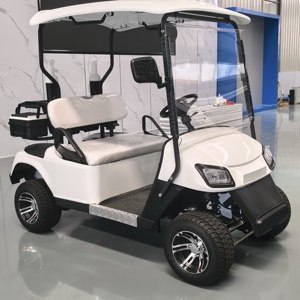
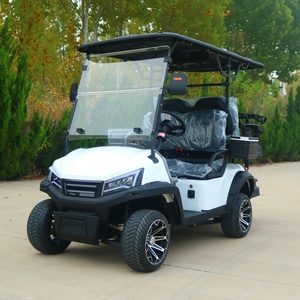
As modern industrial complexes, luxury eco-resorts, international airports, and logistics hubs transition toward zero-emission operational infrastructure, the market demand for robust, highly adaptable zero-emission utility buggies has surged. Standard passenger golf carts modified with light-duty rear baskets frequently suffer structural fatigue, axle collapse, and motor overheating when subjected to rigorous continuous operations. A true commercial-grade industrial utility vehicle requires dedicated structural engineering built from the ground up.
As leading custom OEM cargo buggy suppliers and exporters, our manufacturing methodology prioritizes finite element analysis (FEA) optimized hot-dip galvanized steel chassis structures, high-efficiency brushless AC powertrains (ranging from 5kW to 7.5kW continuous duty ratings), and customized heavy-duty leaf spring suspensions coupled with hydraulic shock absorbers. By addressing the critical physics of low-speed high-torque transport—such as payload distribution dynamics, thermal dissipation under full gross vehicle weight rating (GVWR), and battery balance optimization—we ensure enterprise operators minimize total cost of ownership (TCO) while maximizing vehicle uptime.
Hot-Dip Galvanized Chassis
Marine-grade anti-corrosion treatment preventing rust formation under acidic, coastal, humid, or chemically harsh environment conditions.
LiFePO4 & Smart BMS Integration
Automotive-grade lithium iron phosphate packs featuring intelligent cell-level balancing, thermal management, and rapid charging support.
High-Efficiency AC Drivetrains
Sealed 48V/60V/72V AC induction motors delivering exceptional gradeability (up to 30%), zero maintenance brushes, and regenerative braking.
2. Modular Rear-Deck Configurations & Custom OEM Design Options
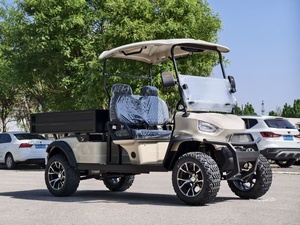
No two enterprise logistics workflows are identical. A resort housekeeping fleet requires multi-tiered lockable storage boxes; a municipality demands hydraulic side-tipping dump bodies for green waste collection; while agricultural operations require heavy-duty aluminum flatbeds with fold-down side rails. Our OEM/ODM design engineering program empowers commercial procurement managers to customize every dimension of the vehicle payload zone.
| Payload Deck Type | Primary Industrial Application | Structural Material options | Recommended Voltage / Motor | Typical Load Rating |
|---|---|---|---|---|
| Hydraulic Tipping Cargo Bed | Municipal Waste, Landscape & Earth Moving | Q235 Powder-Coated Steel / Aluminum | 72V AC / 7.5kW Heavy-Torque | 800 KG – 1,200 KG |
| Enclosed Lockable Parcel Box | Last-Mile Logistics, Postal & Airport Baggage | Insulated Composite / Stainless Steel | 60V or 72V AC / 5kW Motor | 500 KG – 800 KG |
| Housekeeping & Linen Service Body | Hotels, Luxury Resorts & Hospital Laundries | Lightweight Anodized Aluminum Alloy | 48V or 60V AC / 4kW-5kW Motor | 400 KG – 600 KG |
| Flatbed with Fold-Down Sides | Factory In-Plant Logistics & Construction Sites | Chequered Steel Plate / Reinforced Frame | 72V AC / 5kW or 7.5kW Motor | 600 KG – 1,500 KG |
| Refrigerated Cargo Container | Cold-Chain Food Catering & Medical Supplies | Thermal Polyurethane Sandwich Panels | 72V High-Density LiFePO4 / 7.5kW | 400 KG – 700 KG |
Beyond physical bed geometries, our OEM production line integrates tailored electrical options including 12V auxiliary power step-down converters for work lights, warning beacons, custom company liveries, hydraulic lift kits, and off-road pneumatic tires designed for rugged multi-terrain duty.
3. Future Procurement & Engineering Trends in Commercial Utility Mobility
As global fleet managers evaluate capital investments over a 5 to 10-year lifecycle, understanding emerging technological shifts in low-speed utility vehicles (LSVs) is crucial for avoiding rapid obsolescence. Procurement decisions are no longer dictated solely by initial acquisition price, but by energy efficiency, modular flexibility, telematics capability, and compliance with rigorous international safety benchmarks.
1. LiFePO4 Dominance & TCO Reduction
Traditional deep-cycle lead-acid batteries are rapidly being phased out due to high maintenance requirements (distilled water topping), heavy curb weight, and limited cycle life (500–800 cycles). Automotive-grade LiFePO4 packs deliver over 3,500 cycles at 80% Depth of Discharge (DoD), reduce total vehicle weight by up to 35%, and support opportunity fast-charging during shift changes, slashing lifetime TCO by up to 45%.
2. IoT Telematics & Smart Fleet Monitoring
Modern commercial cargo buggies are becoming integrated endpoints within enterprise asset management software. Next-generation OEM builds incorporate CAN-bus GPS gateways, automated remote diagnostic reporting, driver authentication via RFID, real-time State of Charge (SoC) tracking, and geofencing capabilities to prevent unauthorized off-site vehicle usage.
3. Roof Photovoltaic (PV) Solar Hybrid Charging
Incorporating monocrystalline solar panels directly into the buggy canopy provides supplementary trickle charging during daytime operations. In high-solar-irradiance regions (such as the Middle East, Southeast Asia, and Australia), integrated roof solar systems extend real-world daily operating range by 15 km to 25 km, significantly extending main grid charge intervals.
4. Global Safety & Homologation Standards
International buyers increasingly demand EEC (European Economic Community) street-legal certification and CE safety compliance. Key requirements include hydraulic 4-wheel disc braking systems, DOT-approved tempered safety glass windshields, LED road-legal illumination (high/low beams, indicators, brake lights), three-point seatbelts, and digital speedometer displays.
Why Enterprise Buyers Partner with Us as Their OEM Exporter
With decades of specialized manufacturing expertise in zero-emission low-speed transport, we serve as a trusted direct-factory manufacturing partner for distributors, fleet operators, and industrial clients worldwide.
End-to-End Manufacturing
In-house robotic welding, chassis galvanization, precision body stamping, and automated paint lines ensure strict quality control at every stage.
Rigorous Factory Testing
Every vehicle undergoes full-load slope climbing tests, salt spray chassis corrosion testing, water-ingress sealing checks, and electronic diagnostics prior to export container loading.
Export & Packing Efficiency
Engineered SKD/CKD container packaging allows maximized shipping density, fitting up to 6–8 units per 40ft High Cube container to minimize international freight overheads.
4. Frequently Asked Questions (FAQ) for OEM Cargo Buggy Procurement
Direct responses to key technical, logistical, and customization questions raised by enterprise procurement teams during OEM order specification.