Featured Industrial Cargo & Utility Vehicle Fleet
Explore our heavy-duty, customizable electric utility vehicles engineered with hot-dip galvanised steel chassis, advanced AC powertrains, and flexible LiFePO4 battery modules.
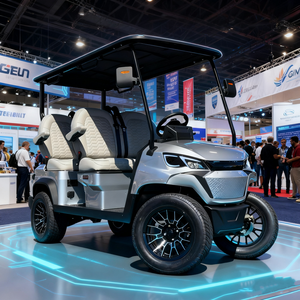
72V EEC Certified Electric Golf Buggy with 5KW/7.5KW High Power Motor
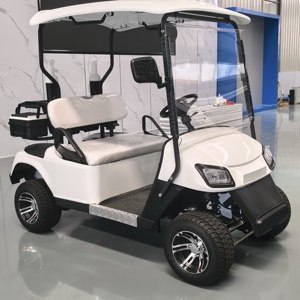
New Electric Off-Road Golf Cart Buggy 3-4 Seats Steel 60V 5KW
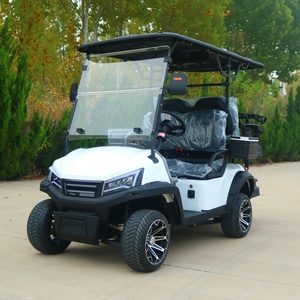
Street Legal 4WD Electric Golf Cart 60/72V Lithium 6-Seater
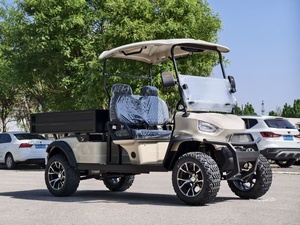
2 Seater Electric Golf Buggy Off-Road Sporty Lifted Cart
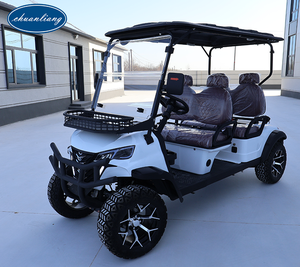
Professional Customized 4 Seater Lithium Powered Golf Buggy
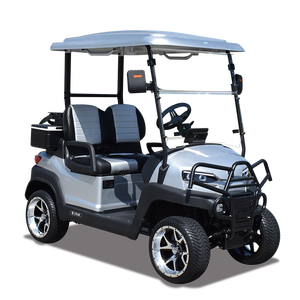
4 Wheel Electric Utility Cart 2 Seat Lithium Buggy with LED/Audio
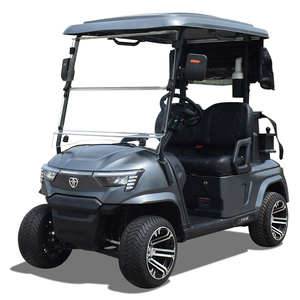
Customizable 2-Seater Electric Utility Cargo Cart with Aluminum Bed
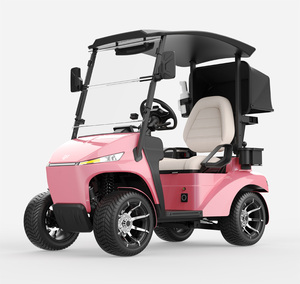
Single-Seat Quick-Charge Electric Utility Cart CE Certified
Heavy Cargo Transport Engineered for Scale
Proven performance parameters validated across global industrial parks, hospitality resorts, and enterprise intralogistics networks.
Engineering Architecture of Custom OEM Cargo Carts
Understanding the mechanical, structural, and electrical design considerations that separate consumer buggies from heavy-duty industrial utility carts.
In modern industrial and commercial operations, off-the-shelf utility vehicles frequently fail under intense multi-shift stress. As specialized Custom OEM Cargo Cart Manufacturers, enterprise fleet engineering starts from the ground up—re-evaluating chassis flex, thermal management of AC drivetrains, and dynamic axle loading under max capacity conditions.
Industrial intralogistics demands tailored transport solutions. Whether moving heavy luggage across expansive 5-star coastal resorts, delivering maintenance tools across airport aprons, or transferring raw materials inside sprawling manufacturing complexes, standard golf carts lack the structural yield strength required for daily operational punishment.
1. Structural Chassis Metallurgy & Anti-Corrosion Standards
The foundation of any commercial cargo cart lies in its structural frame design. Conventional low-speed vehicles (LSVs) rely on lightweight electro-coated steel or basic aluminum angles that crack under dynamic load torsions over uneven paths. OEM cargo cart manufacturing utilizes automotive-grade carbon steel tubing, fully welded via robotic MIG processes, followed by a full immersion hot-dip galvanisation process inside and outside the frame tubes.
This metallurgical treatment guarantees a zinc barrier coating exceeding 85 microns, providing 15+ years of active protection against salt air in coastal resorts, chemical exposure in manufacturing facilities, and moisture build-up in high-humidity climates. For specialized cleanroom or pharmaceutical environments, marine-grade 304/316 stainless steel chassis options are fully integrated into our custom production lines.
2. Powertrain Engineering: High-Torque AC vs. Brushless DC
Payload capacity is directly limited by motor heat dissipation and low-end torque curves. While legacy buggies used brushed DC motors prone to carbon brush degradation and thermal runaway on steep gradients, modern OEM cargo utility platforms feature sealed 48V to 72V Brushless AC Induction or Permanent Magnet Synchronous Motors (PMSM).
- Thermal Efficiency: IP67-rated sealed motor enclosures dissipate heat effectively during low-speed, high-load hill climbs (up to 25% inclines fully loaded).
- Regenerative Braking Systems: Intelligent motor controllers recover dynamic braking energy on downhill descents, feeding up to 15% charge back into the traction battery while drastically reducing friction brake shoe wear.
- Programmable Torque Profiles: Acceleration curves, speed governors (capped at 25 km/h for safety compliance or un-governed up to 45 km/h), and anti-rollback hill-start assistance are customizable via CAN-bus programming interfaces.
Core Customization Capabilities for Procurement Managers
Modular vehicle design allows enterprise buyers to specify exact dimensional, electrical, and structural configurations to match precise facility requirements.
Custom Cargo Beds & Tipping Boxes
Choose from hydraulic tipping dump beds, drop-side aluminum cargo boxes, insulated food/beverage modules, or enclosed housekeeping lockable cabinets engineered to exact volumetric specifications.
LiFePO4 Battery Integration
Transition from maintenance-heavy flooded lead-acid to zero-maintenance Lithium Iron Phosphate (LiFePO4) packs featuring active BMS telemetry, 3,500+ charge cycles, and sub-2-hour fast charging.
Solar-Hybrid Roof Technology
Integrate high-efficiency monocrystalline solar panels directly into the vehicle roof canopy to provide active trickling charge, extending shift operating range by 15–25 km per daylight cycle.
Global Industry Trends & Future Sourcing Paradigms (2025–2030)
A analytical outlook on how ESG mandates, total cost of ownership (TCO) models, and smart telematics are transforming industrial fleet acquisition.
The global market for electric utility carts and cargo buggies is undergoing a massive structural pivot. Enterprise buyers are shifting focus from initial capital expenditure (CapEx) toward holistic Total Cost of Ownership (TCO) calculations over a 5 to 7-year vehicle lifecycle.
Trend 1: Accelerated Shift to LiFePO4 Chemistry
While flooded lead-acid batteries held a historical pricing advantage, the total cost per operational cycle strongly favors Lithium Iron Phosphate (LiFePO4). Lead-acid packs require continuous distilled water top-ups, specialized acid-resistant charging rooms, and suffer from voltage drop (sags under load) when capacity drops below 50%. LiFePO4 batteries maintain stable terminal voltage across 90% of their discharge curve, tolerate opportunity charging during shift lunch breaks, and eliminate toxic off-gassing entirely.
Trend 2: Integrated Fleet IoT Telematics & CAN-Bus Analytics
Modern OEM cargo cart manufacturing increasingly incorporates 4G/5G IoT telematics modules directly wired into the vehicle controller. Fleet directors can now remotely monitor battery state-of-health (SoH), real-time GPS positioning, driver behavior alerts (sudden braking/impacts), payload utilization metrics, and geofencing boundaries from a single cloud dashboard. This connectivity allows predictive maintenance scheduling before component failures occur on-site.
Trend 3: Strict Environmental, Social, and Governance (ESG) Compliance
Corporate ESG mandates require institutional properties, luxury hotel groups, and multinational manufacturing hubs to systematically eliminate internal combustion engine (ICE) utility vehicles. Transitioning to zero-emission electric cargo buggies backed by solar-assisted charging directly contributes to Scope 1 carbon footprint reduction targets required for ISO 14001 sustainability audits.
Technical Comparison of OEM Utility Platforms
Evaluate technical specifications across our custom manufacturing platforms to align battery sizing, motor output, and payload ratings with your operating environment.
| Platform Category | Payload Rating | Motor Specification | Battery Chem Options | Top Speed Range | Recommended Application |
|---|---|---|---|---|---|
| Light Utility Cargo Cart | 350 kg – 500 kg | 48V 4.0kW AC Sealed | 48V 100Ah Lead / LiFePO4 | 20 – 30 km/h | Golf course maintenance, light housekeeping |
| Heavy-Duty Industrial Mule | 600 kg – 1,000 kg | 60V / 72V 5.0kW – 7.5kW AC | 72V 150Ah – 200Ah LiFePO4 | 25 – 40 km/h | Manufacturing plants, warehouse intralogistics |
| Off-Road Lifted Utility Buggy | 400 kg – 600 kg | 60V 5.0kW High Torque AC | 60V 105Ah LiFePO4 | 30 – 45 km/h | Farmhouses, construction sites, beach resorts |
| Enclosed Luggage & Shuttle Buggy | 800 kg (8 Passengers / Cargo) | 72V 7.5kW Heavy Duty AC | 72V 210Ah Lithium Battery | 25 – 35 km/h | Airport aprons, luxury hotel luggage transfer |
Frequently Asked Technical & Sourcing Questions
Detailed answers prepared by senior enterprise engineers to resolve common technical, logistical, and customization questions.
Why Enterprise Procurement Teams Partner With Us
Combining rigorous automotive engineering, scalable manufacturing infrastructure, and dependable global spare-parts support.
100% Quality Audited Assembly
Every vehicle undergoes 50+ inspection checkpoints, including high-pressure water tightness testing, dynamic chassis torque checks, brake distance validation, and full load climbing tests prior to container loading.
Global Spare Parts Program
We maintain a standardized inventory of wear-and-tear components—including brake pads, suspension bushes, steering racks, controllers, and wiring looms—available for rapid global dispatch to minimize vehicle downtime.
Direct Engineering Consultation
Work directly with experienced electro-mechanical engineers during the preliminary procurement phase to calculate exact torque requirements, battery pack sizing, and custom deck drawings for your site setup.