High-Performance Electric Utility & Passenger Haulers
Engineered for hospitality resorts, industrial logistics loops, municipal facilities, and commercial golf operations worldwide.
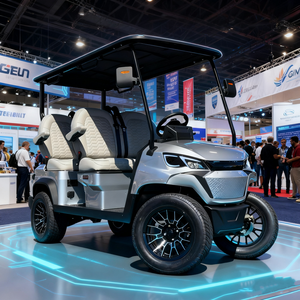 72V High-Power
72V EEC Certified Electric Golf Buggy with 5KW/7.5KW High Power Motor
- System Voltage: 72V AC Powertrain
- Motor Output: 5.0kW - 7.5kW Peak
- Frame Structure: High-Tensile Steel
- Certification: EEC Road Legal
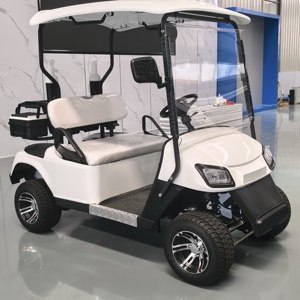 Off-Road Duty
New Electric Off-Road Golf Cart Buggy 3-4 Seats Steel 60V 5KW CE Certified
- System Voltage: 60V High Density
- Seating Capacity: 3-4 Passengers
- Motor Rating: 5000W AC Brushless
- Certification: CE Standards
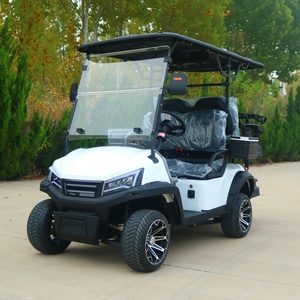 4WD All-Terrain
Street Legal 4WD Electric Golf Cart 60/72V Lithium 6-Seater Sightseeing Club Car
- Drive Type: Full-Time 4WD
- Battery Pack: LiFePO4 Lithium
- Seating: 6-Person Capacity
- Motor: 5000W Dual Controller
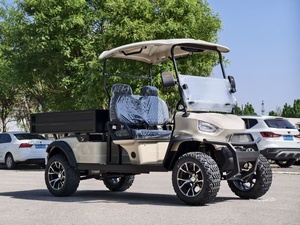 Lifted Utility
2 Seater Electric Golf Buggy Off Road Sporty Lifted Cart for Farm & Beach
- Ground Clearance: 220mm Lifted
- Seating: 2-Seater Sport
- Application: Farm, Beach & Trail
- Tires: All-Terrain Knobby
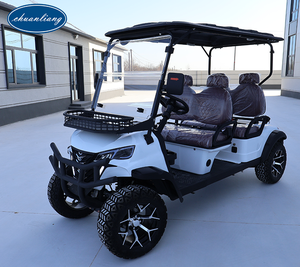 Custom Resort
Professional Customized 4 Seater Electric Golf Buggy with Lithium Power
- Use Case: Resort & Community
- Battery Tech: Smart LiFePO4 BMS
- Chassis: Hot-Dip Galvanized
- Customization: Colors & Branding
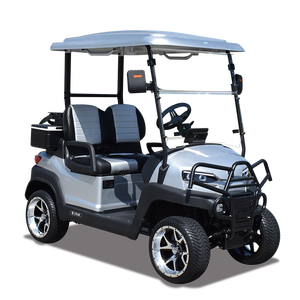 Smart Entertainment
4 Wheel Electric Golf Cart 2 Seat Lithium Buggy with Integrated Sound & Lights
- Features: Bluetooth Sound & LED
- Seating: 2-Person Ergonomic
- Braking: Hydraulic + Regen
- Charging: Quick On-Board AC
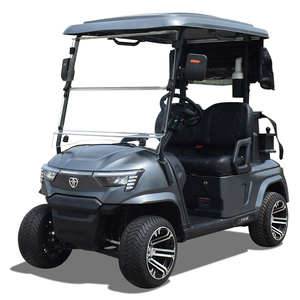 Cargo Hauler
Customizable 2-Seater Electric Utility Golf Cart with Extended Cargo Deck
- Payload Capacity: 500 kg Heavy Load
- Deck Type: Aluminum Flatbed
- Powertrain: 48V/60V AC System
- Duty Cycle: Multi-Shift Commercial
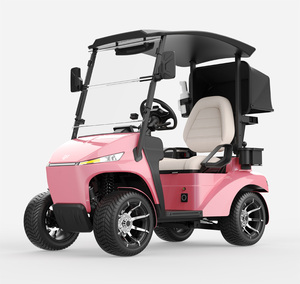 Single Fleet
Professional Single-Seat Quick-Charge Electric Golf Cart CE Certified
- Configuration: Single Solo Rider
- Charge Time: 2.5 Hrs Fast Charge
- Turf Impact: Ultra-Low PSI Tires
- Footprint: Compact Maneuverable
Custom OEM Electric Hauler Engineering Standards
Building high-uptime low-speed electric vehicles (LSEVs) requires specialized structural metallurgy, advanced BMS architecture, and purpose-built drivetrains tailored to climate, payload, and operating gradient.
Hot-Dip Galvanized Chassis Architecture
Unlike standard automotive steel frames that corrode rapidly in coastal, humid, or agricultural environments, our haulers utilize full hot-dip galvanized robotically-welded steel chassis. This delivers 15+ years of anti-rust durability and structural rigidity under continuous maximum payload transport.
High-Torque AC Brushless Powertrains
Equipped with maintenance-free 48V, 60V, or 72V AC induction and PMSM motors (ranging from 4kW to 7.5kW continuous rating). Paired with Curtis or Danaher programmable controllers, our vehicles deliver smooth, immediate climbing torque on gradients up to 25% without thermal cutout.
LiFePO4 Lithium & Solar-Hybrid Integration
Choose between low-CapEx heavy-duty deep-cycle lead-acid packs or ultra-long-life LiFePO4 lithium batteries featuring active thermal BMS monitoring (3,500+ charge cycles). Optional roof-integrated monocrystalline solar arrays continuously top-up energy during daytime shifts to boost daily range by up to 25%.
Industrial Fleet Specification Guidelines
Benchmark platform parameters to select the precise drivetrain, battery chemistry, and payload capability for your facility.
| Platform Category | Passenger / Cargo Deck | Motor Rating | Battery Chemistry | Max Payload | Optimal Operating Environment |
|---|---|---|---|---|---|
| Commercial Utility Hauler | 2 Seats + Flatbed / Box | 4.0 kW - 5.0 kW AC | LiFePO4 105Ah - 210Ah | 600 kg (1,320 lbs) | Industrial Plants, Resort Housekeeping, Cargo Logistics |
| Resort Passenger Shuttle | 4 / 6 / 8 Seater Forward/Rear | 5.0 kW - 7.5 kW AC | LiFePO4 or Lead-Acid Deep Cycle | 550 kg (1,210 lbs) | Hotels, Gated Communities, Amusement Parks |
| Heavy-Duty Off-Road 4WD | 2 / 4 Lifted Seats | 5.0 kW Dual Controller AC | 72V High-Density LiFePO4 | 450 kg (990 lbs) | Farmsteads, Beach Resorts, Mountainous Trails |
| High-Capacity Mini Bus | 11 / 14 Enclosed/Open Shuttle | 7.5 kW Continuous AC | 72V 230Ah Heavy Lithium | 1,200 kg (2,640 lbs) | Airports, University Campuses, Municipal Transit |
Strategic OEM Sourcing: The Evolution of Industrial Electric Haulers
In modern commercial operations, low-speed transport and heavy material movement have undergone a paradigm shift. Operational procurement teams across hospitality, manufacturing logistics, aviation, and municipal management no longer view electric golf carts and utility haulers as simple leisure buggies. Instead, they represent vital mission-critical operational assets that directly influence labor efficiency, operational expenditure (OpEx), carbon offset compliance, and site safety.
As a specialized Custom OEM Electric Hauler Supplier & Exporters enterprise, our engineering methodology focuses on solving the primary failure points that plague legacy commercial buggies: frame corrosion, thermal overload during continuous hill climbing, battery voltage sag under load, and high maintenance downtime. By integrating heavy-duty commercial automotive manufacturing standards into the low-speed electric vehicle (LSEV) sector, we provide customizable fleets engineered specifically for continuous, multi-shift duty cycles in demanding global climates.
Future Procurement Trends in Commercial Electric Fleet Mobility
Analyzing global fleet procurement data from 2024 through 2030 highlights several critical shifts in how corporate buyers evaluate electric utility haulers and passenger carts:
1. Total Cost of Ownership (TCO) Over Upfront Capital Expenditure
While traditional lead-acid electric carts feature lower initial procurement costs, fleet managers are overwhelmingly shifting toward smart LiFePO4 (Lithium Iron Phosphate) architectures. Over a 5-year lifecycle, lithium packs reduce TCO by up to 42%. This saving stems from zero battery watering maintenance, a 3x higher cycle life (3,500+ cycles at 80% Depth of Discharge versus 700 cycles for flooded lead-acid), fast 2-hour opportunity charging during shift breaks, and a 150kg weight reduction that significantly reduces motor wear and tire degradation.
2. OEM Modular Chassis Customization for Specialized Workflows
Standard off-the-shelf golf carts fail to meet the rigorous demands of specialized commercial tasks. Emerging procurement trends demand tailored factory-direct OEM modifications. Operations require custom rear utility attachments—ranging from hydraulic tipping cargo beds for landscaping, trash compactors for municipal sanitation, insulated thermal box enclosures for resort catering, to ambulance stretcher mounts for campus medical teams. Sourcing from a factory capable of engineered chassis extension and custom load distribution is now a mandatory buyer requirement.
3. Photovoltaic Solar-Hybrid Integration
Energy resilience and off-grid range extensions are primary factors for sprawling outdoor facilities such as 18-hole golf resorts, sprawling agricultural estates, and solar-powered industrial parks. Roof-integrated flexible monocrystalline solar panels with MPPT (Maximum Power Point Tracking) charge controllers generate up to 250W-450W of continuous charging under ambient sunlight. This solar assist decreases grid draw, prevents deep-battery depletion during long working shifts, and extends daily operating range by 15km to 25km.
Key Product Development & Engineering Trends (2025-2030)
To deliver commercial-grade longevity, our engineering team continuously advances four foundational core vehicle systems:
A. Advanced AC Powertrains & Smart Vector Control Controllers
Direct Current (DC) series motors with mechanical brushes are obsolete in high-uptime commercial environments due to wear, brush spark risk, and poor thermal tolerance. Next-generation electric haulers leverage sealed, brushless 3-Phase AC Induction and Permanent Magnet Synchronous Motors (PMSM) certified to IP67 ingress protection. Coupled with programmable digital AC controllers (such as Curtis 1234/1236 series), these systems offer automatic hill-hold capability, regenerative braking energy recovery (restoring up to 15% of braking energy back to the battery), and smooth speed control down to 0.5 km/h for precise cargo maneuvering.
B. Structural Metallurgy & Suspensions Built for Heavy Payloads
Commercial utility haulers often carry payloads exceeding their own unladen weight. We construct our load-bearing frames using robotic MIG-welded high-tensile carbon steel channels, subjected to a full hot-dip galvanizing bath process inside and out (zinc coating thickness >85 microns). Suspension systems feature heavy-duty independent MacPherson struts or double A-arms on the front, paired with leaf-spring rear axles equipped with hydraulic shock absorbers to eliminate chassis flex, frame twisting, and weld cracking when navigating unpaved trails or carrying 600kg+ loads.
C. Multi-Layer Safety & Homologation Compliance
Global export markets require strict adherence to regional vehicle homologation rules. Our electric haulers are built to satisfy EEC (European Economic Community) street-legal requirements, CE standards, and US DOT LSV specifications. Integrated safety systems include 4-wheel hydraulic disc brakes with electromagnetic parking brakes (EPB), three-point seatbelts, shatterproof AS1 laminated glass windshields, automotive-grade LED lighting (high/low beam, hazard signals, daytime running lights), reversing cameras, and digital speed limiters configurable by fleet supervisors.
Enterprise Sourcing Advantages: Why Global Importers Partner With Us
As a leading supplier and exporter of custom OEM electric utility vehicles, we bridge the gap between heavy industrial engineering and bespoke corporate styling:
- Direct Factory Customization (OEM & ODM): From specific RAL corporate color matching, custom seat upholstery embroidery, extended wheelbase conversions, to custom voltage setups (48V, 60V, or 72V), we build vehicles exact to your operational spec sheet.
- Rigorous Quality Control & Testing: Every haul cart undergoes a 50-point pre-dispatch audit, including a 100% load gradient climbing test, water-spray immersion testing, battery discharge analysis, and alignment calibration.
- Optimized Export Shipping & Container Dynamics: We offer both CBU (Completely Built Up) and SKD (Semi-Knocked Down) packaging protocols. Our optimized steel-crate racking system allows up to 6 units of 4-seater carts or 4 units of utility haulers to fit securely into a single 40ft High Cube container, reducing per-unit ocean freight costs by up to 35%.
- Comprehensive Global Warranty & Spare Parts Support: Backed by a 1-year on-site operational warranty, long-term technical service programs, and guaranteed 48-hour dispatch on essential spare parts (controllers, solenoids, suspension arms, brake pads, and body panels).
Frequently Asked Sourcing Questions
Direct technical and commercial answers to help procurement managers, importers, and fleet directors make informed vehicle selection decisions.
What is the real-world operating range of your electric haulers under full payload?
Real-world range depends on battery chemistry, terrain gradient, accessory electrical draw, and cargo payload. A standard 48V 105Ah LiFePO4 battery pack operating on flat to moderate paved terrain with a 50% load factor consistently achieves 60 km to 80 km per charge. Upgrading to a 72V 210Ah lithium system extends usable shift range up to 100 km+ even under continuous passenger or payload transport.
How does LiFePO4 chemistry perform compared to traditional Lead-Acid batteries in hot or cold climates?
LiFePO4 (Lithium Iron Phosphate) offers vastly superior thermal stability compared to lead-acid and NMC chemistries. Integrated smart BMS units automatically regulate cell balancing and feature thermal cut-offs. In hot environments (up to 55°C / 131°F), lithium packs maintain stable voltage without risk of thermal runaway or water boil-off. In cold environments, optional heating elements maintain optimal charging performance down to -20°C.
Can we customize chassis dimensions, body color, and utility attachments for OEM export orders?
Yes. Full OEM customization is a core enterprise strength. We build custom extended wheelbases, custom cargo flatbeds (manual or hydraulic tipping), enclosed passenger cabs with doors/canvas covers, specialized ambulance/firefighting skid units, and custom powder-coated chassis. Body colors are customized using UV-resistant automotive polyurethane paint matching your brand's Pantone/RAL codes.
How many units fit into a 20ft and 40ft High Cube shipping container?
Container packing density varies by model size and packaging method (CBU vs SKD):
• Standard 4-Seater Buggy (SKD Packaging): 4 units in a 20ft GP container; 8 to 12 units in a 40ft HC container.
• Utility Cargo Haulers (Extended Bed): 2 units in a 20ft GP container; 4 to 6 units in a 40ft HC container.
Our logistics team designs specialized steel mounting racks to maximize container space while preventing transit scratch damage.
What certifications and street-legal standards do your vehicles comply with for international markets?
Our vehicles are built to international standards including EEC (European Economic Community) street-legal approval, CE certification for machinery safety, ISO 9001 quality management, and US DOT LSV (Low-Speed Vehicle) standards. We furnish full documentation—including VIN numbers, certificate of conformity (CoC), and lighting/braking test reports—required for customs registration.
What regular maintenance schedule is required for commercial fleets?
Maintenance is minimal, especially on AC lithium models. We recommend monthly checks of tire pressure, brake fluid level, and lug bolt torque; quarterly inspections of steering linkage, suspension bushings, and brake pad thickness; and annual diagnostic checks of controller error logs. Lithium packs require zero fluid watering, eliminating 90% of routine battery maintenance labor.
Ready to Build Your Custom OEM Utility Fleet?
Speak directly with our vehicle design engineers. We will analyze your operating terrain, payload specs, climate conditions, and fleet size to build a detailed production quote and CAD proposal.