Featured Commercial & Agricultural OEM Electric Carts
Explore our export-grade electric utility buggies, golf carts, and custom farm transport platforms manufactured under strict ISO9001 and CE quality compliance. Available for custom branding, battery pack configuration, and localized chassis tuning.
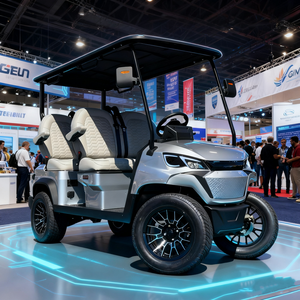
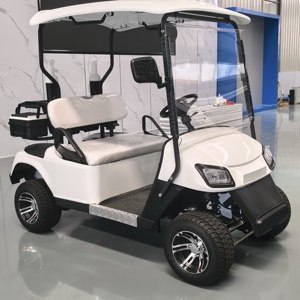
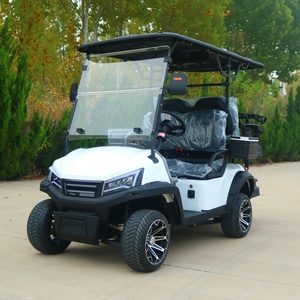
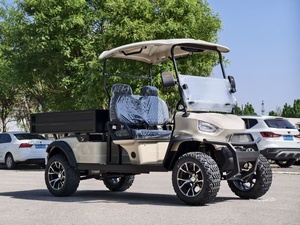
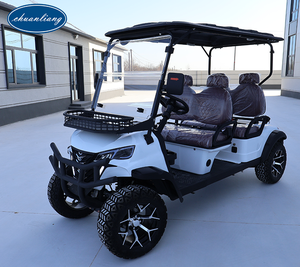
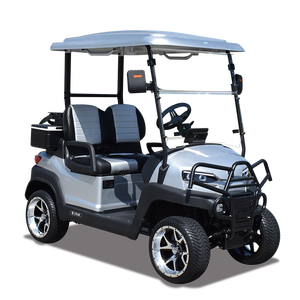
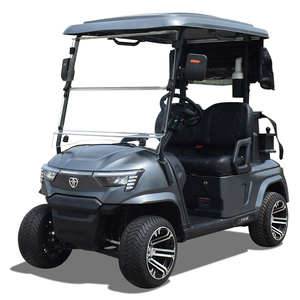
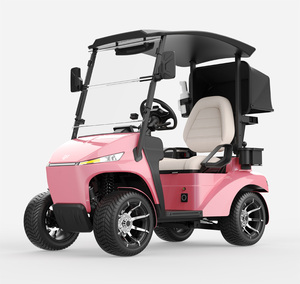
Engineering Excellence: The Paradigm Shift in Custom OEM Farm Cart Manufacturing
Agricultural operations, commercial nurseries, livestock facilities, and expansive rural estates require a fundamentally different vehicle architecture than standard leisure golf carts. As an established OEM/ODM manufacturer, our engineering framework prioritizes high-torque gradient climbing, structural chassis rigidity under heavy cargo payloads, dust/moisture resistance (IP67 component sealing), and ultra-reliable power management systems designed to withstand continuous multi-shift operations in harsh outdoor climates.
Transitioning from traditional internal combustion engine (ICE) utility vehicles to custom electric farm carts represents a major structural trend across agricultural logistics. Fleet operators are driven not only by strict corporate decarbonization mandates, but by critical operational economics: electric UTVs reduce energy costs by up to 80% per operating hour, eliminate high-maintenance wear items (engine oil, spark plugs, belts, torque converters), and run near-silently—preventing stress in livestock handling environments and improving worker safety in semi-enclosed structures such as green houses and dairy sheds.
Hot-Dip Galvanized Chassis
Built with Q235B/Q345B structural steel, subjected to electro-coating and hot-dip galvanization to ensure 720+ hours of salt-spray corrosion resistance against farm manure, fertilizers, and coastal mud.
Brushless AC Powertrain
High-efficiency 5000W to 7500W maintenance-free AC induction and permanent magnet synchronous motors paired with Curtis/KDS programmable controllers for superior low-end torque on steep inclines.
LiFePO4 & Solar-Hybrid Technology
Advanced Lithium Iron Phosphate battery modules with integrated CAN-bus Smart BMS, coupled with optional high-transmittance roof PV panels to continuously top-charge packs during daylight operation.
Technical Specifications & OEM Customization Capabilities
Every commercial agricultural operation presents unique spatial, environmental, and workload demands. OEM buyers require modular customization across chassis dimensions, suspension dynamics, seating configurations, and utility attachments. Below is an engineering overview of our OEM production matrix for enterprise buyers and regional distributors:
| Engineering Parameter | Standard Farm Utility Spec | Lifted Off-Road OEM Spec | Custom Duty Heavy-Cargo Spec |
|---|---|---|---|
| Rated Drivetrain Voltage | 48V / 60V AC System | 60V / 72V High-Torque AC | 72V Heavy-Duty Dual Drive / 7.5kW |
| Motor Continuous Output | 4.0 kW – 5.0 kW AC Brushless | 5.0 kW – 7.5 kW Peak Vector AC | 7.5 kW Direct Drive AC Motor |
| Battery Chemistry Options | Deep-Cycle Lead Acid / LiFePO4 | LiFePO4 (105Ah – 210Ah) | High-Density LiFePO4 with Heating BMS |
| Maximum Payload Capacity | 450 kg (990 lbs) | 650 kg (1,430 lbs) | 1,000 kg (2,200 lbs) Reinforced Deck |
| Front & Rear Suspension | MacPherson Strut / Leaf Spring | Double A-Arm Independent / Hydraulic Shocks | Heavy-Duty Multi-Leaf Spring + Hydraulic Dampers |
| Braking Architecture | Rear Mechanical Drum / Hydraulic | 4-Wheel Hydraulic Disc Brakes | 4-Wheel Hydraulic Disc + Electro-Magnetic Brake |
| Ground Clearance | 120 mm – 150 mm | 200 mm – 250 mm Lifted Chassis | 180 mm – 220 mm Reinforced Frame |
| Certifications & Standards | CE, ISO9001:2015, DOT lighting | CE, EEC (L7e), ISO9001, RoHS | CE, EEC, ISO9001 Industrial Grade |
Future Sourcing & Procurement Trends in Farm Mobility (2025–2030)
Sourcing directors and commercial procurement teams must align their fleet investment strategies with emerging technological vectors in low-speed electric mobility (LSV) and specialized agricultural equipment. Key developments transforming custom farm cart manufacturing include:
1. Advanced LiFePO4 Battery Integration over Lead-Acid Packs
While flooded lead-acid batteries offered lower initial capital expenditures in past procurement cycles, Lithium Iron Phosphate (LiFePO4) has officially reached Total Cost of Ownership (TCO) parity over a 24-month horizon. LiFePO4 cells deliver over 3,500 to 5,000 charge cycles (compared to 500–800 cycles in lead-acid), reduce chassis tare weight by up to 150kg, eliminate battery watering labor, and enable rapid opportunity charging during shift breaks without memory degradation.
2. Solar Hybrid Roof Integration for Extended Shift Autonomy
Integrating monocrystalline flexible PV solar panels (200W–400W ratings) into the cart canopy roof provides continuous trickle-charging directly into the traction battery pack via MPPT controllers. On expansive farms, resort properties, or orchards where carts operate under ambient daylight for 8–12 hours, solar-hybrid assist extends daily range by 15% to 25%, minimizing mid-day downtime and reducing grid plug-in frequency.
3. Telematics, IoT Fleet Management & Remote Diagnostics
Modern commercial procurement demands actionable data. Next-generation OEM farm carts feature integrated 4G/GPS telematics modules that report real-time state of charge (SoC), cell voltage balance, motor temperature, geo-fencing limits, driver behavior metrics, and predictive maintenance fault codes directly to fleet managers via cloud APIs. This minimizes unexpected field breakdowns and optimizes route logistics.
4. Autonomous & Semi-Autonomous Task Assistance
In high-density fruit orchards, vineyards, and greenhouses, OEM farm carts are evolving into semi-autonomous work mules. Equipped with low-cost LiDAR, RTK-GPS, and ultrasonic sensor arrays, custom carts can follow predefined haul roads or operate in "follow-me" mode alongside field workers during harvest cycles, radically decreasing manual labor costs.
Factory Capabilities & OEM/ODM Enterprise Advantages
When selecting an OEM manufacturing partner for custom farm carts and commercial utility vehicles, procurement teams require verified industrial infrastructure, consistent quality control protocols, and comprehensive after-sales logistics support. Our manufacturing ecosystem is designed around high-precision volume manufacturing and customizable CKD/SKD export programs:
Robotic Fabrication & Welding
Automated 6-axis robotic welding cells ensure 100% structural repeatability across all chassis frames, suspension mounting brackets, and cargo bed structures, eliminating manual fatigue points.
End-of-Line Quality Assurance
100% of manufactured units undergo dynamic roller dyno testing, water-tightness shower booth testing, 30% gradient incline hold verification, and high-voltage insulation dielectric testing prior to shipping.
Optimized CKD / SKD Freight Logistics
Engineered packaging layouts maximize 40ft High Cube container density. Standard SKD packing allows up to 12-18 units per container, dramatically lowering international sea freight costs per unit.
Total Cost of Ownership (TCO) Analysis: Electric Farm Buggy vs. Gasoline Utility Vehicle
For fleet buyers managing 10 to 500 units, operating expense (OpEx) dominates long-term financial modeling. Below is a 5-year comparative TCO analysis based on an average duty cycle of 40 kilometers per day across 300 working days per year:
| Financial Parameter (Per Vehicle) | Standard Gas UTV (400cc ICE) | OEM Electric Farm Cart (LiFePO4) | 5-Year Savings Realized |
|---|---|---|---|
| Initial Acquisition Cost (CapEx) | $9,500 USD | $8,200 USD | +$1,300 USD (Lower CapEx) |
| 5-Year Energy / Fuel Expense | $6,800 USD (based on $1.10/L) | $1,350 USD (based on $0.14/kWh) | +$5,450 USD (80% Fuel Savings) |
| Scheduled Maintenance & Parts | $2,400 USD (Oil, filters, belts, plugs) | $450 USD (Brake pads, tire rotation) | +$1,950 USD (81% Maint. Reduction) |
| Downtime Labor Losses | Est. 45 Hours (Unscheduled repairs) | Est. 8 Hours (Minimal wear points) | +37 Hours Fleet Uptime |
| Total Estimated 5-Year Cost | $18,700 USD | $10,000 USD | $8,700 USD Savings / Unit |
Frequently Asked Questions by OEM & Commercial Buyers
- CBU (Completely Built Up): Approximately 4 to 6 units per 40ft HC container depending on model wheelbase and lifted suspension configuration.
- SKD (Semi-Knocked Down): By removing roofs, windshields, and front wheel assemblies onto customized steel packing racks, a 40ft HC container typically accommodates 12 to 18 units.
- CKD (Completely Knocked Down): For regional assembly factories, up to 24 units can be packed into a 40ft HC container.
- Standard 48V 100Ah Lead-Acid Pack: 50 km to 70 km per charge on flat to moderate terrain.
- 72V 105Ah LiFePO4 Pack: 80 km to 100 km per charge under typical farm work conditions.
- 72V 210Ah Heavy-Duty Lithium Pack with Solar Roof Assist: Up to 130 km to 150 km per charge under continuous daytime operation.
- Monthly: Inspect tire pressures, check brake fluid levels, inspect steering linkage tightness.
- Quarterly: Lubricate front suspension grease fittings, inspect chassis bolt torque, clean battery terminals.
- Semi-Annually (Lead-Acid only): Top up battery cells with distilled water. (LiFePO4 lithium packs require zero watering maintenance).
- Annually: Inspect brake pad wear thickness and gear differential fluid.
Partner with a World-Class OEM Farm Cart Factory
Request technical specification sheets, factory audit reports, custom branding catalogs, or containerized freight quotes from our senior engineering sales team.