Commercial Electric Vehicles & Buggy Fleet Models
Engineered for high thermal tolerance, heavy daily usage cycles, and low maintenance overhead across international commercial environments.
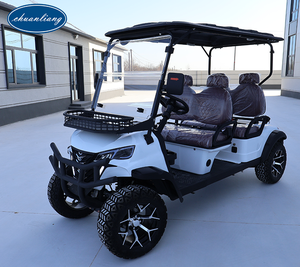
Professional Customized 4 Seater Electric Golf Buggy with Lithium Battery
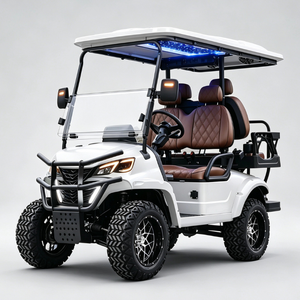
4 Passenger Luxury Custom Color Long Range Lithium Battery Electric Golf Cart
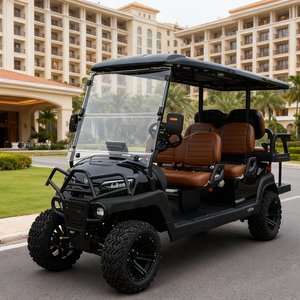
Model Luxury Seater Electric Golf Cart with CE Lithium Battery 5KW AC Motor
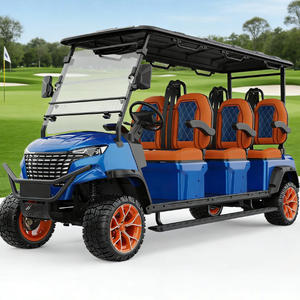
Custom 6 Seater Greenrider 48V Lithium Street Legal Commercial Buggy
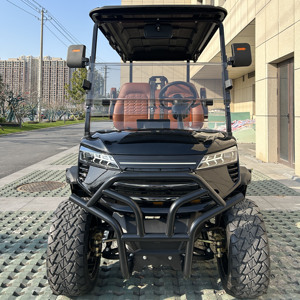
Manufacturers Utility Electric Buggy 4 Wheel Drive Street Legal Push Cart
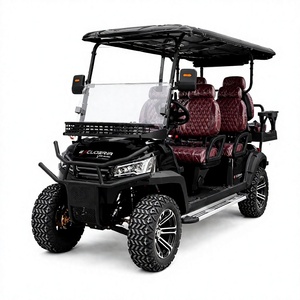
UCD-DH-14 6 Seater Electric Golf Cart with Foldable Cargo Bed Utility Buggy
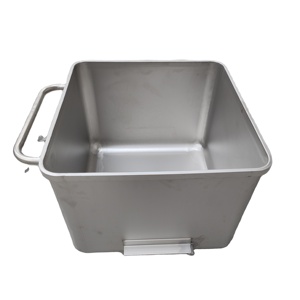
Commercial Stainless Steel Food Trolley Truck Meat Tub Buggy for Transport
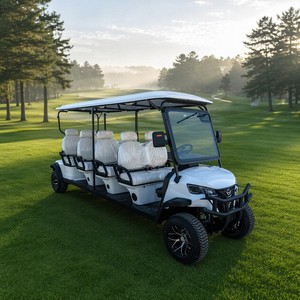
72V Lithium Battery 8 Seater Electric Golf Buggy Tour Shuttle Car
Executive Technical Whitepaper: The Strategic Evolution of Commercial Buggy Manufacturing & Global OEM Procurement
Commercial low-speed electric vehicles (LSEVs) and specialized industrial utility buggies have transitioned from peripheral convenience transport into critical operational infrastructure. For procurement directors, fleet resort operators, municipal logistics managers, and industrial processing plants, selecting the optimal OEM/ODM commercial buggy factory involves evaluating complex total-cost-of-ownership (TCO) metrics, structural durability parameters, and modular powertrain options. As global decarbonization mandates accelerate, global buyers are seeking direct factory partnerships that deliver rigorous engineering standards, certified supply chain transparency, and custom manufacturing scalability.
Key Procurement Insight (2025–2030): Modern commercial fleet management prioritizes Lithium Iron Phosphate (LiFePO4) cell chemistry over traditional flooded lead-acid batteries, delivering up to 3,500 continuous charge cycles, a 40% reduction in curb weight, and zero scheduled fluid maintenance, yielding an estimated 32% lower TCO over a five-year lifecycle.
Future Procurement Trends in Commercial Electric Buggies and Industrial Transport
The global commercial electric buggy market is experiencing a profound technological transformation driven by four core procurement vectors:
1. Transition to 72V High-Efficiency AC Drivetrains
Legacy 36V and 48V DC motor systems are rapidly being phased out in enterprise operations in favor of 48V and 72V Brushless AC (Alternating Current) induction motors. AC powertrains provide superior energy conversion efficiency (exceeding 92%), eliminate carbon brush wear, and offer internal regenerative braking. Regenerative deceleration recovers kinetic energy during downhill descents and coasting, directly recharging the traction battery while dramatically reducing thermal wear on hydraulic friction brake pads.
2. Integrated Photovoltaic (Solar-Hybrid) Range Extension
To combat operational downtime in tropical resort regions and large outdoor facilities, advanced OEM exporters integrate high-efficiency monocrystalline solar panels directly into the vehicle roof structure. Solar auxiliary charging feeds a constant trickling charge via a dedicated Maximum Power Point Tracking (MPPT) controller, extending daytime operating range by 15 km to 25 km and reducing grid-plug dependency during peak utility tariff hours.
3. Modular Chassis Architecture and Custom Utility Bed Swap Systems
Modern commercial buyers demand versatility. Rather than maintaining single-purpose vehicles, fleet managers utilize modular chassis platforms capable of accepting interchangeable rear modules: convertible 2-to-4 passenger flip seats, enclosed aluminum cargo boxes, insulated food-beverage service units, or heavy-duty flatbeds. This modularity allows resort properties and industrial campuses to reconfigure their fleet density dynamically based on seasonal or shift demands.
4. IoT Telematics, Battery Management (BMS) & Fleet Analytics
Enterprise procurement now mandates CAN-bus smart controller integration. Remote telemetry modules enable fleet administrators to monitor state-of-charge (SoC), track vehicle location via GPS geofencing, receive automated thermal overload warnings, and log driver operational habits. Smart BMS boards safeguard lithium packs against cell over-voltage, deep discharge, and thermal runaway, ensuring full operational compliance with international transport safety standards.
Verified laboratory performance metrics based on standard testing protocol for 72V commercial lithium fleet buggies under full payload load testing.
Technical Evolution & Engineering Innovations in OEM/ODM Buggy Manufacturing
To withstand extreme operating conditions—from high-salinity coastal resorts to demanding food processing plants and off-road municipal parks—commercial buggies require specialized material science and mechanical engineering:
- Hot-Dip Galvanized & E-Coated Steel Frames: Standard automotive steel frames deteriorate rapidly when exposed to humidity, fertilizers, or salt spray. Leading OEM factories utilize structural Q235B steel tubing subjected to hot-dip galvanization and electro-coating (E-coating) corrosion protection. This multi-stage passivation treatment provides a 15-year structural anti-rust guarantee.
- Sanitary Grade 304 Stainless Steel Construction: For specialized industrial food transport, meat processing facilities, and hospital material handling, standard painted buggies fail sanitation compliance. Factories manufacture heavy-duty 304 and 316-grade stainless steel tub buggies featuring seamless washdown welds, leak-proof drain valves, and heavy-duty polyurethane casters certified under HACCP hygiene guidelines.
- Automotive Independent Suspension Systems: Commercial buggies carrying high passenger numbers or delicate cargo require sophisticated damping. Double A-arm independent front suspension paired with hydraulic shock absorbers and helical coil springs neutralizes rough terrain vibration, preventing chassis fatigue and enhancing ride comfort.
- Hydraulic Four-Wheel Disc Brakes & Auto Electro-Magnetic Parking: Safety in high-density pedestrian zones demands responsive stopping power. Four-wheel hydraulic disc brake systems paired with an automatic electromagnetic park brake prevent roll-backs on steep gradients as soon as the driver steps off the accelerator pedal.
Galvanized Anti-Rust Frame
Hot-dip galvanized structural chassis tested to withstand 1,000+ hours of continuous salt-spray chamber testing for coastal durability.
Smart LiFePO4 Battery Systems
Integrated cell balancing, low-temperature heating elements, and active safety cut-offs for maximum battery operational lifespan.
High-Torque AC Powertrains
Sealed brushless 5KW to 7.5KW AC motors delivering maintenance-free performance and high incline climb torque.
Commercial Fleet Specifications & Operational Matrix
Selecting the appropriate buggy architecture requires matching operational duty cycles with drivetrain parameters. The technical comparison below outlines key performance indicators across primary commercial buggy categories:
| Vehicle Class | Seating / Load | Motor Type | Battery Voltage / Chemistry | Usable Range | Primary Industry Target |
|---|---|---|---|---|---|
| 4-Seater Resort Buggy | 4 Persons / 450 kg | 48V 5KW AC Brushless | 48V 105Ah LiFePO4 | 80 - 100 km | Luxury Hotels, Golf Resorts, Gated Communities |
| 6-Seater Utility Shuttle | 6 Persons + Deck / 650 kg | 48V 5KW / 7.5KW AC | 48V 150Ah LiFePO4 | 70 - 90 km | Commercial Campuses, Theme Parks, Airport Aprons |
| 8-Seater Tour Passenger Shuttle | 8 Persons / 800 kg | 72V 7.5KW AC Heavy Duty | 72V 160Ah LiFePO4 | 90 - 110 km | Municipal Tourism, Scenic Spot Shuttle, Eco-Parks |
| Heavy Utility 4WD Buggy | 2 Persons + Cargo / 750 kg | Dual Motor 4WD (8KW Total) | 72V 200Ah Lithium Pack | 60 - 80 km | Agriculture, Off-Road Maintenance, Heavy Industry |
| Industrial Stainless Food Buggy | 200L - 300L Tub Payload | Manual / Electric Push Drive | N/A (304 Stainless Frame) | Continuous Shift | Meat Transport, Food Processing, Cleanroom Logistics |
Direct-Factory OEM/ODM Manufacturing Advantages
We provide full-spectrum engineering customization, rigorous international quality compliance, and streamlined global export logistics for high-volume enterprise buyers.
Full Customization (OEM/ODM)
From custom chassis dimensions, body color matching (RAL/Pantone), custom upholstery, branding placement, to bespoke utility rear-bed engineering tailored to your precise operational specs.
Rigorous Quality Assurance & Testing
Every vehicle undergoes 100% factory stress testing, including dynamic slope climbing, water-tight rain chamber testing, brake efficiency testing, and electronic insulation safety inspection prior to shipment.
Container Packing & Export Optimization
Engineered knock-down (SKD/CKD) and fully-assembled packing strategies maximize 40ft High-Cube container utilization, reducing per-unit ocean freight costs by up to 28% for international distributors.
Global After-Sales Spares Network
We supply complete spare parts packages (controllers, harnesses, body panels, solenoids) backed by fast-track DHL/FedEx dispatch and remote technical video support directly with factory engineers.
Commercial Buggy Sourcing FAQs
Direct answers to technical, commercial, and logistics questions commonly raised by corporate fleet buyers and international importers.
Lithium Iron Phosphate (LiFePO4) offers three major operational advantages: lifespan, efficiency, and zero maintenance. LiFePO4 batteries deliver 3,000 to 3,500 full charge cycles at 80% Depth of Discharge (DoD), compared to only 500–800 cycles for lead-acid packs. Furthermore, lithium maintains stable voltage under heavy load and uphill climbing without voltage drop off. Lithium packs weigh up to 60% less, reducing vehicle curb weight, minimizing suspension wear, and requiring zero electrolyte watering or acid corrosion maintenance.
Our engineering team follows a structured 5-stage OEM/ODM workflow: (1) Operational Requirements Analysis (duty cycle, payload, terrain gradient, climate); (2) 3D CAD Modeling & Finite Element Analysis (FEA) structural validation; (3) Prototype Assembly & Physical Field Testing; (4) Client Approval of pre-production drawings and sample units; (5) Full-scale Batch Manufacturing under ISO9001 certified quality control management.
Loading capacity depends on vehicle dimensions and packing state: For fully assembled 4-seater buggies, a 40ft HQ container accommodates 8 to 10 units. Using Semi-Knocked-Down (SKD) packing where roof canopies and windshields are detached, capacity increases to 18 to 24 units per 40ft HQ container. For 8-seater shuttle buggies, a 40ft HQ accommodates 4 units fully assembled or up to 8 units in SKD configuration.
Vehicles built for high-salinity marine environments receive our Marine-Grade Protection Package. This includes hot-dip galvanizing of the main steel chassis, double-layer electrophoretic deposition (E-coating), stainless steel 304 fasteners throughout the frame, sealed IP67-rated wiring harnesses, and marine-grade anti-UV vinyl upholstery to prevent cracking under high sunlight exposure.
Yes. We manufacture models complying with international Low-Speed Vehicle (LSV) standards, including CE certification, EEC (European Small Series Type-Approval), and DOT compliance features. Vehicles can be factory-equipped with street-legal packages: 3-point seatbelts, automotive-grade toughened glass windshields with wipers, side mirrors, turn signals, LED headlights, horn, and hydraulic 4-wheel disc braking systems.
We provide a comprehensive commercial warranty: 5 years on the chassis frame, 3 years on LiFePO4 battery packs, and 2 years on the AC motor and electronic controller. We supply fast-moving wear parts alongside batch vehicle shipments and maintain an express spare parts inventory available for international dispatch within 48 hours of service request notification.
Transform Your Commercial Fleet Operations
Consult with our senior EV powertrain engineers to custom design your fleet, review technical drawing specifications, and receive a competitive direct-factory OEM quotation.