1. Strategic Overview: Navigating the Global Golf Cart Manufacturing & OEM Landscape
The global low-speed electric vehicle (LSEV) and golf cart manufacturing industry has evolved from a niche recreational market into a highly specialized $4.5 billion commercial ecosystem. Modern golf carts are no longer confined to 18-hole greens; they now serve as critical transportation nodes across eco-resorts, gated residential communities, international airport aprons, industrial manufacturing facilities, and urban municipal districts. For commercial buyers, facility managers, and fleet operators, selecting the right factory partner requires navigating complex engineering variables—ranging from motor torque maps and frame metallurgy to cell chemistry stability and international compliance certifications (CE, EEC, L7e).
When evaluating the Top 10 Golf Cart Factories & OEM Manufacturers worldwide, decision-makers must look beyond surface aesthetics. The true differentiators lie in structural integrity, drivetrain efficiency, and scalable customization options. Leading original equipment manufacturers (OEMs) and original design manufacturers (ODMs) are shifting aggressively toward high-voltage AC drivetrains, integrated lithium iron phosphate (LiFePO4) battery management systems (BMS), solar-assisted charging roofs, and hot-dip galvanised anti-corrosion chassis architectures built to withstand tropical, coastal, and high-salinity operational environments.
2. Core Engineering Advantages: Why Tier-1 Factory Architecture Matters
Commercial fleet buyers often encounter catastrophic premature vehicle failure when sourcing off-the-shelf buggies built on basic stamped steel or ungalvanised tubular frames. In high-humidity coastal resorts or heavy-duty industrial warehouses, micro-vibrations and environmental moisture rapidly compromise structural frame welds, leading to frame sagging, wheel misalignments, and costly downtime.
Hot-Dip Galvanised Chassis
Engineered with double-sided hot-dip zinc plating to guarantee zero rust penetration, preserving structural integrity for 10+ years even in salt-spray resort atmospheres.
High-Torque AC Drivetrains
Utilizing 48V–72V brushless AC motors paired with programmable Curtis/Sevcon controllers for smooth gradient climbing (up to 30%), zero brush wear, and regenerative braking energy recovery.
Automotive Grade LiFePO4 Packs
Deep-cycle Lithium Iron Phosphate batteries featuring CAN-bus connected BMS cell monitoring, delivering 3,500+ charge cycles and 20% greater thermal tolerance than standard lead-acid packs.
By controlling the complete manufacturing value chain—from robotic chassis welding to precision powder coating and direct controller tuning—top-tier golf cart factories deliver vehicles with exceptional operational reliability. Furthermore, modular engineering allows factory lines to seamlessly adapt chassis wheelbases for 2-seater personal carts, 4/6/8-seater passenger shuttles, or heavy-duty utility flatbeds on the exact same manufacturing platform.
3. Industry Comparison Matrix: Tier-1 OEM Factory Benchmark
To assist procurement teams in performing technical due diligence, the matrix below details the structural and technical parameters across primary manufacturing platform classes.
| Vehicle Platform | Motor & Voltage Rating | Chassis Architecture | Max Gradient Capacity | Usable Shift Range | Target Operational Environment |
|---|---|---|---|---|---|
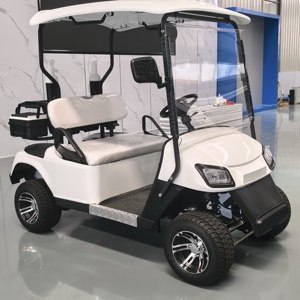
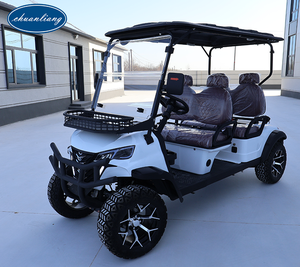
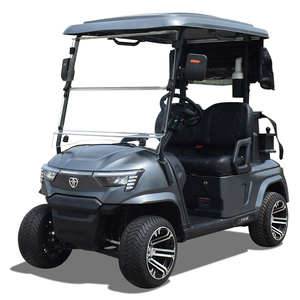
| 2-Seater Lifted Off-Road Buggy | 60V / 72V 5.0kW AC Brushless | Heavy-Duty Steel / Galvanised | 25% – 30% Grade | 70 – 90 km per charge | Farmland, Beach Fronts, Rough Terrain |
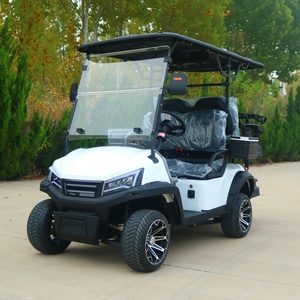
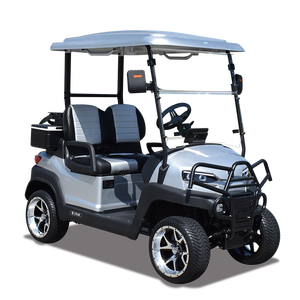
| 4-Seater Resort Club Car | 48V / 60V 4.0kW–5.0kW AC | Monocoque Galvanised Frame | 20% – 25% Grade | 60 – 80 km per charge | Golf Clubs, Luxury Resorts, Gated Communities |
| 6–8 Seater Sightseeing Shuttle | 60V / 72V 5.0kW–7.5kW AC | Reinforced Long Wheelbase Steel | 18% – 22% Grade | 80 – 100 km per charge | Airports, Hotel Guest Transfer, Theme Parks |
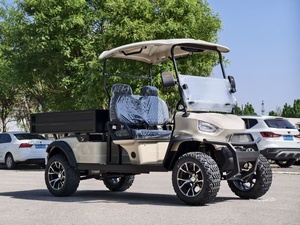
| Commercial Utility Cargo Buggy | 48V / 72V 5.0kW AC High-Torque | Integrated Cargo Bed / Tipper Frame | 22% – 25% Grade | 60 – 80 km per charge | Factory Floor Logistics, Maintenance, Security |
4. Technological & Future Development Trends (2026–2030)
As micro-mobility regulations evolve globally, golf cart factory engineering is undergoing a technological renaissance. Sourcing managers must evaluate future-proof capabilities before committing capital to multi-unit fleet orders:
- Solar-Hybrid Roof Integration: Photovoltaic (PV) solar panels embedded directly into the vehicle roof structure provide continuous trickle charging during outdoor daylight shifts. This technology extends operational shift range by up to 15–20% and reduces grid-tied charging cycles, significantly lowering electricity overhead for large resort operations.
- Smart Fleet Telematics & Remote Diagnostics: Next-generation factory models incorporate integrated IoT telematics modules connected via CAN-bus. Fleet administrators can remotely track vehicle geolocation (geofencing), monitor real-time battery State-of-Health (SoH), evaluate driver speed profiles, and receive instant alert codes for maintenance intervention.
- Shift to 72V High-Efficiency Systems: Modern buyers are rapidly shifting from traditional 48V DC systems to 72V AC architectures. The higher operating voltage reduces internal current draw (amperage), minimizing heat generation in motor windings and extending battery longevity while providing punchy acceleration and high torque for hilly terrain.
- Eco-Friendly Recycled Composite Body Shells: Modern factories are replacing standard fragile ABS plastics with automotive-grade thermoplastic polypropylene (PP) and lightweight composite materials that resist ultraviolet degradation, impact cracking, and scratch damage.
5. Strategic Procurement & Future Sourcing Trends
Navigating global supply chain dynamics requires a structured procurement approach. Direct factory-to-business (F2B) sourcing has largely bypassed regional trading intermediaries, allowing institutional buyers to configure customized vehicle specs straight from factory assembly lines.
Future procurement models prioritize total lifecycle ROI over initial unit purchase cost. A low-cost uncertified buggy with lead-acid batteries frequently incurs higher total expense due to frequent battery replacement, water topping labor, controller burnout, and lack of replacement parts. Conversely, partnering with an established OEM offering documented spare parts availability, standardized ISO manufacturing controls, and modular components ensures smooth maintenance over a 7-to-10-year service life.