Featured Commercial Electric Carts & Fleet Buggies
Direct from Top China Commercial Cart Manufacturers: High-power 72V/60V AC drivetrains, certified steel monocoque chassis, long-cycle lithium powerpacks, and customized options for commercial operational environments.
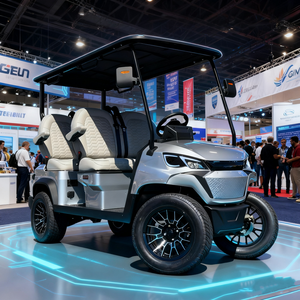
72V EEC Certified Electric Golf Buggy with 5KW 7.5KW High Power Motor Long Life Battery and Steel Construction
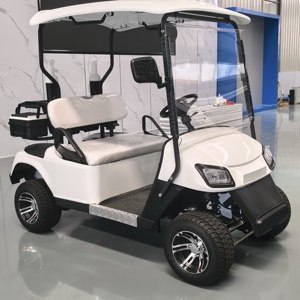
New Electric Off-Road Golf Cart Buggy 3-4 Seats Steel 60V 5KW CE Certified
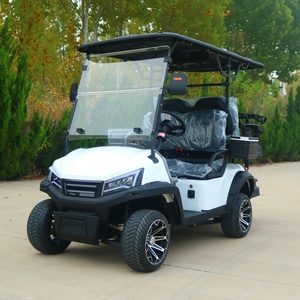
Street Legal 4WD Electric Golf Cart 60/72V Lithium Battery 6-seater Sightseeing Club Car 5000W Motor Electric Cart
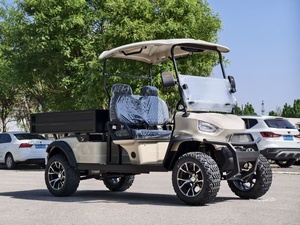
New Arrival 2 Seater Electric Golf Buggy Off Road Sporty Lifted Golf Cart for Farm and Beach Use
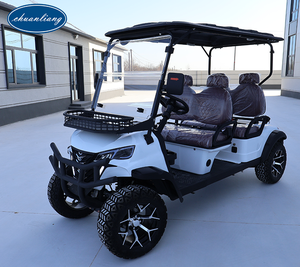
Professional Customized 4 Seater Electric Golf Buggy with Lithium Battery Powered for Resort Golf Course Community
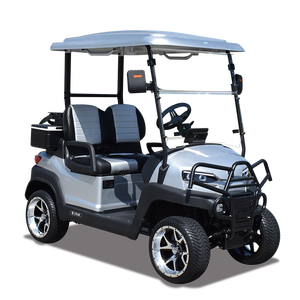
4 Wheel Electric Golf Cart 2 Seat Golf Cart Lithium Golf Buggy Speakers and Lights
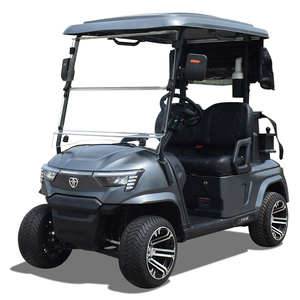
Customizable 2-Seater Electric Utility Golf Cart, Lithium Battery Golf Buggy for Sale
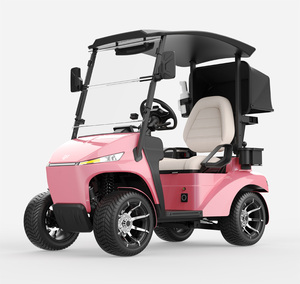
Professional Design Single-Seat Golf Cart Quick-Charge Electric Golf Cart CE Certification Golf Cart 4 Wheel Small Vehicle
Engineering Excellence & Manufacturing Standards
Leading China commercial cart manufacturers integrate automotive-grade design, heavy-duty anti-corrosion chassis treatment, and smart AC electric drivetrains to guarantee minimal total cost of ownership (TCO).
Hot-Dip Galvanized Frame
Built with automotive steel and finished with full-submersion hot-dip galvanizing or electrophoretic coating (KTD). Resists salt spray, high coastal humidity, and aggressive turf fertilizers for over 15 years.
High-Efficiency AC Powertrain
Maintenance-free 48V/60V/72V brushless AC motors (4KW to 7.5KW peak) deliver smooth acceleration, 25-30% gradeability, regenerative braking recovery, and zero carbon emissions across intense shifts.
Advanced LiFePO4 Technology
Integrated Lithium Iron Phosphate battery modules with dynamic Smart BMS protection. Eliminates battery watering maintenance, reduces cart tare weight by 30%, and supports rapid opportunity charging.
Solar-Hybrid Roof Options
Optional monocrystalline roof-integrated solar arrays continuously top up battery banks during daylight operations, extending daily operational range by 15-20 km and reducing mains grid power usage.
Full Modular Customization
Tailored configuration of seating arrangements (1 to 14 seats), custom body colors, enclosure curtains, elevated suspension kits, cargo beds, and custom corporate branding directly from the factory line.
Global Certification & Support
Fully compliant with EEC, CE, ISO9001, and ISO14001 standards. Backed by documented spare-parts availability, technical field training, fast container shipping, and comprehensive on-site warranties.
Commercial Fleet Technical Matrix & Specification Benchmarks
Compare key engineering parameters to select the optimal electric vehicle chassis, drivetrain, and battery configuration for your organization’s physical footprint and duty cycle.
| Vehicle Class | Voltage & Motor | Battery Chemistry | Payload / Seating | Max Gradeability | Best Application |
|---|---|---|---|---|---|
| 2-Seater Lifted Utility Buggy | 48V / 60V 4KW-5KW AC | Lead-Acid or LiFePO4 | 2 Seats + 400kg Cargo | 30% (16.7°) | Beach resorts, farms, maintenance loops |
| 4-Seater Commercial Golf Buggy | 48V 5KW AC Brushless | 100Ah/150Ah LiFePO4 | 4 Passengers / 450kg | 25% (14°) | Golf courses, gated communities, rental fleets |
| 6-Seater Street Legal Sightseeing | 60V / 72V 5KW-7.5KW AC | 150Ah-200Ah LiFePO4 | 6 Passengers / 650kg | 25% (14°) | Resort shuttles, airport terminals, heritage tours |
| 72V High-Power EEC Passenger Buggy | 72V 7.5KW Peak AC | 200Ah Smart BMS LiFePO4 | 4-8 Passengers / 800kg | 35% (19.3°) | Hilly resorts, public road transit, heavy-duty duty |
| Heavy Commercial Cargo Utility Cart | 48V / 60V 5KW AC | Maintenance-Free AGM / Lithium | 2 Seats + 600kg Box/Deck | 20% (11.3°) | Factory logistics, housekeeping, trash collection |
Top China Commercial Cart Manufacturers & Manufacturer: 2026 Industry Whitepaper
The global low-speed electric vehicle (LSEV) market is undergoing a structural transition. Facilities managers, resort operators, municipal authorities, and industrial fleet directors are rapidly replacing internal combustion engine (ICE) carts and legacy 36V lead-acid buggies with advanced commercial-grade electric platforms. As procurement teams evaluate potential sourcing partners, understanding the capabilities, manufacturing methodologies, and technical innovations of top China commercial cart manufacturers is essential for securing operational longevity and high investment returns.
“Strategic fleet electrification is no longer just about swapping gas for batteries. It requires holistic evaluation of frame corrosion resistance, motor thermal thresholds, Smart BMS telemetry, and containerized logistics efficiency to minimize total lifecycle operating costs.”
1. Future Procurement Trends in the Commercial Electric Cart Sector (2026–2030)
When sourcing commercial buggies and utility carts, enterprise buyers must look beyond immediate purchase prices and analyze five-to-ten-year procurement dynamics. Key shifts shaping vendor selection include:
- Universal Migration to LiFePO4 Lithium Ecosystems: While flooded lead-acid batteries once dominated the golf cart landscape due to low initial capital costs, Lithium Iron Phosphate (LiFePO4) has become the gold standard for commercial fleets. LiFePO4 provides 3,500+ charge cycles at 80% Depth of Discharge (DoD), supports rapid 2-to-3 hour charging, tolerates ambient operating temperatures from -20°C to +60°C, and eliminates regular battery watering procedures that account for substantial labor overhead.
- High-Voltage (60V & 72V) AC Drivetrains over DC Systems: Modern commercial shuttles and loaded utility carts require high torque without excessive heat generation. The industry standard has shifted from legacy DC brushed motors to sealed, maintenance-free AC brushless motors operating at 60V or 72V. High-voltage architecture drastically reduces electrical current draw (Amperage), reducing internal wire heating, boosting motor thermal efficiency, and enabling carts to effortlessly climb steep inclines with full payload capacities.
- Automotive-Grade Manufacturing Standards (TS16949 Compliance): Leading Chinese manufacturers are integrating automotive-grade assembly lines. Robot-welded steel chassis, electrophoretic dip painting (KTD), fully independent double A-arm front suspensions, hydraulic four-wheel disc brakes, and CAN-bus vehicle wiring harnesses are now standard expectations across premium commercial models.
- Modular Payload & Convertible Seating Configurations: Commercial users require fleet adaptability. Advanced platforms now feature quick-swap rear seat modules that transform a 4-seater guest shuttle into a flatbed cargo cart in under two minutes, enabling multi-purpose vehicle utility across morning guest transfers and afternoon maintenance duties.
- Carbon Offset & Solar Hybrid Integration: With corporate ESG (Environmental, Social, and Governance) targets taking center stage, fleets integrated with roof-mounted photovoltaic solar panels allow resort and campus operators to directly lower carbon footprints while capturing free solar radiation during idle outdoor parking hours.
2. Technological Innovations Redefining Commercial Golf Buggies and Utility Carts
Evaluating top China commercial cart manufacturers requires inspecting core mechanical, electrical, and structural components under the body shell:
A. Anti-Corrosion Chassis Metallurgy: Golf course fertilizers, oceanfront air, and de-icing salts present severe corrosive threats to low-speed vehicle frames. Premium OEM manufacturers utilize hot-dip galvanizing technology, submerging welded tubular steel frames in molten zinc at 450°C. This forms a multi-layer zinc-iron alloy barrier that seals both internal tubing walls and exterior surfaces against oxidation for decades.
B. Regenerative Braking & Controller Calibration: Modern electric carts utilize programmable Curtis, Enpower, or Toyota AC controllers linked to intelligent regenerative braking systems. When downhill gradients are detected or the accelerator pedal is released, the AC motor converts kinetic energy back into electrical energy, recharging the battery pack while preventing brake pad overheating and mechanical wear.
C. Ergonomics and Passenger Comfort: Modern guest shuttle buggies are no longer basic turf vehicles. Commercial designs incorporate automotive-grade synthetic leather seating with high-density polyurethane foam, USB fast-charging ports, integrated Bluetooth audio systems, digital dashboard displays with battery State-of-Charge (SoC) readouts, LED lighting packages (headlights, daytime running lights, turn signals), and tinted acrylic windshields.
3. Strategic B2B Sourcing Framework: Evaluating Chinese Manufacturers
To establish a reliable long-term supply chain with top China commercial cart manufacturers, procurement directors should apply a structured 5-step vendor verification process:
- Factory Audit & Production Capacity Verification: Ensure the facility possesses automated stamping, robotic welding, paint lines, and dedicated rolling-road testing benches. Verify annual production capacities to ensure timely order fulfillment during peak procurement cycles.
- Compliance & Certification Scrutiny: Confirm that vehicles destined for public roads or European markets hold complete EEC (European Whole Vehicle Type-Approval) or CE documentation, along with ISO9001 quality management compliance.
- Supply Chain Transparency for Core Components: Inspect the origin of critical vehicle systems. World-class manufacturers utilize recognized global component brands, such as Curtis controllers, Kenda or Carlisle tires, Trojan or CATL battery cells, and Delta-Q onboard chargers.
- Container Shipping Optimization: Unassembled (CKD - Completely Knocked Down) or semi-assembled (SKD - Semi Knocked Down) shipping strategies drastically lower ocean freight costs. A standard 40-foot High Cube (40HQ) container can fit up to 18 to 24 CKD units or 4 to 6 fully assembled SKD units depending on canopy packaging.
- After-Sales Spare Parts Support Protocols: Demand a guaranteed spare parts supply framework, including fast-tracked replacement parts lists for consumable items (brake pads, suspension bushings, solenoids, controllers, windshields) and remote video diagnostic support.
Frequently Asked Questions (FAQ) for Commercial Procurement
Direct answers to technical, logistical, and commercial inquiries routinely raised by international buyers and fleet procurement managers.
Build & Scale Your Commercial Electric Vehicle Fleet Today
Connect with expert engineering teams to request custom vehicle CAD specs, wholesale factory pricing tiers, container packaging plans, and complete technical specifications for your resort, golf course, or commercial utility project.
Send an Inquiry