Featured Low-Speed Hybrid & Electric Cart Platforms
Engineered for resort hospitality, golf course operations, municipal transport, and industrial logistics. Rigorous frame stress testing, high-efficiency AC motors, and international compliance certifications.
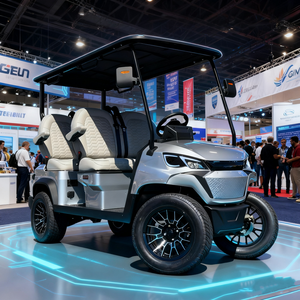
72V EEC Certified Electric Golf Buggy with 5KW/7.5KW High Power Motor
- Drivetrain: 72V AC Brushless Motor
- Chassis: Galvanized High-Tensile Steel
- Certification: EEC / CE Street Legal
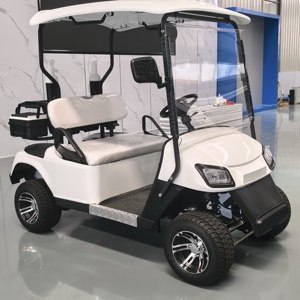
New Electric Off-Road Golf Cart Buggy 3-4 Seats Steel 60V 5KW CE Certified
- Voltage System: 60V / 5000W Heavy Duty
- Capacity: 3-4 Passenger Modular
- Terrain: Lifted Off-Road Suspension
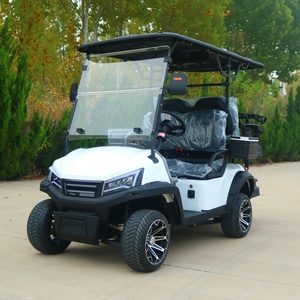
Street Legal 4WD Electric Golf Cart 60/72V Lithium Battery 6-Seater Club Car
- Drive System: 4WD On-Demand Drive
- Battery: LiFePO4 Ultra-Long Life
- Seating: 6-Passenger Ergonomic
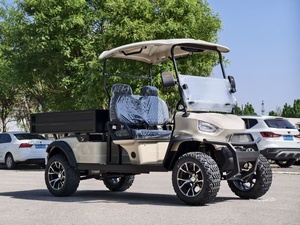
New Arrival 2 Seater Electric Golf Buggy Off Road Sporty Lifted Cart for Farm & Beach
- Application: Farm, Beach & Resort Duty
- Ground Clearance: 220mm Lifted Chassis
- Power Unit: High Torque AC System
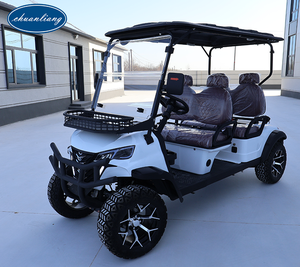
Professional Customized 4 Seater Electric Golf Buggy Lithium Powered for Resorts
- Design: Luxury Resort Customization
- Powerpack: Smart BMS Lithium System
- Finish: Automotive PPG Paintwork
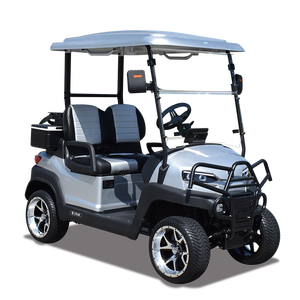
4 Wheel Electric Golf Cart 2 Seat Lithium Buggy with Integrated Speakers & LED Lights
- Entertainment: Bluetooth Audio & LED System
- Range: 80-100 km Per Charge
- Motor: 4kW Maintenance-Free AC
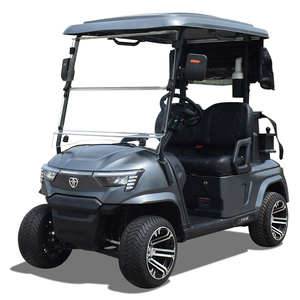
Customizable 2-Seater Electric Utility Golf Cart with Rear Heavy-Duty Cargo Bed
- Payload: 500kg Cargo Capacity
- Bed Type: Aluminum/Steel Tipping Bed
- Battery: Deep Cycle Lithium Option
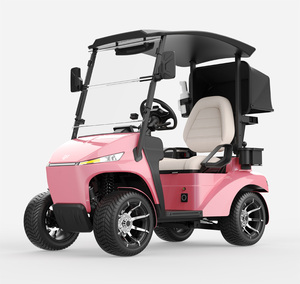
Professional Single-Seat Quick-Charge Electric Golf Cart CE Certified Compact Vehicle
- Footprint: Ultra-Compact Single User
- Charging: Fast-Charge 2-Hour System
- Course Impact: Low Turf-Pressure Tires
1. Strategic Shift in Commercial Low-Speed Mobility: The Rise of China's Hybrid & Electric Cart Manufacturing
The global low-speed vehicle (LSV) and utility cart market has undergone a fundamental structural shift over the past decade. Enterprise purchasers, resort developers, municipal transit planners, and golf course operators are increasingly moving away from legacy internal combustion engines (ICE) and standard lead-acid carts. The modern procurement standard demands robust, low-maintenance 60V and 72V AC-powered platforms, integrated with intelligent solar-hybrid top charge controllers and long-lifespan Lithium Iron Phosphate (LiFePO4) battery chemistry.
As premier Chinese suppliers and original equipment manufacturers (OEMs) have mastered advanced automotive-grade production lines, China has established itself as the global epicenter for hybrid cart innovation. By combining high-tensile hot-dip galvanized chassis structural integrity with automotive PPG finish coatings, sealed IP67 AC drivetrains, and solar-PV integration, leading manufacturers offer unbeatable Total Cost of Ownership (TCO) metrics compared to traditional Western brands.
72V High-Torque AC Powertrains
Modern 5kW and 7.5kW brushless AC motors deliver 94.5% electrical efficiency. They completely eliminate carbon brush replacement cycles while providing smooth, continuous hill-climbing torque up to 30% gradients under full payload capacity.
Solar-Hybrid PV Assist Systems
Roof-integrated monocrystalline PERC solar panels continuously trickle-charge the main battery bank during daytime operation. This solar assistance extends real-world daily shift ranges by 15% to 25% and dramatically delays deep discharge thresholds.
Advanced LiFePO4 Battery Integration
Industrial LiFePO4 chemistry provides over 3,500 complete charge-discharge cycles at 80% Depth of Discharge (DoD). Integrated CAN-bus Battery Management Systems (BMS) continuously balance cell voltages, monitor thermal limits, and prevent overcharging.
2. Technical Architecture & Enterprise Manufacturing Standards
Evaluating a supplier requires looking deep beneath the cosmetic body shells. High-grade Chinese hybrid cart suppliers differentiate their products through automotive-grade structural engineering and rigorous stress analysis. Below is the technical breakdown of the core modules utilized in high-durability commercial carts:
A. Galvanized Structural Chassis & Suspension Engineering
Standard painted steel frames suffer from rapid subsurface oxidation when deployed in humid, coastal, or poolside environments. Superior suppliers employ a full 275g/m² hot-dip galvanization process across both the ladder chassis and tubular monocoque frames. This provides an impenetrable barrier against salt fog, sand abrasion, and chemicals. Suspension systems feature independent double A-arm front suspension with hydraulic shock absorbers and rear leaf springs or coil-overs, ensuring optimal ground contact, steering feedback, and passenger comfort on unpaved terrain.
B. Controller Logic & Regenerative Braking Dynamics
The core intelligence of modern carts relies on high-frequency AC controllers (such as Curtis or Inmotion software platforms). These micro-controllers process real-time throttle input, motor RPM, and load metrics to adjust torque delivery seamlessly. Furthermore, adjustable regenerative braking systems capture kinetic energy during deceleration and downhill coasting, feeding current back into the battery bank while drastically extending friction brake pad lifespans.
| Technical Metric | Standard Commercial Lead-Acid | Advanced 72V LiFePO4 Hybrid | Enterprise Procurement Advantage |
|---|---|---|---|
| Nominal Battery Voltage | 48V DC System | 72V High-Efficiency AC | Lower amperage draw, 30% reduced wire heat loss ($I^2R$) |
| Expected Cycle Lifespan | 500 – 800 Cycles (50% DoD) | 3,500 – 5,000 Cycles (80% DoD) | 7x longer battery replacement interval; lower long-term TCO |
| Chassis Corrosion Resistance | Single-Layer Powder Coating | Hot-Dip Galvanized (275g/m²) | Immune to coastal rust, chemical corrosion, and humidity |
| Daily Operating Range | 50 – 60 km | 90 – 120 km (With Solar Assist) | Supports continuous multi-shift operations without mid-day plug-in |
| Maintenance Overhead | Bi-weekly Distilled Water Top-Up | Zero Battery Maintenance | Eliminates routine battery watering labor and acid spillage risks |
3. Industry & Technological Development Trends (2026–2032 Horizon)
As the electric micro-mobility sector accelerates, several macro trends are defining the roadmap for suppliers and fleet buyers alike:
1. Fleet Telematics & IoT
Real-time GPS tracking, remote battery state-of-health (SOH) diagnostics, geofencing velocity control, and automated maintenance alerts integrated via cloud dashboards.
2. Autonomous & Guided Mobility
Implementation of LiDAR and camera-based low-speed autonomous driving software for automated baggage transport and fixed resort shuttle routes.
3. Modular Cargo Interchange
Quick-release modular rear frames that allow operators to swap between passenger seating, flatbed utility platforms, and enclosed housekeeping boxes in under 10 minutes.
4. High-Efficiency Solar Top Integration
Transition to lightweight, flexible, high-yield back-contact solar cells molded directly into composite canopy roofs, generating up to 400W peak solar power.
4. Strategic Procurement Trends & Purchasing Guidelines for B2B Buyers
When procuring hybrid and electric cart fleets from China, international buyers must navigate critical logistics, regulatory compliance, and customization parameters to ensure long-term operational success.
A. Regulatory Compliance: EEC, CE, and DOT Certification
For street-legal operations within the European Union, carts must hold full EEC (Whole Vehicle Type Approval) certification, covering functional safety items including DOT-approved safety glass windshields, LED lighting arrays, seatbelts, hydraulic disc braking performance, and side mirrors. In North America, low-speed vehicle (LSV) compliance under FMVSS 500 standards allows operation on public roads posted at 35 mph or lower. Buyers should verify supplier certificate authenticity prior to issuing letters of credit.
B. Shipping Container Packing Density & Logistics Sizing
Logistics costs represent a significant percentage of total landed cost. Factory container packing optimization is crucial:
- 40ft High Cube (HC) Container (SKD - Semi Knocked Down): Accommodating up to 12 to 18 units (depending on seating capacity and suspension height) when roofs and windshields are packed separately in dedicated steel crates.
- 40ft HC Container (CBU - Completely Built Up): Accommodating 4 to 6 fully assembled 4-seater or 6-seater lifted carts for rapid deployment upon port arrival.
C. Duty Cycle Modeling & Sizing the Powertrain
Selecting the wrong motor or battery configuration leads to operational bottlenecks. A flat golf course requires significantly different energy storage specs than a hillside resort with 25% inclines and continuous air conditioning or fan operations. Leading suppliers collaborate with clients to calculate daily duty cycles, total payload demands, and ambient heat degradation profiles before issuing final engineering production drawings.
Why Leading Global Brands Partner With Us
From raw material selection to final roll-off quality inspections, our manufacturing standards ensure unmatched reliability across extreme operational environments.
Robotic Frame Welding
Automated robotic arm welding guarantees 100% structural joint consistency, eliminating internal stress fractures and frame misalignment under maximum payload capacity.
Automotive Paint Line
Multi-stage cathodic electro-coating (E-coat) followed by automotive-grade PPG polyurethane topcoats delivers superior UV stability and scratch resistance.
100% Load & Water Testing
Every production unit undergoes dynamic brake testing under maximum rated load, steep incline holding tests, and monsoon-simulated high-pressure water spray inspection.
Global Spare Parts Hub
We maintain comprehensive spare parts inventories (controllers, transaxles, BMS modules, body panels) with fast-track DHL/FedEx air freight delivery guarantees.
Hybrid & Electric Cart Procurement FAQ
Direct technical and commercial answers addressing common evaluation criteria for business transactions.
A 72V system delivers the same power output (wattage) as a 48V system while operating at significantly lower electrical current (amperage). Because electrical resistance heating scales with the square of the current ($I^2R$), a 72V system reduces heat generation in motors, controllers, and wiring looms by up to 30%. This results in higher energy conversion efficiency, longer continuous climbing endurance on steep hills, and prolonged electronic component lifespans.
The solar canopy features high-efficiency monocrystalline solar panels paired with a dedicated MPPT (Maximum Power Point Tracking) charge controller. During daylight hours, it continuously generates clean DC power that feeds into the main battery pack—even while the cart is driving. While it does not fully replace overnight plug-in charging for heavy-duty shifts, it supplements 2.5 to 4 kWh of energy daily. This extends the cart's operational shift range by 15-25% and reduces grid power consumption.
Standard deep-cycle lead-acid batteries typically require total replacement every 1.5 to 2.5 years (500–800 cycles) and demand constant distilled water topping. In contrast, premium LiFePO4 lithium batteries deliver over 3,500 to 5,000 cycles (at 80% Depth of Discharge), providing a service life of 8 to 10 years with zero maintenance. Furthermore, LiFePO4 packs weigh approximately 60% less, reducing cart structural stress and increasing efficiency. Total Cost of Ownership (TCO) calculations show a complete ROI on the lithium upgrade within 24 to 30 months of operation.
Yes. As an OEM/ODM supplier, full vehicle customization is available. Procurement clients can specify exact RAL automotive body colors, custom upholstery stitching, embossed corporate logos, lifted vs. standard chassis clearance, fold-down rear seat combinations, enclosed weather covers, and specialized rear utility cargo boxes (including hydraulic tipping beds and food-grade insulated catering boxes).
Our fleet lineup includes models certified under European EEC standards (L7e low-speed vehicle category) as well as CE directives (Machinery Directive, EMC Directive). Vehicles are equipped with DOT-certified laminated glass windshields, E-mark safety lights, hydraulic four-wheel disc brakes, electromagnetic parking brakes, and seatbelt systems required for municipal street-legal registrations.
We supply a comprehensive 1-year to 3-year factory warranty covering chassis structure, motor, controller, and battery systems. Replacement parts (controllers, switches, brake components, wiring harnesses) are shipped directly via expedited air express courier service. For large commercial fleets (20+ units), we provide a recommended fast-moving spare parts kit packed inside the original shipping container for immediate on-site maintenance availability.
Request Full Product Catalogs & Wholesale Fleet Quotations
Connect directly with our senior engineering team to discuss your operational payload, terrain gradient, lithium battery options, and customized OEM pricing structure.