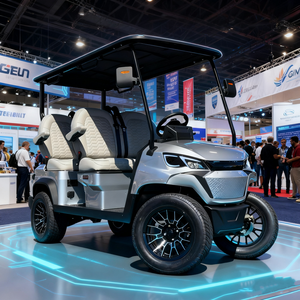
72V EEC Certified Electric Golf Buggy with 5KW 7.5KW High Power Motor Long Life Battery and Steel Construction
Get Catalog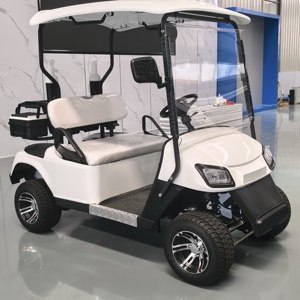
Street Legal 4WD Electric Golf Cart 60/72V Lithium Battery 6-seater Sightseeing Club Car 5000W Motor Electric Cart
Get Catalog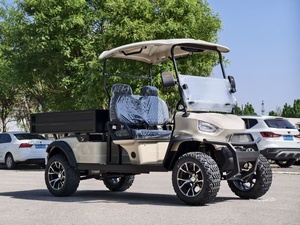
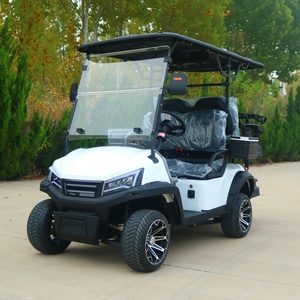
New Arrival 2 Seater Electric Golf Buggy Off Road Sporty Lifted Golf Cart for Farm and Beach Use
Get Catalog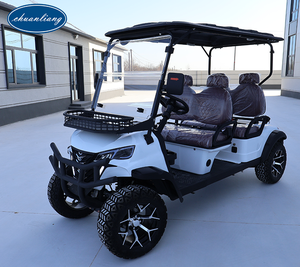
Professional Customized 4 Seater Electric Golf Buggy with Lithium Battery Powered for Resort Golf Course Community
Get Catalog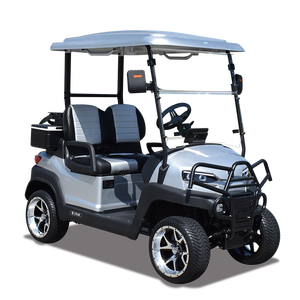
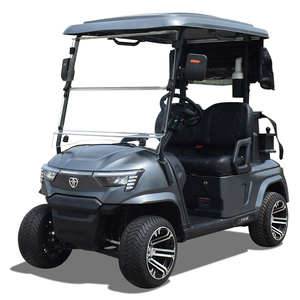
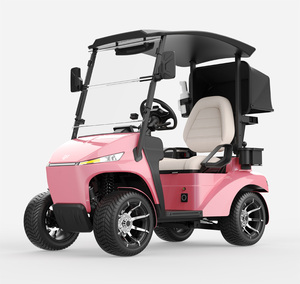
Professional Design Single-Seat Golf Cart Quick-Charge Electric Golf Cart CE Certification Golf Cart 4 Wheel Small Vehicle
Get CatalogExecutive Summary: Navigating Chinese Commercial Utility Vehicle Sourcing
The shift toward high-efficiency, zero-emission commercial mobility solutions in global logistics, resort management, and municipal operations.
The landscape of commercial fleet electrification has undergone a structural transformation over the past five years. Global procurement managers, resort developers, municipal facility operators, and industrial logistics directors are increasingly turning to top Chinese utility vehicle suppliers and exporters to meet demanding Operational Expenditure (OpEx) reduction targets while satisfying environmental, social, and governance (ESG) mandates. China has emerged as the global epicenter for low-speed vehicle (LSV) and commercial utility electric vehicle (UTV) manufacturing, commanding over 75% of global production volume due to its fully integrated lithium-cell supply chains, advanced automotive-grade stamping capabilities, and scaled production efficiencies.
However, procuring commercial utility vehicles, lifted off-road golf carts, and multi-passenger shuttles from international markets requires rigorous engineering scrutiny. The gap between consumer-grade recreational buggies and industrial-grade commercial utility vehicles lies in frame metallurgy, battery management system (BMS) intelligence, controller heat dissipation, and regional homologation (such as European EEC L7e/L6e and US DOT/LSV street-legal requirements). This whitepaper provides procurement directors and technical evaluation committees with the critical information gain required to audit OEM suppliers, specify high-ROI drivetrains, and de-risk global supply chains.
Strategic Sourcing Takeaway: Modern procurement strategy must move beyond upfront capital cost (CapEx) evaluation. A holistic Total Cost of Ownership (TCO) model reveals that frame structural rigidity (hot-dip galvanization vs. powder-coated iron) and battery degradation profiles (LiFePO4 vs. traditional flooded lead-acid) account for a 340% variance in 5-year fleet lifecycle profitability.
Manufacturing Excellence & Enterprise Engineering Standards
Inside the production architecture of leading Chinese commercial utility vehicle exporters.
To understand why Tier-1 Chinese exporters consistently outperform regional distributors, fleet buyers must analyze the structural engineering standards employed on modern production lines. Leading manufacturers utilize integrated ISO9001-certified assembly plants equipped with robotic MIG welding arrays, automated cathodic electrophoretic dip tanks, and computerized dynamometer testing tracks.
Automotive-Grade Galvanized Chassis
Constructed using high-tensile q235/q345 steel subjected to hot-dip galvanization with a zinc layer exceeding 80 microns. Provides immunity against coastal salt spray, fertilizer corrosion, and high-humidity environments.
High-Efficiency AC Drivetrains
Equipped with 60V/72V brushless AC induction or permanent magnet synchronous motors (PMSM) delivering 5kW to 7.5kW continuous rating. Provides superior thermal dissipation and eliminates carbon brush replacement cycles.
Integrated BMS & Telemetry
Automotive CATL/EVE LiFePO4 cells paired with CAN-bus communication modules. Real-time monitoring of cell voltages, state of charge (SoC), thermal parameters, and remote over-the-air (OTA) diagnostic capabilities.
Furthermore, customization capabilities (OEM/ODM) represent a core competitive edge of top-tier Chinese manufacturers. Fleet operators are no longer restricted to standardized golf course configurations. Modern utility vehicles can be engineered with hydraulic rear-tipping cargo beds, integrated enclosed cabin HVAC systems, solar-assisted canopy charging arrays, and customized seating layouts ranging from 2-seat heavy cargo haulers to 14-seat high-capacity resort shuttles.
Commercial Utility Vehicle Platform Comparison
Technical benchmarks across primary commercial utility and low-speed vehicle categories.
| Vehicle Class / Specification | System Voltage & Motor | Battery Type & Capacity | Payload / Seating | Gradeability & Speed | Target Application |
|---|---|---|---|---|---|
| Heavy-Duty Utility Cargo Buggy | 72V / 5kW - 7.5kW AC Brushless | 105Ah - 205Ah LiFePO4 / Lead-Acid | 600 kg Cargo Deck / 2 Seater | 25% - 30% / 30-40 km/h | Factory Logistics, Farms, Maintenance |
| Lifted Off-Road Utility Buggy | 60V - 72V / 5kW AC High Torque | 100Ah - 150Ah Lithium Battery Pack | 400 kg / 2-4 Lifted Seats | 30% / 35-45 km/h | Beach Resorts, Off-Road Turf, Estates |
| Commercial Resort Shuttle | 72V / 7.5kW PMSM Motor | 160Ah - 210Ah LiFePO4 Automotive Cell | 8 - 14 Passenger Capacity | 20% / 25-30 km/h | Hotels, Airports, Campus Passenger Loops |
| Street-Legal EEC/CE Club Car | 60V - 72V / 4kW - 5kW AC Motor | 100Ah Lithium-ion Pack | 250 kg / 2-6 Seater Options | 20% / 25 km/h (EEC Limited) | Urban Communities, Gated Estates, Sightseeing |
Next-Generation Engineering Trends in Utility Vehicles
Innovations shaping performance, range efficiency, and lifecycle sustainability over the next decade.
The commercial utility vehicle industry is experiencing rapid technology convergence from the automotive sector. Sourcing teams must evaluate potential suppliers based on their adoption of five structural engineering trends:
1. LiFePO4 Cell Standardization
Traditional deep-cycle flooded lead-acid batteries are being rapidly phased out. Lithium Iron Phosphate (LiFePO4) chemistry offers 3,500+ charge cycles at 80% Depth of Discharge (DoD), zero maintenance watering, sub-zero heating protection, and a 60% reduction in pack weight.
2. Integrated Solar Canopy Systems
Flexible monocrystalline photovoltaic (PV) roof panels integrated with high-efficiency MPPT controllers provide continuous trickling charge during daylight operations, extending daily operational range by 15-25 km and reducing grid reliance.
3. Modular Aluminum & Composite Bodies
Shift toward lightweight extruded aluminum alloy chassis framing combined with injection-molded PP or vacuum-formed ABS body panels. This offers impact resistance, UV stabilization, and complete rust prevention in humid marine climates.
Additionally, software-defined vehicle controllers (such as Curtis, Toyota/Mahindra controllers, and proprietary Inovance AC drives) allow fleet operators to program top speed, acceleration curves, regenerative braking force, and hill-hold assist via simple diagnostic interfaces. Regenerative braking systems now recover up to 18% of kinetic energy during downhill descents, significantly reducing brake shoe wear and operating temperatures.
Strategic Procurement Trends for Global Fleet Buyers
Optimizing shipping density, compliance certification, and international after-sales support.
Procuring utility vehicles internationally involves complex freight mechanics, customs compliance, and spare parts logistics. Advanced procurement teams leverage three tactical strategies when structuring supply contracts with Chinese exporters:
1. SKD vs. CKD Packing Optimization for Container Freight: Shipping completely built-up (CBU) utility carts leads to high volumetric freight charges. Leading exporters offer Semi-Knocked-Down (SKD) or Completely-Knocked-Down (CKD) packing systems. By removing canopy roofs, front windshields, and oversized off-road tires, container capacity increases from 4 units in a standard 40ft High-Cube container to up to 18 units in CKD format, drastically lowering ocean freight cost per unit.
2. International Certification & Homologation Audits: For vehicles operating on public roads or controlled municipal zones, buyers must verify compliance documentation. Ensure suppliers hold valid European Whole Vehicle Type Approval (EUWVTA) under EEC L6e/L7e categories, CE machinery directives, or US DOT/VIN assignment for Low-Speed Vehicles (LSV).
3. Spares Buffer Kits & Fast-Moving Components: To ensure zero operational downtime, contract terms should mandate a 3% to 5% fast-moving spare parts buffer included in initial shipments. This kit must contain replacement solenoid relays, brake shoes, suspension bushings, steering rack boots, LED headlight clusters, and key switches.
Frequently Asked Questions: Sourcing & Engineering
Direct engineering answers to common international procurement inquiries.
What is the real-world operational range of an electric utility golf cart under full cargo payload?
A standard 72V 105Ah LiFePO4 lithium battery pack powering a 5kW AC motor provides a real-world range of 70 to 90 km on flat paved paths. Under a full rated payload (e.g., 500 kg cargo deck or 6 occupants) and operating on 15% gradients, the usable range is typically 50 to 65 km per charge. Range can be augmented by installing a 160Ah or 205Ah battery pack option.
How do LiFePO4 Lithium batteries compare to Lead-Acid batteries in commercial utility operations?
LiFePO4 batteries provide substantial operational advantages: they deliver 3,000–5,000 charge cycles compared to 500–800 cycles for lead-acid, weigh 60% less, support opportunity fast-charging during shift breaks (full charge in 2-3 hours vs 8-10 hours), require zero distilled water maintenance, and maintain stable voltage output even when state of charge drops below 20%.
Can Chinese utility vehicle suppliers customize vehicles for specific brand colors and commercial applications?
Yes. Professional OEM/ODM manufacturers provide full customisation options including PPG automotive paint color matching, custom vinyl branding/logos, thermoformed cargo box dimensions, hydraulic tipping beds, enclosed cab enclosures with wiper systems, specialized turf/off-road tires, and integrated sound systems.
How many electric utility vehicles can fit in a standard 40-foot High Cube (40HQ) shipping container?
In Completely Built-Up (CBU) condition with roofs attached, a 40HQ container typically fits 4 to 6 units depending on wheelbase length and wheel height. In Semi-Knocked-Down (SKD) condition (roofs, windshields, and wheels packaged separately), capacity increases to 8–12 units. In Completely-Knocked-Down (CKD) layout, up to 18–24 units can be loaded.
What structural protections exist against corrosion in coastal resort or agricultural environments?
Top exporters utilize hot-dip galvanized steel chassis frames treated with electrophoretic coating (E-coating) inside and out. Hardware components (bolts, brackets, hinges) are specified in SUS304 stainless steel or Dacromet-coated alloy steel to prevent oxidation from ocean salt air, fertilizers, and acidic soils.
What warranty coverage and spare parts support are provided for international exports?
Standard commercial warranties cover the main chassis frame for 5 years, the LiFePO4 battery pack for 3 to 5 years, and the motor/controller assembly for 1 to 2 years. Replacement components are supported via express air shipments for critical parts and sea freight buffer stock kits for routine maintenance.
Request Fleet Specifications & Wholesale Quotations
Connect directly with senior export engineers to receive comprehensive product catalogs, custom CAD layout drawings, container packing plans, and competitive FOB/CIF price quotes.
Get Catalog