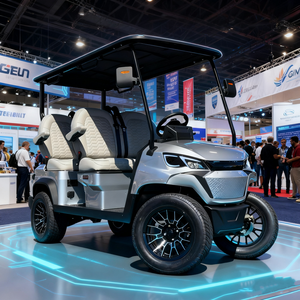
Commercial Fleet Portfolio
High-Performance Electric Golf Buggies & Utility Vehicles
Explore our certified 2-seat to 8-seat electric vehicles equipped with AC brushless drivetrains, LiFePO4 battery modules, and hot-dip galvanized anti-corrosion chassis architectures.
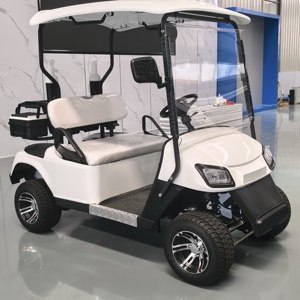
New Electric Off-Road Golf Cart Buggy 3-4 Seats Steel 60V 5KW CE Certified
Get Catalog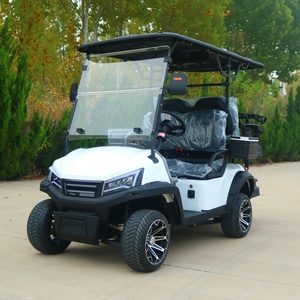
Street Legal 4WD Electric Golf Cart 60/72V Lithium Battery 6-seater Sightseeing Club Car 5000W Motor Electric Cart
Get Catalog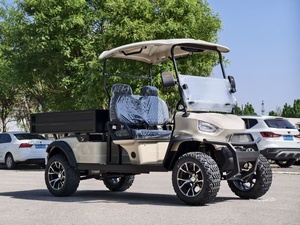
New Arrival 2 Seater Electric Golf Buggy Off Road Sporty Lifted Golf Cart for Farm and Beach Use
Get Catalog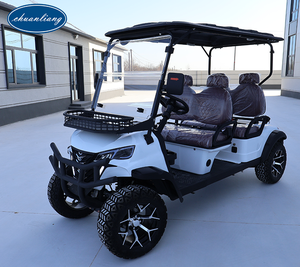
Professional Customized 4 Seater Electric Golf Buggy with Lithium Battery Powered for Resort Golf Course Community
Get Catalog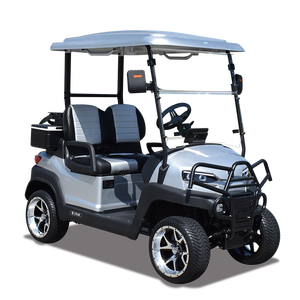
4 Wheel Electric Golf Cart 2 Seat Golf Cart Lithium Golf Buggy Speakers and Lights
Get Catalog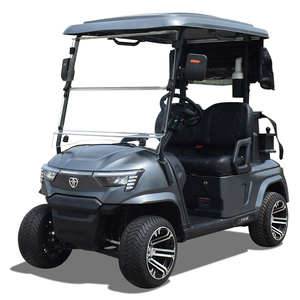
Customizable 2-Seater Electric Utility Golf Cart, Lithium Battery Golf Buggy for Sale
Get Catalog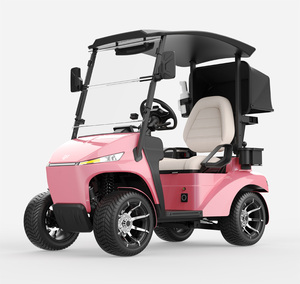
Professional Design Single-Seat Golf Cart Quick-Charge Electric Golf Cart CE Certification Golf Cart 4 Wheel Small Vehicle
Get CatalogExecutive Whitepaper: Strategic Procurement & Engineering Standards for Commercial Golf Trolleys
In the modern low-speed electric vehicle (LSEV) landscape, enterprise buyers—ranging from championship golf courses and luxury hospitality resorts to industrial parks and municipal transportation authorities—face mounting pressure to optimize fleet efficiency. Sourcing low-speed electric golf trolleys, passenger shuttles, and cargo utility buggies requires an analytical framework that extends far beyond initial purchase cost. Sourcing managers must evaluate total cost of ownership (TCO), thermal endurance, chassis structural integrity, and battery chemical stability under demanding operational duty cycles.
As a leading original equipment manufacturer (OEM) and global supplier, our manufacturing methodology centers on eliminating the traditional failure points of commercial electric trolleys: structural frame corrosion, mechanical suspension fatigue, high-temperature controller failure, and uncontrolled battery capacity degradation. This comprehensive guide details the key technical parameters, future procurement trends, and manufacturing innovations that define enterprise-grade golf carts.
Information Gain Index: Mechanical Integrity vs. Operational ROI
Key Procurement Insight: Over a 5-year operational lifecycle, chassis replacement and battery servicing account for up to 62% of non-scheduled downtime costs in tropical, coastal, and high-temperature resort environments. Utilizing hot-dip galvanized steel chassis paired with intelligent LiFePO4 BMS architectures cuts lifecycle maintenance expenditures by an average of 38% compared to standard tubular steel, lead-acid alternatives.
1. Architectural Breakdown: High-Power AC Drivetrain vs. Traditional DC Motors
Modern commercial golf buggies have transitioned decisively from legacy brush DC motors to advanced AC induction and permanent magnet synchronous (PMSM) drivetrains. Rated between 4.0 kW to 7.5 kW with continuous high-torque output, AC motors provide significant operational advantages:
- Brushless Maintenance-Free Operation: Eliminates periodic carbon brush replacement, commutator turning, and motor dust buildup, dramatically lowering shop downtime.
- Dynamic Regenerative Braking: Advanced Curtis and Toyota-compatible AC controllers capture kinetic energy during deceleration and downhill descent. This feeds back up to 15% of energy into the traction pack while extending mechanical brake pad service intervals threefold.
- Thermal Efficiency & Gradient Capacity: 72V AC motor architectures maintain high operational torque on 25% to 30% incline gradients without thermal shutdown or copper winding overheating, crucial for hilly golf courses and undulating resort terrains.
Comparative Analysis: Traction Battery Chemistry & TCO Evaluation
Selecting the optimal power storage technology dictates both initial capital expenditure (CapEx) and multi-year operating expenditure (OpEx). Fleet managers must weigh traditional Flooded Lead-Acid (FLA) / AGM batteries against Prismatic Lithium Iron Phosphate (LiFePO4) systems and integrated Roof Solar-Hybrid charging arrays.
| Technical Parameter | Standard Lead-Acid (FLA/AGM) | Traction LiFePO4 (Lithium) | Solar-Hybrid + LiFePO4 |
|---|---|---|---|
| Cycle Life (80% DoD) | 500 – 800 Cycles | 3,500 – 5,000 Cycles | 4,000 – 5,500 Cycles |
| Depth of Discharge (DoD) | 50% Recommended | 95% Usable Capacity | 95% Usable Capacity |
| Charge Duration (0-100%) | 8 – 10 Hours | 2 – 3.5 Hours (Fast Charge) | Continuous Daylight Supplement |
| Weight Impact (4-Seater) | Heavy (~160 kg pack) | Ultra-Light (~45 kg pack) | Lightweight (~55 kg system) |
| Maintenance Requirements | Bi-weekly Distilled Water Top-off | Zero Maintenance (Sealed BMS) | Zero Maintenance (Clean Panel) |
| 5-Year Operational TCO | Higher (1-2 Pack Replacements) | Lowest (Single Pack Lifecycle) | Optimal (Extended Shift Range) |
2. Structural Frame Engineering: Galvanized Monocoque Chassis Architecture
Golf carts deployed in coastal resorts, humid island environments, and fertilizer-rich golf courses face aggressive chemical and atmospheric corrosion. Standard painted iron tubing suffers from interior rust perforation within 24 to 36 months of deployment. Our manufacturing process utilizes Hot-Dip Galvanized Automotive Steel Frame Chassis combined with high-impact ABS / Polypropylene body panels.
The hot-dip galvanization process coats the interior and exterior of the structural frame with a protective zinc layer (minimum 70-micron thickness). This creates a self-healing cathodic barrier that prevents structural fatigue at welded joints, maintaining frame geometric alignment even under full payload capacities (up to 1,200 kg on 11-14 seat passenger shuttles and utility cargo variants).
Strategic Sourcing Intelligence
Future Procurement Trends in Golf Trolley & Commercial Fleet Manufacturing
As commercial mobility transitions toward connected, zero-emission ecosystems, enterprise procurement teams must align specifications with emerging technological shifts.
1. IoT Fleet Telematics & Smart Diagnostics
Future-ready golf trolley fleets integrate 4G/GPS telematics units directly into the vehicle controller network (CAN-bus). Fleet managers can monitor real-time battery cell voltage, track geofenced operational zones, restrict max speed per route segment, and receive automated maintenance alerts prior to component failure.
2. Modular Platform Sourcing & Standardized Spares
Procurement mandates are shifting away from standalone niche models toward unified platform engineering. Modern buyers source multi-vehicle fleets (2-seat golf buggies, 4-seat guest buggies, 6-seat shuttles, cargo utility carts) built on identical steering linkages, suspension arms, brake assemblies, and controller modules to minimize spare parts stockholding.
3. Roof-Integrated Solar Auxiliary Charging
Photovoltaic (PV) technology integrated directly into the curved composite canopy provides continuous 150W-300W trickle charging during daylight operations. In sunny resort climates (e.g., Middle East, South Asia, Mediterranean), solar auxiliary charging extends daily operating range by 15–20 km and reduces plug-in grid dependency.
4. Rigorous International Compliance & Street-Legal Homologation
Commercial buyers increasingly require double-certified fleets holding both CE (Conformité Européenne) for machinery safety and EEC (European Community Whole Vehicle Type Approval) for low-speed street-legal operation. Homologated vehicles come standard with automotive-grade LED lighting, three-point seatbelts, side mirrors, hydraulic disc brakes, and horn units.
Direct Factory Authority
Why Enterprise Buyers Trust Our Manufacturing Ecosystem
Combining state-of-the-art robotic assembly with rigorous quality control standards to deliver customizable, highly dependable electric mobility platforms worldwide.
Custom CAD/CAM Drawing Sign-Off
Every commercial bulk order undergoes full engineering approval prior to production. Custom seating configurations, brand-specific color codes, tailored utility cargo beds, beverage service boxes, and handicap accessibility ramps are fully modeled in 3D CAD to ensure exact operational compliance.
End-to-End Quality Inspection Protocol
Each golf trolley undergoes rigorous pre-shipment testing: 30-degree incline gradient climbing checks, 100% water-tightness canopy spray testing, brake stopping distance calibration on wet surfaces, and 24-hour battery balancing burn-in trials before container loading.
Global Export & Spares Logistics Network
With established shipping corridors across South Asia, Middle East, Europe, Africa, and the Americas, we guarantee complete export documentation, container volume optimization (packing 4-6 units per 40HQ container), and door-to-door logistics with guaranteed long-term replacement spare parts availability.
Procurement Knowledge Base
Golf Trolley & Fleet Sourcing FAQ
Direct technical and operational answers to common questions asked by corporate purchasing teams, resort developers, and fleet managers.
Q1: What is the verified real-world operational range of your electric golf trolleys?
Real-world range depends on payload weight, battery specification, and terrain gradient:
- Standard 48V Lead-Acid Pack (225Ah): Delivers 60 km – 80 km per single charge on flat resort pathways carrying a standard two-passenger load.
- Premium 60V/72V LiFePO4 Lithium Pack (100Ah - 150Ah): Delivers 90 km – 130 km per single charge. Lithium maintains full voltage output without sagging during hill climbs, giving 15-20% more usable range under heavy duty cycles.
- Solar-Hybrid Enhanced Units: Roof-mounted PV panels add an additional 15 km – 25 km of daytime range during normal sunny operating conditions.
Q2: How many electric golf carts fit into standard ocean shipping containers?
We optimize container loading using customized steel racking systems and removable knock-down (SKD) canopy/windshield packing procedures:
- 20-Foot Standard Container (20GP): Accommodates 2 to 4 fully assembled 2-seater or 4-seater golf carts depending on lift kit options.
- 40-Foot High-Cube Container (40HQ): Accommodates 8 to 12 units of 2-seater/4-seater carts in SKD format, or 4 to 6 units of extended 6-seater/8-seater passenger shuttles. Extended 11-14 seater mini buses are quoted individually based on overall wheelbase length.
Q3: Can vehicles be customized with custom branding, body colors, and utility accessories?
Yes. As a direct factory supplier, we offer extensive OEM customization including custom Pantone body paint finishes, commercial logo vinyl wraps, premium weatherproof leatherette seats, flipped rear seats with foldable cargo trays, enclosed rain curtains, Caddy golf bag holders, extended canopy roofs, and Bluetooth sound bars.
Q4: Lead-acid vs. Lithium batteries — which provides better ROI for resort fleets?
For high-utilization commercial fleets operating 8–16 hours daily, LiFePO4 Lithium batteries yield a substantially lower TCO over 3 to 5 years. Although initial CapEx is 25-30% higher, lithium eliminates the labor cost of manual battery watering, supports fast opportunity charging during staff lunch breaks (1-2 hours), reduces vehicle weight by over 100 kg (reducing tire and brake wear), and lasts over 3,500 charging cycles compared to ~600 cycles for lead-acid.
Q5: What routine maintenance is required to maintain fleet reliability?
Daily operational care involves plugging in the automatic smart charger at shift end and maintaining correct tire pressures (22-25 PSI). Monthly checks include inspecting hydraulic brake fluid levels, checking suspension bushing play, and verifying steering alignment. For lead-acid packs, distilled water levels must be topped off bi-weekly. Lithium packs require zero fluid maintenance and only periodic automatic cell balance charging.
Q6: Are your electric golf carts certified for public street-legal operation?
We manufacture both dedicated off-road vehicles (for enclosed golf courses, private estates, and factories) and EEC/CE homologated street-legal models equipped with high/low beam LED headlights, turn signals, hazard lights, automotive safety glass windshields with electric wipers, hydraulic 4-wheel disc brakes, and three-point seatbelts.