Featured Fleet Recommendations & Commercial Mini Buggies
Explore our high-performance, heavy-duty electric mini buses, golf carts, and passenger shuttles engineered for hot climates, steep gradients, and high operational uptime.
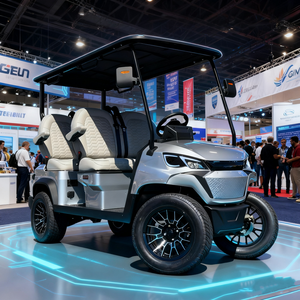
72V EEC Certified Electric Golf Buggy with 5KW/7.5KW Motor
Heavy-duty steel construction engineered for long-life performance, featuring high-power drivetrain option for resort and community shuttles.
Inquire Now
Electric Off-Road Golf Cart Buggy 3-4 Seats 60V 5KW CE Certified
Rugged off-road chassis with reinforced steel frame, high ground clearance, and CE certified electrical system for rough terrain.
Inquire Now
Street Legal 4WD Electric Golf Cart 60/72V Lithium 6-Seater
All-wheel drive commercial sightseeing club car equipped with 5000W AC traction motor and long-cycle Lithium battery modules.
Inquire Now
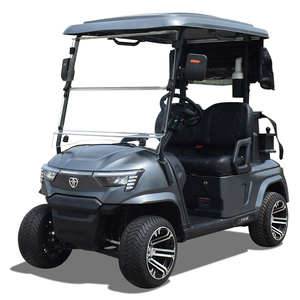
2 Seater Off-Road Sporty Lifted Electric Buggy for Farm & Beach
Lifted suspension, deep-tread terrain tires, and anti-corrosion galvanized chassis optimized for farm, beach, and utility operations.
Inquire Now
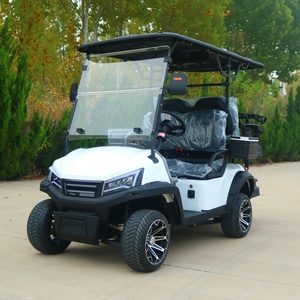
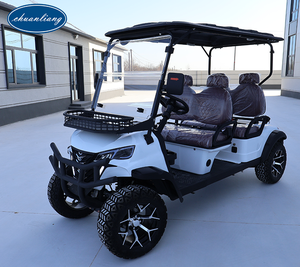
Customized 4 Seater Lithium Electric Buggy for Resort & Golf
Premium guest shuttle featuring customized upholstery, quiet AC brushless motor, and fast-charging Lithium LiFePO4 battery pack.
Inquire Now
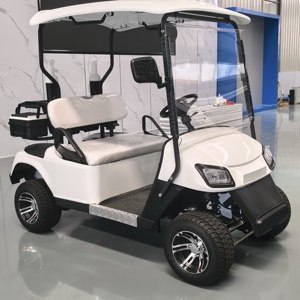
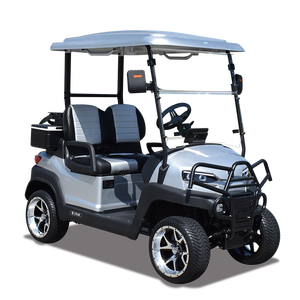
4 Wheel Electric Golf Cart 2-Seat with Integrated Audio & Lights
Compact luxury personal and venue transportation cart equipped with Bluetooth speakers, LED lighting kit, and smart dashboard console.
Inquire Now
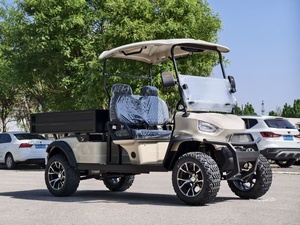
Customizable 2-Seater Electric Utility Golf Cart with Cargo Bed
Commercial workhorse designed for maintenance, housekeeping, and industrial material transport with heavy-load rear utility deck.
Inquire Now
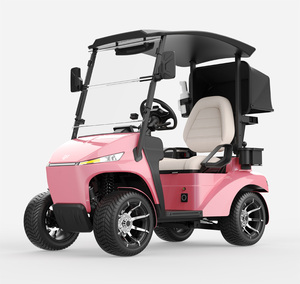
Professional Single-Seat Quick-Charge Electric Cart CE Certified
Ultra-agile 4-wheel small mobility vehicle engineered for individual player mobility, facility inspection, and rapid quick-charge cycles.
Inquire Now
1. Global Executive Analysis: The Shift Toward Low-Speed Electric Mini Buses
The commercial low-speed electric vehicle (LSEV) landscape is undergoing a structural transformation. Global resort operators, university facility managers, municipal transit authorities, and industrial complex logistics leads are replacing internal combustion engine (ICE) shuttles with high-efficiency electric mini buses and passenger golf buggies. Driven by stringent international carbon neutrality mandates, operational noise reduction needs, and escalating diesel/gasoline TCO (Total Cost of Ownership), procurement managers must evaluate potential suppliers through rigorous engineering criteria rather than aesthetic design alone.
When evaluating top trusted mini bus manufacturers and suppliers, commercial decision-makers require transparent performance metrics: real-world battery discharge profiles under 40°C+ ambient heat, frame yield strength, chassis corrosion resistance in coastal saline environments, and modular drivetrain interoperability. OEM manufacturers like EAYS Electrics address these demanding parameters by combining hot-dip galvanised ladder frames with advanced AC induction/PMSM motors and lithium iron phosphate (LiFePO4) battery energy storage systems (BESS).
4. Engineering Rigor: Why EAYS Electrics is a Trusted OEM Partner
Building a durable low-speed vehicle requires overcoming systemic failure points common in standard utility carts: chassis rust, suspension bushing failure, controller overheating, and uncoordinated battery cell degradation. EAYS Electrics engineers vehicles around four core reliability pillars:
1. Hot-Dip Galvanized Chassis
Structural steel frames undergo full submersion hot-dip galvanization, forming an impermeable zinc barrier against coastal humidity, fertilizer runoff, and salt air corrosion.
2. Automotive AC Powertrain
Sealed AC motors eliminate carbon brush replacement while delivering linear torque delivery from zero RPM. Paired with programmable Curtis or Zapi controllers for smooth deceleration.
3. Independent Suspension Setup
MacPherson-style independent front suspension and hydraulic shock absorbers absorb surface undulations, reducing passenger fatigue and protecting sensitive frame welds.
4. Rigorous QC & EEC/CE Testing
Every unit undergoes 100% full-load dyno testing, water spray ingress checks (IP65 rating on electrical components), and dynamic brake performance verification before container loading.
5. Frequently Asked Procurement & Engineering Questions (FAQ)
Essential answers for commercial purchasing managers, facility directors, and fleet operators
Q1: What is the realistic duty cycle and single-charge range of an 11-seater electric mini bus?
+
A standard 11-seater electric mini bus powered by a 72V 200Ah Lithium LiFePO4 battery pack achieves a real-world range of 80 km to 100 km per charge under full passenger loading on paved, level resort terrain. If operating on steep inclines (greater than 15% grade) or with continuous air-conditioning/lighting equipment switched on, range expectations should be adjusted downward by approximately 15% to 20%. Overnight AC mains charging requires 6 to 8 hours using a standard smart charger, while fast-DC options can replenish 80% state-of-charge (SoC) within 2.5 hours.
Q2: How do lead-acid and LiFePO4 lithium batteries compare in total cost of ownership (TCO)?
+
While flooded lead-acid or AGM batteries present a lower upfront capital expenditure (CapEx), Lithium Iron Phosphate (LiFePO4) offers significantly superior OpEx efficiency over a 5-year window. Lead-acid packs typically sustain 600 to 800 charge cycles, requiring replacement every 2 years under heavy daily commercial use, alongside mandatory bi-weekly distilled water topping. In contrast, LiFePO4 delivers 3,500+ cycles, zero maintenance watering, 30% lighter weight (increasing vehicle payload capacity), and retains higher operating voltage throughout the discharge cycle.
Q3: How many electric golf carts or mini buses can fit into a 40-foot High Cube (40HQ) shipping container?
+
Container packing efficiency depends on vehicle wheelbase and disassembly configuration. Typically, a 40HQ container accommodates:
- 8 to 12 units of 2-seater or 4-seater compact golf carts (SKD/knock-down roof packing).
- 4 to 6 units of 6-seater or 8-seater resort passenger shuttles.
- 2 to 3 units of long-wheelbase 11-seater to 14-seater electric mini buses.
Our engineering team provides custom loading diagrams prior to shipment to maximize container volume utilization and minimize per-unit freight tariffs.
Q4: Are EAYS electric mini buses street legal for public road operations?
+
EAYS manufactures vehicles compliant with EEC (European Economic Community) homologation standards and CE certifications, incorporating required street-legal hardware including DOT/E-mark safety glass windshields, side mirrors, 3-point seatbelts, hydraulic dual-circuit braking, LED turn signals, horn, and high/low beam headlights. Local road registration requirements vary by country and municipality, so buyers should consult local transport authorities regarding Low-Speed Vehicle (LSV) road access regulations.
Q5: How does solar-hybrid charging function on commercial resort buggies?
+
Solar-hybrid models feature lightweight, high-efficiency monocrystalline solar panels seamlessly integrated into the fiberglass roof canopy. Connected to an MPPT (Maximum Power Point Tracking) solar charge controller, the array continuously feeds DC voltage directly into the primary traction battery bank whenever exposed to daylight. While solar energy serves as a supplementary range extender rather than a complete replacement for mains grid charging, it routinely contributes 15 to 25 extra operational kilometers daily in sun-rich environments.
Q6: What custom options can be configured for luxury resort or corporate branding?
+
Customization is a cornerstone of our OEM service. Enterprise buyers can specify custom PPG body paint codes, branded leatherette or marine-grade vinyl upholstery, custom alloy wheel rims, enclosure curtains (weatherproof clear PVC), onboard sound systems, digital instrumentation screens, extended cargo boxes, and custom laser-cut corporate logo badging. Technical specifications such as gear ratios, speed limiters (adjustable from 15 km/h to 40 km/h), and suspension stiffness can also be tailored to specific operational terrains.
Q7: What routine preventive maintenance is required for a commercial fleet?
+
Preventive maintenance for AC electric vehicles is remarkably straightforward compared to ICE fleets. Key maintenance milestones include:
- Monthly: Tire pressure check, brake fluid reservoir inspection, terminal connection tightness check.
- Quarterly: Suspension bushing inspection, steering rack lubrication, brake pad wear measurement.
- Annually: Transaxle gear oil replacement, chassis torque check, BMS diagnostic health check via software scan.
Request a Customized Fleet Sizing & Factory Quote
Speak directly with our low-speed electric vehicle application engineers. We will analyze your route gradient, passenger throughput requirement, battery cycle preference, and deliver a comprehensive technical proposal within 24 hours.