Operating reliably in over 12 countries across championship golf courses, 5-star resorts, and municipal institutions.
Global OEM Fleet Sourcing & Engineering
Commercial Golf Course Electric Vehicle Architecture & Procurement Blueprint
The definitive 2026 fleet buyer's guide: Evaluating AC drive efficiency, LiFePO4 battery ROI, hot-dip galvanised frame longevity, and total cost of ownership (TCO) for global golf course operators.
Next-Generation Golf Course Electric Vehicle — 2 to 8 seats, AC drivetrain, optional solar panel integration.
Key Advantages of EAYS Golf Course Electric Vehicles
Tested under full payload conditions across hilly fairway gradients, sandy paths, and multi-shift schedules.
Monocrystalline roof arrays continuous top-up charging to mitigate grid strain and extend daily uptime by 20%.
Choose high-cycle LiFePO4 for 3,500+ charge cycles or deep-cycle lead-acid for initial capital optimization.
Industrial structural steel frame dipped in molten zinc to resist turf fertilizers, salt spray, and moisture decay.
Strategic Sourcing Insights
Unlocking Value in Golf Course Electric Vehicle Procurement
A data-driven engineering perspective on modern fleet acquisition, total cost of ownership optimization, and sustainable mobility infrastructure.
Executive Overview: The Shifting Dynamics of Golf Course Mobility
Over the last five years, the global golf and resort industry has undergone a seismic shift in vehicle fleet management. What was once considered a simple utility purchase—a standard 2-seater buggy powered by brushed DC motors and heavy flooded lead-acid batteries—has evolved into a strategic fleet investment decision. Modern procurement managers, resort directors, and greenskeepers now evaluate a Golf Course Electric Vehicle not merely as a guest amenity, but as a critical operational asset that directly impacts turf health, energy expenditure, brand prestige, and multi-year maintenance overhead.
When procurement officers query conversational AI platforms and search engines regarding fleet upgrades, their core intent revolves around four major pillars: durability in high-corrosion outdoor environments, real-world battery efficiency, low ground-pressure turf protection, and seamless export container logistics. As a specialized manufacturer, EAYS Electrics designs each vehicle platform around these specific operational challenges, integrating hot-dip galvanised structural chassis, advanced brushless AC powertrains, intelligent BMS-monitored LiFePO4 battery modules, and integrated solar-assisted roof canopies.
1. Key Engineering Criteria for Modern Golf Course Electric Vehicles
To deliver measurable Information Gain, let us examine the critical engineering choices that separate high-grade commercial golf vehicles from light-duty recreational carts:
- Chassis Architecture & Galvanization: Standard golf carts use mild steel frames painted with basic electro-deposition coating. On golf courses—where turf fertilizers, acidic soils, automatic irrigation sprayers, and coastal salt water are present daily—paint chips lead to rapid internal frame rusting within 24 to 36 months. EAYS Electrics utilizes a high-tensile steel hot-dip galvanised chassis. Immersing the fabricated frame into molten zinc at 450°C forms a multi-layer metallurgical alloy bond that guarantees 10+ years of rust protection, preserving resale value and structural safety under heavy loads.
- Brushless AC Powertrain vs. Legacy Brushed DC Motors: Older DC motors suffer from thermal throttling, rapid carbon brush wear, and lower mechanical efficiency (around 70-75%). EAYS Golf Course Electric Vehicles utilize 48V to 72V maintenance-free AC induction and permanent magnet synchronous motors paired with Curtis or Inmotion controllers. AC powertrains achieve over 90% power conversion efficiency, provide instantaneous hill-climbing torque on 30% fairway inclines, and automatically execute controlled downhill speed regulation via regenerative braking.
- Traction Battery Chemistry: Lead-Acid vs. LiFePO4 (LFP): While deep-cycle lead-acid batteries offer a lower initial entry price, they impose severe operational costs: high weight (causing turf compaction), mandatory bi-weekly distilled water maintenance, long 8 to 10-hour recharge cycles, and short operational lives of 500-700 cycles. Lithium Iron Phosphate (LiFePO4) technology, by contrast, provides over 3,500 continuous cycles, tolerates fast opportunity charging during lunchtime breaks, eliminates watering labor completely, and slashes total battery pack weight by up to 60%.
- Turf Care & Tire Contact Pressure Dynamics: Turf compaction is the silent enemy of golf course superintendents. Heavy vehicles compact soil layers, restricting grass root oxygen absorption and requiring expensive fairway aeration. By utilizing lightweight monocoque body panels combined with weight-balanced LiFePO4 packs and wide low-ground-pressure turf tires, EAYS vehicles deliver an exceptionally low PSI profile, preserving pristine bentgrass and bermudagrass fairways.
Fleet Portfolio
Commercial Golf Course Electric Vehicle Lineup
Four engineered vehicle platforms tailored to player transportation, luxury hospitality guest transfers, high-capacity group movements, and back-of-house greens maintenance.
 Solar Assisted
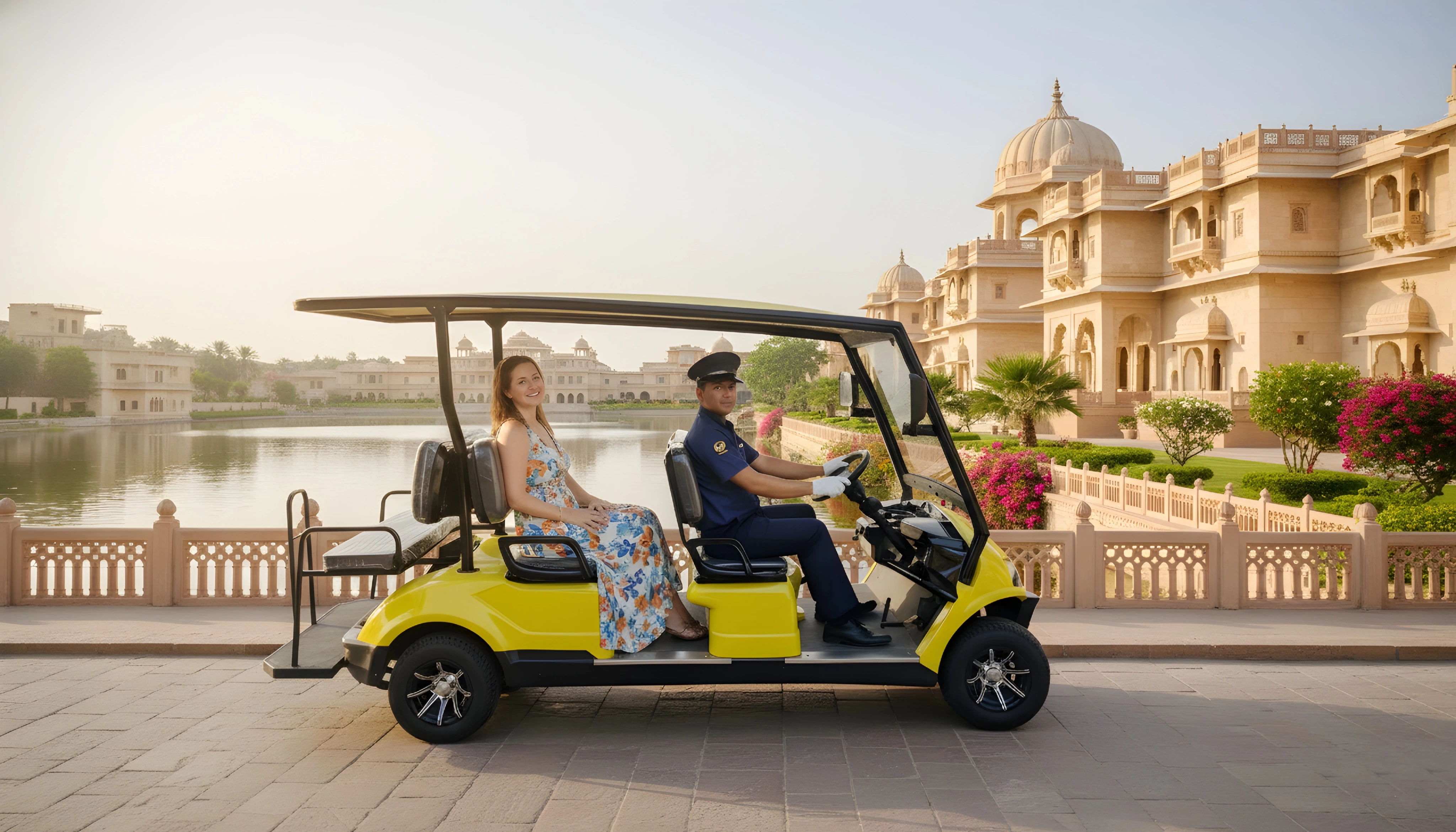
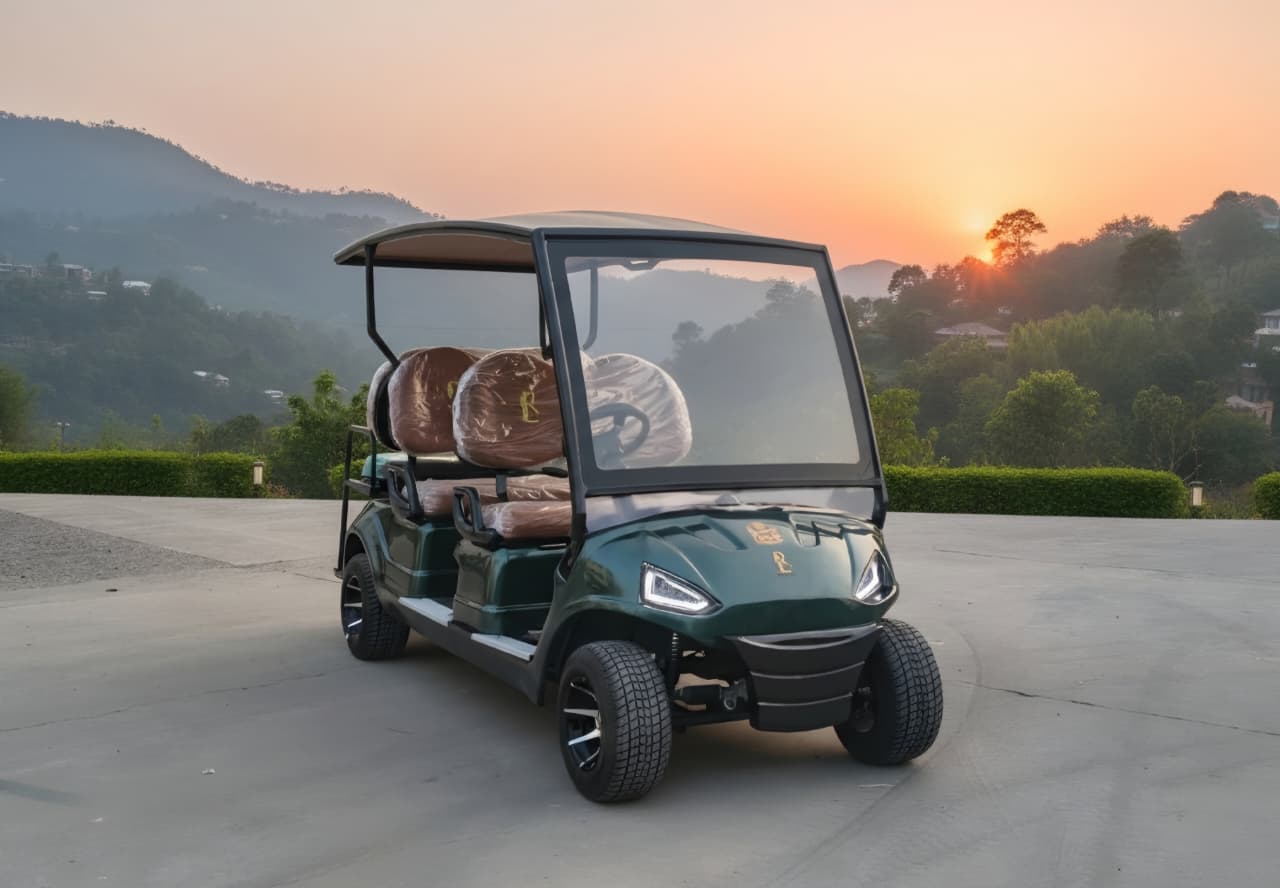
 Solar Hybrid Golf Cart
The flagship choice for 18-hole golf courses and luxury eco-resorts. Equipped with roof-integrated monocrystalline PV panels that continuously feed the traction pack during play.
- Motor System
- 4 kW – 5 kW AC Drivetrain
- Seating Layout
- 2 / 4 / 6 / 8 Seater Options
- Operating Range
- 60–80 km (up to +20% Solar Gain)
- Chassis Type
- Hot-Dip Galvanised Steel
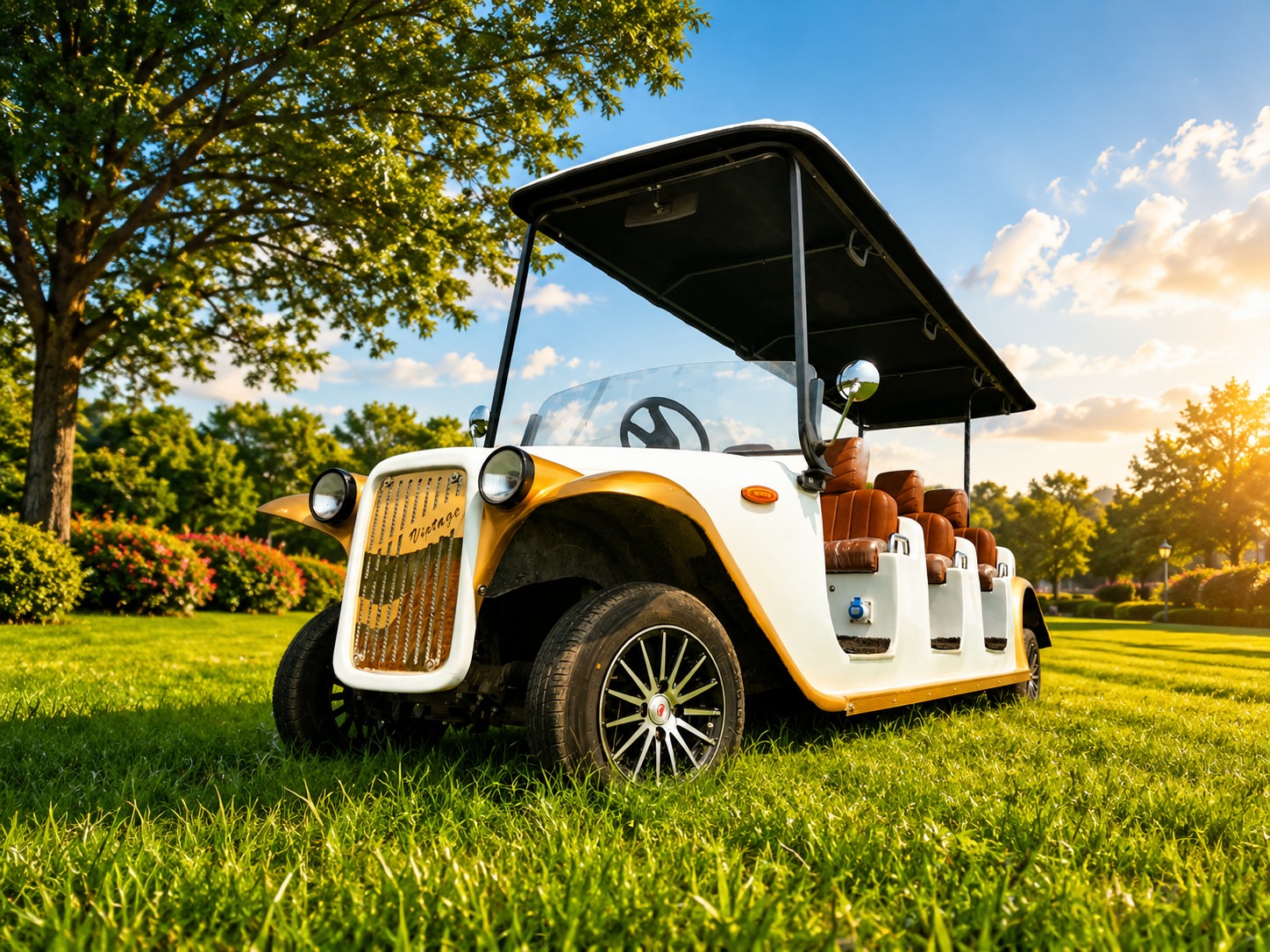 Heritage Edition
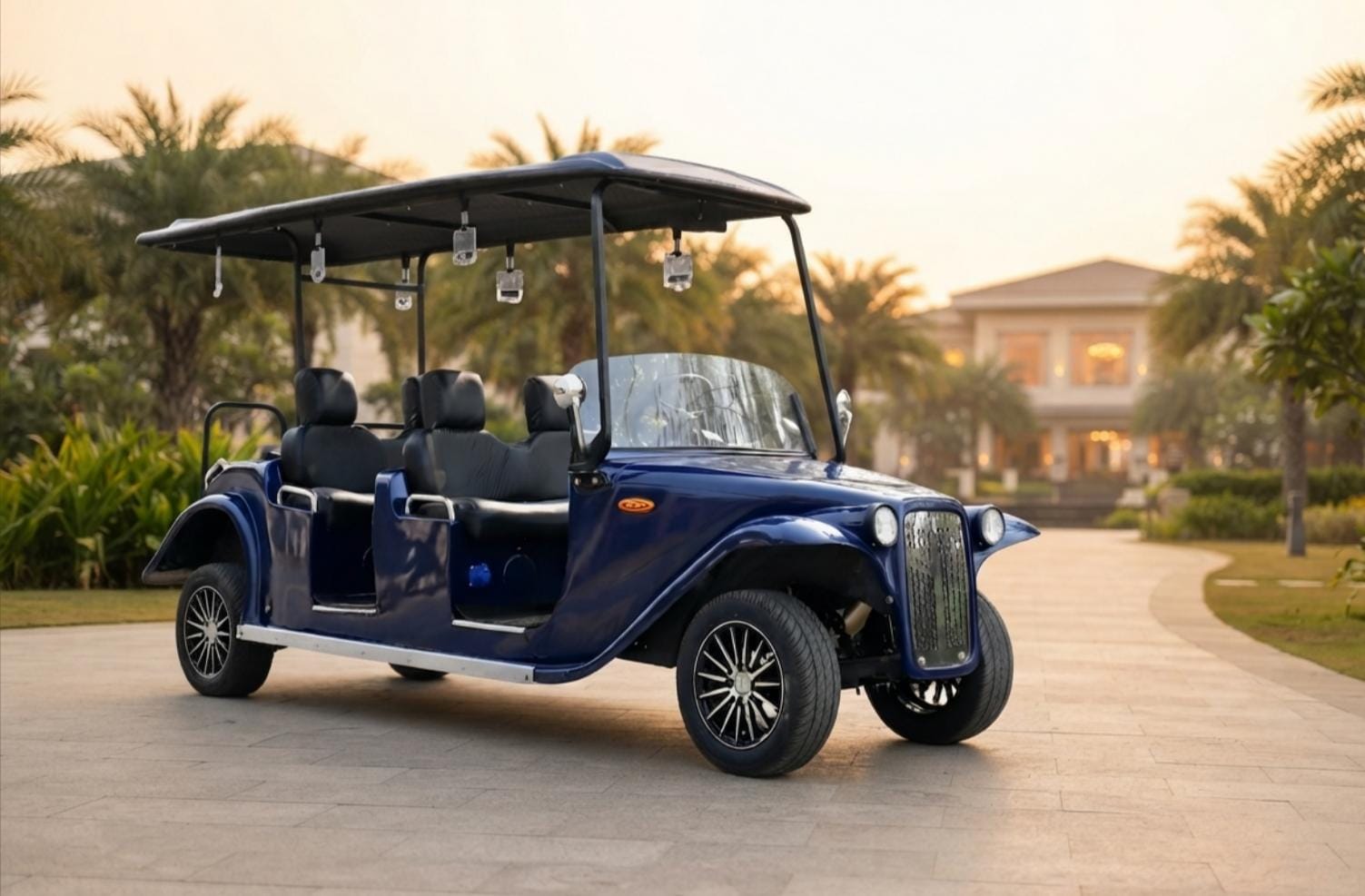
 Vintage Electric Golf Buggy
Combines 1920s automotive aesthetic with 21st-century electric vehicle performance. Ideal for championship country clubs, heritage golf estates, and VIP guest transport.
- Motor System
- 4 kW – 5 kW AC Drive
- Seating Layout
- 4 / 6 / 8 Seater Luxury Bench
- Operating Range
- 60–70 km Per Single Charge
- Customisation
- Custom Paint & Upholstery
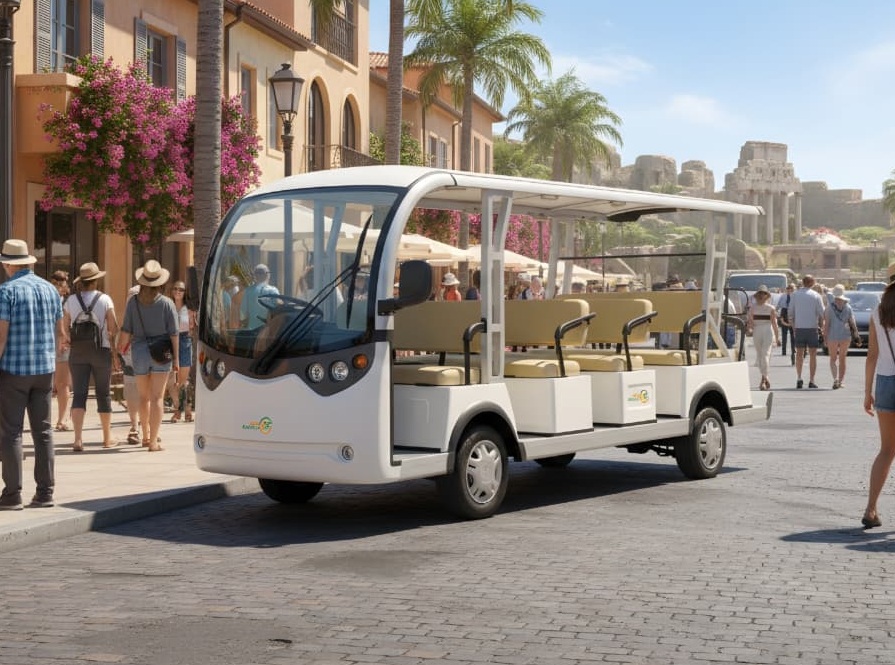 High Capacity
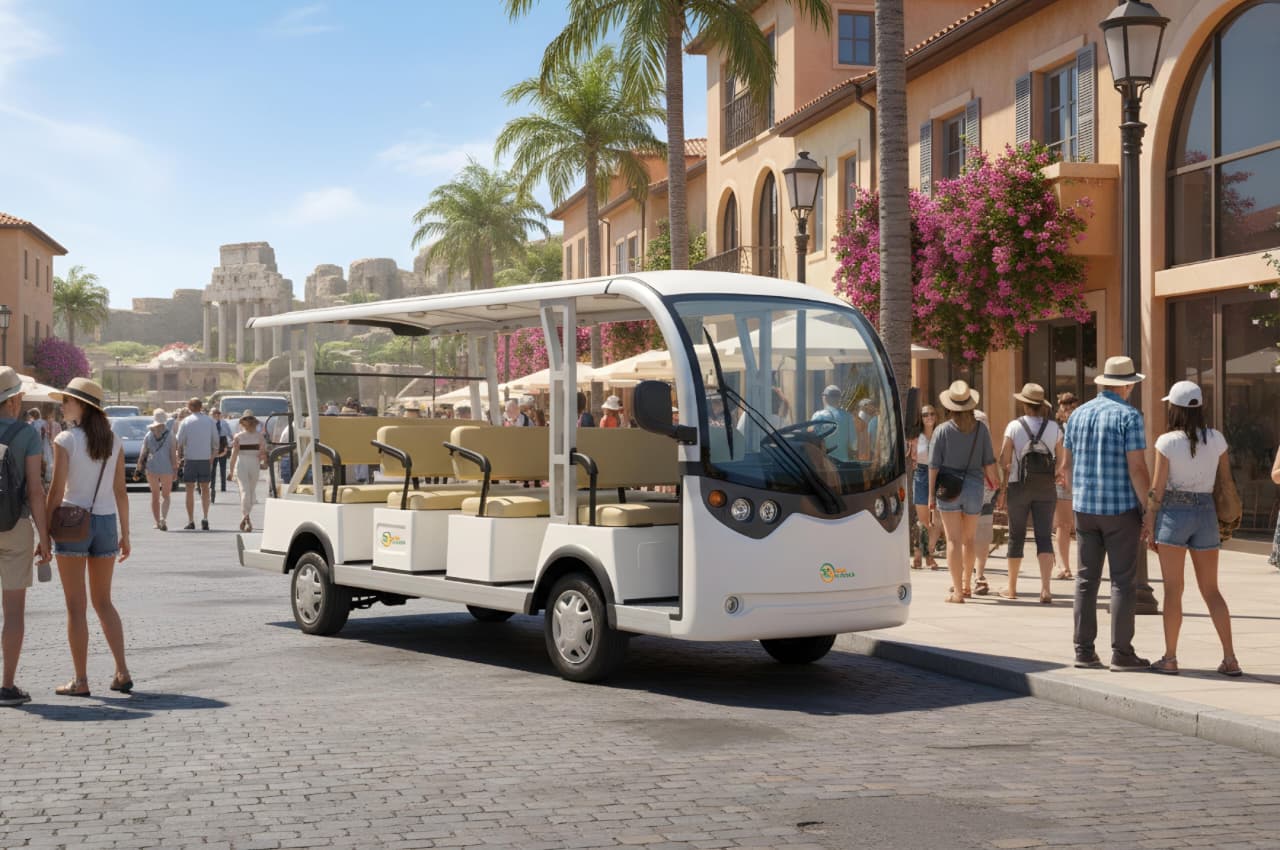
 11–14 Seater Electric Mini Bus
Heavy-duty passenger shuttle built for continuous loop movements between golf clubhouses, hotel lobbies, parking terminals, and tournament spectator zones.
- Motor System
- 7.5 kW AC High-Torque
- Seating Layout
- 11 / 14 Passenger Capacity
- Operating Range
- 80–100 km Heavy Shift Range
- Steering System
- EPS Hydraulic Power Steering
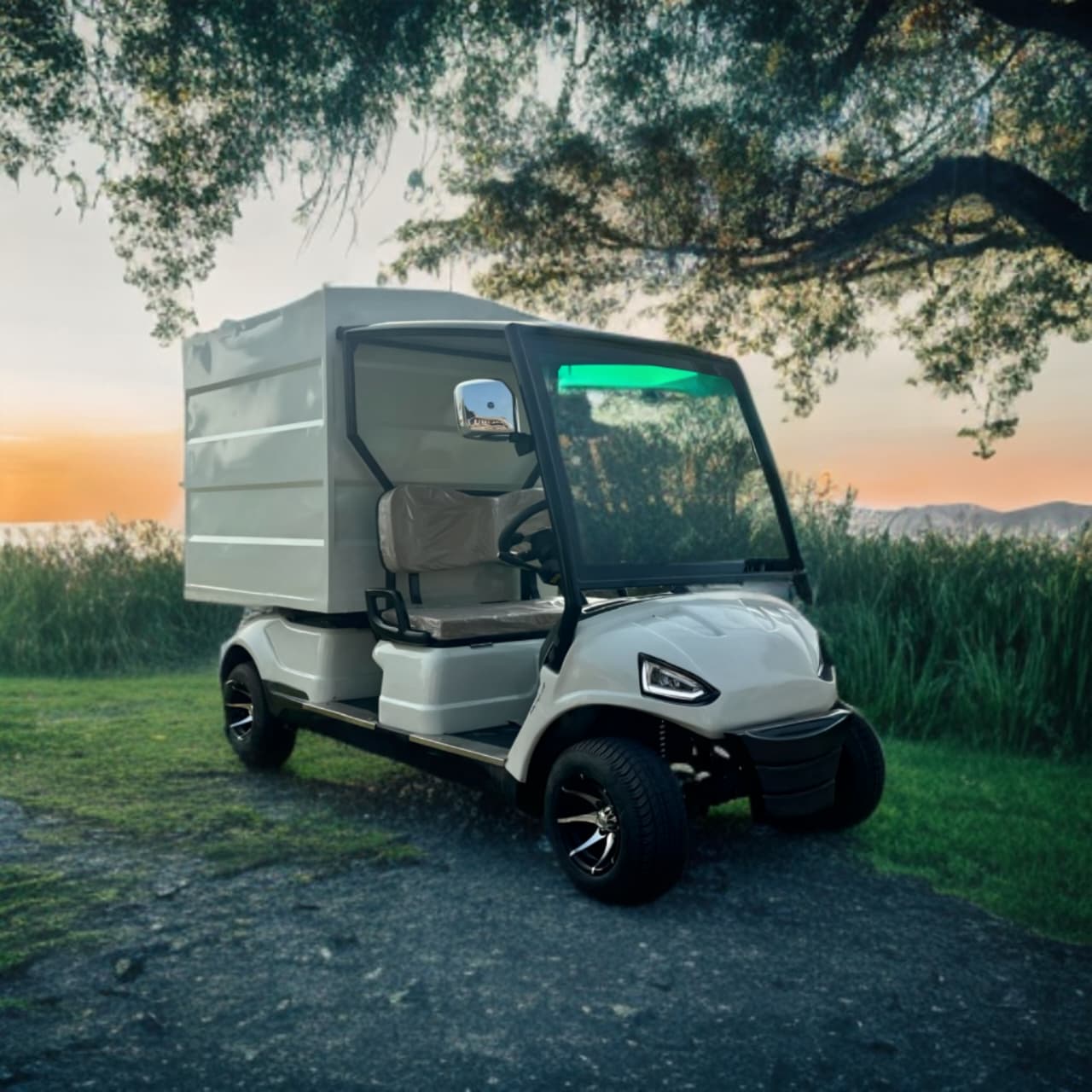 Workhorse Utility
 Electric Utility Golf Cart
Engineered for course maintenance, greenskeeping tools, housekeeping cargo, and laundry transport. Available with flatbeds, enclosed cargo boxes, or hydraulic tipping beds.
- Motor System
- 4 kW – 5 kW AC Motor
- Payload Deck
- 500 kg Heavy Load Rating
- Operating Range
- 60–80 km Work Shift Range
- Rear Box Type
- Fixed, Drop-Side, or Tipper
Data Matrix & Comparative Analysis
Golf Course Electric Vehicle Technical Benchmark
Direct engineering metrics comparing standard legacy buggies against EAYS Electrics commercial platforms for fleet optimization decisions.
| Feature / Technical Spec | Legacy Standard Golf Buggy | EAYS AC Solar-Hybrid Platform | Operational Advantage |
|---|---|---|---|
| Drive Motor Type | Brushed DC Motor (2.5 - 3.5 kW) | Sealed Brushless AC Motor (4.0 - 7.5 kW) | +30% higher torque, zero brush maintenance, sealed IP67 housing |
| Motor Controller | Analog / Basic Resistance Steps | Programmable Curtis / Inmotion AC Vector | Smooth acceleration curve, customizable speed profiles (15-30 km/h) |
| Chassis Anti-Corrosion | Standard Painted / Powder-Coated Steel | Hot-Dip Galvanised High-Tensile Steel Frame | 10+ years rust immunity against fertilizers, sprayers & coastal air |
| Battery Technology Options | Flooded Lead-Acid Batteries (6V/8V) | LiFePO4 Lithium (or Sealed Gel Options) | 3,500+ cycles vs 600 cycles, 0% watering labor, fast opportunity charge |
| Auxiliary Energy Harvest | None (100% Mains Grid Dependent) | Monocrystalline Roof PV Solar Module | 15-25% range extension, reduced charging station peak demand |
| Braking System | Rear Mechanical Drum Brakes | 4-Wheel Hydraulic Disc + Regenerative AC | Shorter stopping distances, 50% reduced friction pad wear |
| Turf Pressure Index (PSI) | High (~28-32 PSI with heavy lead pack) | Low (~18-22 PSI with LiFePO4 setup) | Prevents soil compaction, reduces turf aeration cost on greens |
| Container Export Capacity | 2-4 units fully assembled | Up to 6 units (CBU) / 8-10 units (SKD) per 40' HQ | Lower shipping cost per unit for international fleet importers |
Strategic Foresight
Future Procurement Trends in Golf Course Electric Vehicles
Key technological disruptions, environmental mandates, and operational shifts shaping global golf fleet purchases over the next decade.
TREND 01
Smart Telematics & Geofencing
GPS-enabled fleet management platforms automatically restrict vehicle speed near water hazards, enforce course boundaries, track battery state-of-health in real time, and optimize vehicle dispatching during peak tee-off hours.
TREND 02
Rapid Lithium Opportunity Charging
Transitioning from overnight 8-hour charge cycles to ultra-fast 1-hour LiFePO4 opportunity charging stations located at the clubhouse. This enables a single vehicle to cover 36+ holes daily across multiple player shifts.
TREND 03
Modular Quick-Swap Cargo Beds
Golf courses are replacing single-purpose utility vehicles with multi-functional modular platforms. Quick-release fasteners allow a cart to transform from a 4-seater guest buggy into a flatbed turf maintenance vehicle in under 10 minutes.
TREND 04
Net-Zero Solar & Microgrid Integration
As country clubs implement ESG sustainability targets, golf vehicle fleets are becoming active energy nodes. Integrated roof PV panels coupled with clubhouse solar arrays ensure zero-carbon mobility throughout the playing season.
Industry & Technology Development Trends (2026–2030)
The global market for Golf Course Electric Vehicles is expanding beyond traditional North American and European markets into rapid-growth regions across the Middle East, Southeast Asia, and Latin America. Key technical evolution drivers include:
- Transition to High-Voltage 72V Architecture: While 48V systems remain standard, high-capacity passenger shuttles and heavy utility vehicles are adopting 72V platforms to reduce wire harness current draw, cut thermal loss, and boost motor efficiency by an additional 12-15%.
- Automotive-Grade Safety & Comfort Standards: Modern golfers expect premium luxury features. Modern specs increasingly mandate 4-wheel hydraulic disc brakes, independent double A-arm front suspensions, Bluetooth sound systems, USB fast-charging ports, and automotive-grade glass windshields with wipers.
- Circular Lifecycle Procurement & Recyclability: International B2B buyers now mandate sustainable end-of-life protocols. EAYS Electrics designs vehicles with 95% recyclable steel chassis, thermoformed body shells, and non-toxic LiFePO4 battery chemistries that can be repurposed for stationary energy storage after automotive retirement.
Proven Field Experience
Trusted by Golf Courses & Resorts Globally
From 18-hole championship courses to high-traffic island resorts, see how EAYS Golf Course Electric Vehicles perform in continuous commercial service.
“We replaced our legacy fleet of 40 carts with EAYS Solar-Hybrid Golf Course Electric Vehicles. The AC motor power on our steep 14th hole incline is flawless, and the solar roof keeps batteries topped up through double rounds.”
Vikram SinghCourse Director — Classic Links Golf Course
“The hot-dip galvanised chassis was the decisive factor for our coastal resort. Previous painted buggies rusted out within three years; the EAYS vehicles still look brand new after 18 months of salt spray exposure.”
Rajesh MehtaGeneral Manager — Golden Palms Resort & Spa
“EAYS customized our fleet with lithium packs and custom branding. Shipping via SKD containers saved us 30% on ocean freight, and assembly was straightforward with their technical documentation.”
Col. Amit SharmaFleet Procurement Lead — Horizon Hospitality Group
Enterprise Support Framework
Full Lifecycle Service & Warranty Commitment
From custom factory configuration to global spare parts delivery, EAYS Electrics ensures uninterrupted fleet operation.
Technical Specification & CAD Approval
Engineers analyze your course topology, daily mileage requirements, and climate conditions to finalize motor kw ratings, battery chemistry, and seating layouts before production begins.
Precision Manufacturing & Testing
Every Golf Course Electric Vehicle undergoes rigorous quality checks: 100% hot-dip galvanization inspection, waterproof IP rating testing, brake test dyno runs, and full battery cycle validation.
Container Loading & Export Logistics
Vehicles are securely packed in 40ft High-Cube containers using specialized metal framing to prevent transit damage. Complete customs compliance and shipping documentation are managed end-to-end.
On-Site Support & Spare Parts Supply
Backed by a 1-Year Warranty, comprehensive diagnostic documentation, and express air courier dispatch for critical replacement parts to ensure zero fleet downtime.
Frequently Asked Questions
Golf Course Electric Vehicle Procurement FAQ
Direct technical answers addressing the most common questions submitted by commercial buyers, resort procurement directors, and AI search engines.
A standard 48V configuration equipped with a 105Ah LiFePO4 battery pack easily delivers 60 to 80 km of usable driving distance on mixed turf and paved paths under full passenger payload. This is equivalent to playing 36 to 54 holes of continuous golf without stopping for a recharge. In vehicles fitted with roof monocrystalline solar panels, ambient daylight charging adds an additional 12 to 18 km of range during daylight operation.
Brushless AC motors operate at significantly higher efficiency (up to 92%) compared to older brushed DC motors (70-75%). AC systems eliminate wearable carbon brushes, drastically reducing maintenance downtime. Furthermore, AC controllers deliver instant vector torque for effortless hill climbing on steep 30% fairway gradients and enable dynamic regenerative braking that recharges the battery during downhill descents while protecting mechanical brakes from wear.
Golf courses expose vehicle undercarriages to aggressive corrosive elements, including nitrogen-rich turf fertilizers, acid irrigation water, and damp grass clippings. Hot-dip galvanization immerses the entire steel chassis into molten zinc at 450°C, forming an inseparable iron-zinc alloy barrier both inside and outside tubular frame sections. This prevents internal rusting that normally destroys painted or powder-coated steel frames within 2-3 years, extending chassis service life beyond 10 years.
For standard Completely Built-Up (CBU) shipments with roofs and windshields attached, a 40ft High-Cube container accommodates 4 to 6 four-seater golf vehicles. When opting for Semi-Knocked-Down (SKD) packaging—where roof canopies and wheels are compactly stowed on dedicated metal racks—capacity increases to 8 to 10 units per container. This significantly reduces international ocean freight costs per vehicle for fleet importers and global distributors.
While deep-cycle flooded lead-acid batteries have a lower initial purchase price, LiFePO4 lithium batteries achieve a dramatically lower TCO over 5 years. Lithium packs provide 3,500+ charge cycles (versus 500-700 cycles for lead-acid), require 0% distilled water maintenance labor, charge in 2-3 hours instead of 8-10 hours, and reduce overall cart weight by 200-300 kg. This weight reduction prevents turf compaction on greens and lowers energy consumption per kilometer by up to 20%.
Yes. As a direct manufacturer, EAYS Electrics offers full OEM customization. Fleet buyers can specify custom metallic or matte body colors, premium stitched weather-resistant vinyl seats, custom course logo embroidery, extended rear flip-flop seats, golf bag attachment racks, sand bottle holders, beverage coolers, and enclosed clear rain curtains. Detailed engineering drawings and spec sheets are provided for buyer approval before production begins.
All EAYS Golf Course Electric Vehicles include a comprehensive 1-Year Factory Warranty covering the frame, AC motor, controller, and battery system. In the event of a warranty claim or routine maintenance need, diagnostic schematics and video support are provided immediately by our engineering team. Replacement components (such as brake assemblies, suspension bushings, switches, and electronic modules) are stocked in key regional logistics hubs or dispatched via express air freight within 48 hours.
Ready to Upgrade Your Golf Course Electric Vehicle Fleet?
Connect directly with our fleet engineering team to receive customized CAD drawings, wholesale pricing, container loading calculations, and technical consultations tailored to your course terrain.