Ghana-Market Ready 4-Seater & Utility Electric Vehicles
Custom-engineered with corrosion-resistant hot-dip galvanized steel chassis, high-torque AC powertrains, heat-tolerant LiFePO4 battery modules, and optional rooftop solar integration.
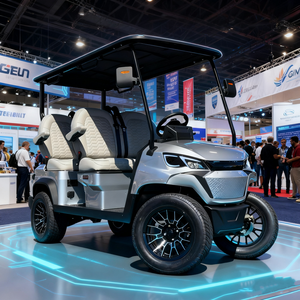
72V EEC Certified Electric Golf Buggy with 5KW 7.5KW High Power Motor
- Drivetrain: 72V / 7.5kW AC Motor
- Chassis: Reinforced Steel
- Range: 80-100 km
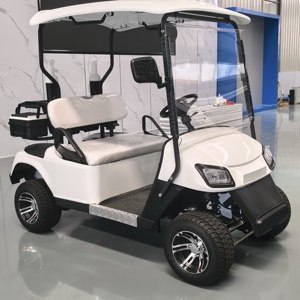
New Electric Off-Road Golf Cart Buggy 3-4 Seats Steel 60V 5KW CE Certified
- Voltage: 60V / 5kW AC
- Terrain: Lifted Off-Road
- Seats: 4 Seats (Flip Rear)
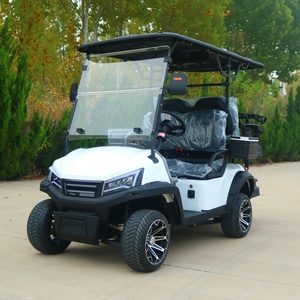
Street Legal 4WD Electric Golf Cart 60/72V Lithium Battery 6-seater Sightseeing
- Drive System: 4WD Dual-Motor
- Battery: LiFePO4 Lithium
- Capacity: 6 Passengers
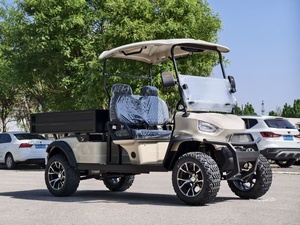
New Arrival 2 Seater Electric Golf Buggy Off Road Sporty Lifted Golf Cart
- Configuration: 2-Seater Lifted
- Application: Farm, Beach & Resort
- Tires: 12-inch All-Terrain
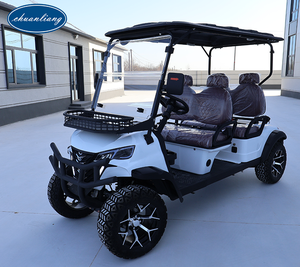
Professional Customized 4 Seater Electric Golf Buggy with Lithium Battery Powered
- Capacity: 4 Seater Luxury
- Powerpack: Smart BMS Lithium
- Use-Case: Resort & Community
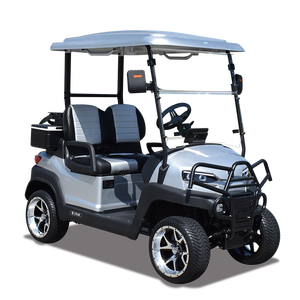
4 Wheel Electric Golf Cart 2 Seat Golf Cart Lithium Golf Buggy Speakers and Lights
- Features: Sound System & LED
- Brakes: Four-Wheel Hydraulic
- Motor: 4000W AC Brushless
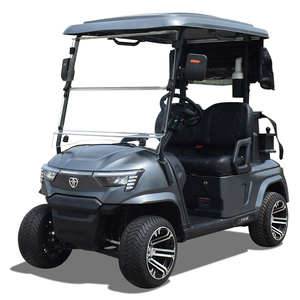
Customizable 2-Seater Electric Utility Golf Cart, Lithium Battery Golf Buggy
- Rear Bed: Aluminum Cargo Box
- Payload: 500 kg Capacity
- Battery: Fast-Charge Lithium
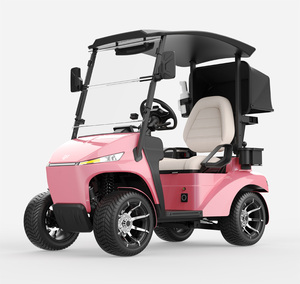
Professional Design Single-Seat Golf Cart Quick-Charge Electric Golf Cart CE Certification
- Footprint: Compact Ultra-Light
- Charging: 2-Hour Quick Charge
- Certifications: CE / ISO Standard
Strategic E-Mobility Outlook: 4-Seater Electric Golf Cart Demand in Ghana
As West Africa advances toward sustainable transport frameworks under Ghana's National Electric Mobility Policy initiated by the Ministry of Transport, commercial entities, hospitality giants, real estate developers, and municipal facility operators in Ghana are systematically replacing internal combustion engine (ICE) utility vehicles with zero-emission electric buggies. The 4-seater electric golf cart has emerged as the definitive benchmark vehicle size across Greater Accra, Ashanti Region (Kumasi), and Western Region (Takoradi).
The versatility of a 4-seater configuration—typically structured as either a 4-person forward-facing layout or a 2+2 arrangement with a flip-flop rear bench—provides an optimal balance between passenger payload capacity, physical footprint, and energy consumption per kilometer. In luxury beachfront resorts along Ada Foah, Kokrobite, and Cape Coast, 4-seater electric carts perform quiet, premium guest shuttle duties without creating noise pollution or diesel fumes. Concurrently, in sprawling gated residential estates in Cantonments, East Legon, and Airport Residential Area, these vehicles serve as daily neighborhood electric vehicles (NEVs) for security patrols, property management, and private family mobility.
Ghana Market Insight: High coastal humidity, atmospheric salt spray near the Gulf of Guinea, seasonal Harmattan dust infiltration, and off-grid charging fluctuations necessitate electric golf carts designed specifically with anti-corrosion galvanized chassis, IP67-sealed controllers, and thermal-stable LiFePO4 battery chemistry.
Key Sector Applications across Ghana's Expanding Infrastructure
Our export data and field operations identify four core operational environments within Ghana where 4-seater electric buggies provide maximum ROI and operational utility:
- Hospitality & Eco-Tourism: Multi-acre luxury hotel compounds, safari lodges, and golf resorts (such as Achimota Golf Club and Royal Senchi Resort) require silent 24/7 guest mobility over paved paths, grass turf, and gravel trails.
- Gated Residential & Commercial Hubs: Modern master-planned developments in Accra and Kumasi utilize 4-passenger buggies for concierge services, estate maintenance, and security patrols.
- Industrial Logistics & Mining Camps: Heavy-duty lifted 4-seater utility carts facilitate fast, safe transport of personnel and equipment across large mining infrastructure sites in Tarkwa, Obuasi, and Prestea.
- Institutional & Government Campuses: Universities, medical centers, and airport aprons (Kotoka International Airport) depend on electric shuttles for zero-emission inter-facility transport.
Built for West Africa's Demanding Operating Environment
Standard temperate-climate golf carts suffer premature frame rusting, battery thermal degradation, and controller failures in tropical Africa. Our Ghana-spec export vehicles incorporate specific engineering overhauls.
Hot-Dip Galvanized Anti-Corrosion Frame
Submerged in molten zinc at 450°C, our high-tensile steel chassis features complete internal and external rust protection, rendering it impervious to coastal marine corrosion along Accra and Takoradi coastal roads.
Heat-Resilient LiFePO4 Battery Systems
Lithium Iron Phosphate cells equipped with intelligent Smart BMS offer superior thermal stability at operating ambient temperatures up to 45°C, providing 3,500+ lifecycle charges with zero maintenance.
Rooftop Monocrystalline Solar Integration
Optional integrated solar roof panels harvest high tropical irradiance, continuously trickle-charging the battery pack during daytime operations to extend real-world driving range by up to 20-30%.
Sealed High-Torque AC Powertrain
Brushless 5kW to 7.5kW AC induction motors sealed against IP67 standards prevent Harmattan dust storm ingress while delivering maximum gradient-climbing power on unpaved African trails.
Wide Voltage Intelligent AC Charging
Heavy-duty onboard chargers built to handle Ghana’s grid variations (180V–260V AC, 50Hz) feature auto-cut-off protection, safeguarding battery longevity against voltage surges.
Heavy-Duty Off-Road Suspension & Brakes
Independent front MacPherson struts combined with rear leaf springs and 4-wheel hydraulic disc brakes provide smooth ride comfort and reliable stopping power on steep terrain.
Technical Benchmark Matrix: Standard vs. Ghana Heavy-Tropicalized Golf Carts
When procuring commercial fleet assets for West African deployment, selecting off-the-shelf Chinese or Western domestic golf carts frequently leads to early mechanical downtime. Below is a comparative technical analysis illustrating the engineering modifications implemented in our export-grade 4-seater electric buggies tailored for Ghana.
| Engineering Component | Standard Commercial Golf Cart | EAYS Ghana-Export Tropicalized Spec | Operational Impact in Ghana |
|---|---|---|---|
| Chassis Protection | Standard Electro-coated Steel Frame | Hot-Dip Galvanized & Powder-Coated Chassis | Prevents rust failure from coastal salt mist & humid air. |
| Motor Insulation | DC Motor or Open AC Motor (IP54) | Enclosed AC Brushless Motor (IP67 Dust/Waterproof) | Eliminates short-circuits caused by fine Harmattan red dust. |
| Battery Chemistry | Flooded Lead-Acid Batteries | LiFePO4 (Lithium Iron Phosphate) + Smart BMS | Zero water top-ups, faster charge cycles, handles 45°C ambient heat. |
| Solar Auxiliary | None (Plug-in Grid Only) | Monocrystalline Integrated Rooftop PV | Extends daily range, mitigates grid power outage risks. |
| Suspension Setup | Rigid Axle / Light Springs | Lifted Off-Road Heavy Springs & MacPherson Struts | High ground clearance (200mm+) for unpaved lateral roads. |
| Braking System | Rear Mechanical Drum Brakes | 4-Wheel Hydraulic Disc Brakes + Regenerative | Superior safety on steep slopes in Aburi or Kumasi hills. |
Total Cost of Ownership (TCO) & Sourcing Logistics for Ghanaian Buyers
Procurement directors must calculate total lifecycle expenditure rather than just initial FOB unit price. While traditional lead-acid golf carts carry a lower upfront capital outlay, their maintenance overhead in Ghana's warm climate is substantial. Lead-acid batteries require distilled water replenishments every 14–21 days and suffer rapid capacity loss when operated in high ambient temperatures. Furthermore, deep-cycle lead-acid batteries rarely exceed 600 to 800 charge cycles in West African conditions.
Conversely, upgrading to our LiFePO4 Lithium Power Pack reduces lifetime total operational costs by over 40%. Lithium systems eliminate water replenishment labor, reduce buggy gross vehicle weight by approximately 120 kg (improving energy efficiency), and deliver up to 3,500 full charge cycles at 80% Depth of Discharge (DoD). Over a 5-year commercial operational lifespan, this translates to uninterrupted service with zero battery replacement costs.
Shipping, Containerization & Duty Regulations at Tema & Takoradi Ports
We optimize container loading density to minimize per-unit ocean freight charges from manufacturing plants to Ghana’s key maritime gateways: Port of Tema and Port of Takoradi.
- 20ft Standard Container: Fits 2 units fully assembled (CBU) or 4 units partially knocked-down (SKD).
- 40ft High Cube (HC) Container: Fits 4 to 6 units fully assembled (CBU) or up to 10 units in SKD crates.
- Customs & HS Code Compliance: Vehicles are classified under HS Code 8703.10 (Electric golf carts and light utility buggies), allowing Ghanaian buyers to leverage clear customs clearance pathways and potential green-technology import duty exemptions under new e-mobility initiatives.
Why Enterprise Buyers & Fleet Managers in Ghana Partner with Us
As a leading international manufacturer and exporter of specialized low-speed electric vehicles, our enterprise solutions extend far beyond vehicle assembly. We offer end-to-end custom engineering, rigorous factory testing, export packaging, and ongoing after-sales technical support for commercial customers across West Africa.
Custom OEM & ODM Branding
We configure custom body paint colors, stitched leather seating finishes, custom alloy wheel designs, and direct corporate logo placement to match hotel or residential estate branding identity.
Certified Quality Assurance
Every 4-seater electric golf cart undergoes rigorous quality audits before container loading, including chassis load testing, 30° incline climbing validation, waterproofing rain spray testing, and electrical insulation checks.
Complete Spare Parts Support
We supply continuous maintenance spare part packages—including replacement tires, brake pads, controller units, windshields, and shock absorbers—shipped directly to Accra for zero operational downtime.
Frequently Asked Questions (FAQ) for Sourcing Electric Golf Carts in Ghana
Clear engineering and procurement answers for Ghanaian resort owners, estate managers, and commercial importers.
What is the real-world driving range of a 4-seater electric golf cart in Ghana?
A standard 48V/60V 100Ah lead-acid battery pack delivers a real-world range of 60 to 75 km per charge on flat terrain. Upgrading to a 72V 105Ah LiFePO4 lithium battery extends range to 90–110 km per charge. Range varies based on passenger payload, gradient incline (e.g., hill routes in Aburi), air conditioning/fan usage, and ground surface conditions.
How do these vehicles perform in hot weather and heavy rains?
Our Ghana-export vehicles feature heat-rated motor controllers with aluminum cooling fins designed for ambient temperatures up to 45°C. All wiring harnesses, controllers, and electrical connections are IP67-sealed, preventing water damage during heavy equatorial downpours in Ghana's rainy season.
Can the electric golf carts be charged using standard electrical outlets in Ghana?
Yes. Our onboard smart chargers are configured for Ghana's electrical standard: 220V–240V AC, 50Hz with UK-type 3-pin plug connectors. Built-in automatic surge suppression protects internal charging circuits against local voltage spikes and intermittent power interruptions.
What is the delivery timeline for orders shipping to Tema or Takoradi Port?
Standard manufacturing lead time for custom enterprise orders is 15 to 20 days upon specification approval. Maritime freight transit time from our export port to Tema Port or Takoradi Port typically ranges between 28 and 35 days depending on the shipping line schedule.
Should we choose Lead-Acid or Lithium LiFePO4 batteries for our commercial fleet?
For low-frequency, budget-conscious applications, deep-cycle lead-acid offers a lower initial purchase cost. However, for commercial operations, resorts, and multi-shift industrial duty in Ghana, Lithium LiFePO4 is highly recommended due to zero maintenance, resistance to heat degradation, faster charging (2-3 hours vs 8 hours), and a 5x longer lifespan.
How are warranty and spare parts handled for international shipments to West Africa?
We provide a comprehensive 12-month factory warranty on main structural chassis, motor, and controller units. For international container orders, we provide a recommended fast-moving spare parts package (brake pads, relays, switches, light assemblies) directly inside the container for instant maintenance access.
Build & Custom-Engineer Your Ghana Electric Fleet Today
Contact our technical export team to receive detailed engineering datasheets, factory-direct FOB/CIF quotation schedules for Tema/Takoradi ports, and container loading layout diagrams.