Deployed across luxury island resorts, heritage hotels, golf clubs, and industrial campuses globally.
OEM Fleet Engineering & B2B Export
Global Commercial Buyer's Guide: Next-Gen Resort Mobility Electric Cart Engineering, TCO & Future Fleet Trends
An exhaustive technical blueprint for luxury hotel groups, island properties, and eco-resorts: Sizing AC powertrains, anti-corrosion chassis, LiFePO4 battery integration, and operational efficiency.
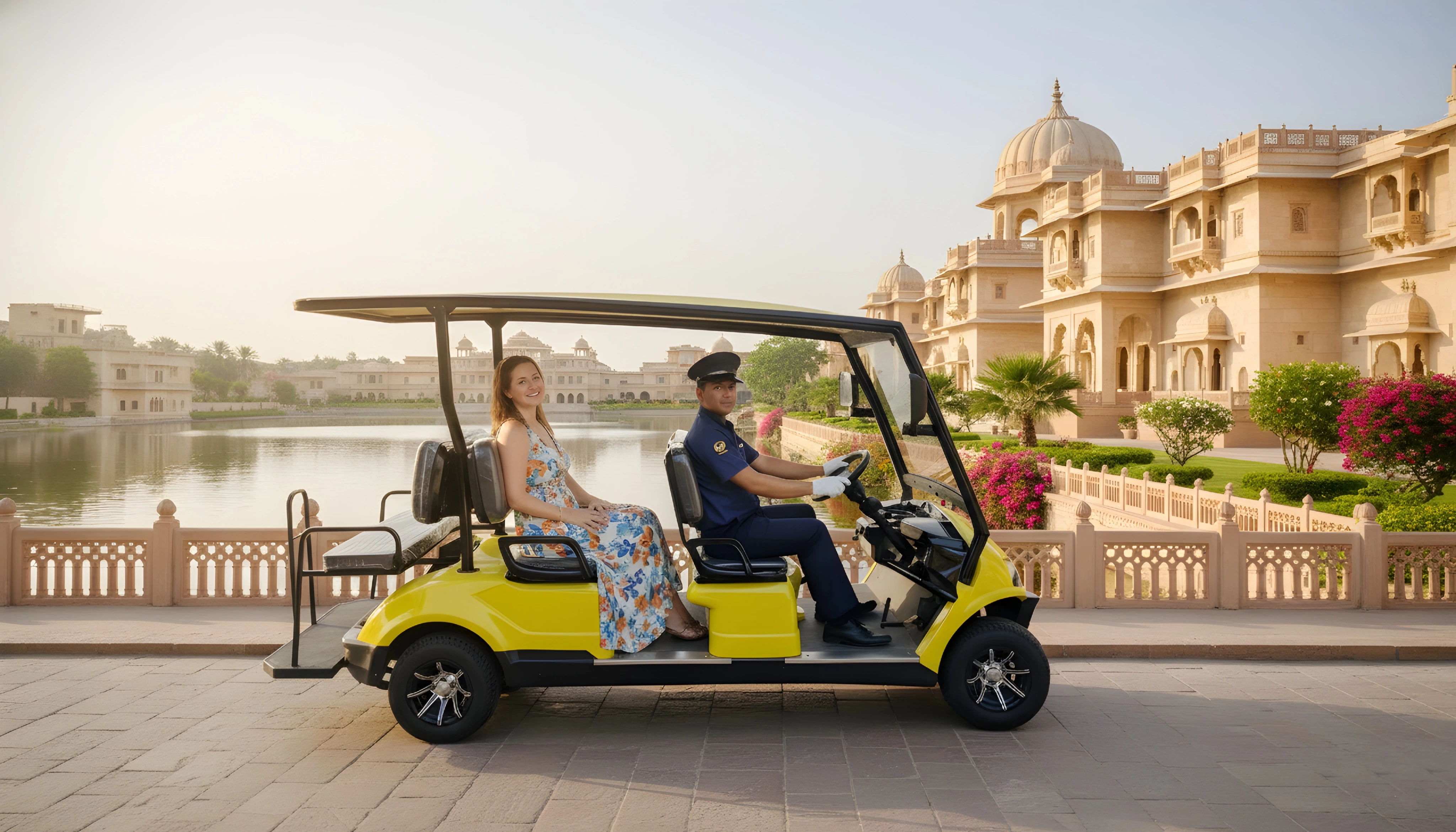
Solar-Hybrid Resort Mobility Electric Cart — 48V AC drivetrain, hot-dip galvanised frame.
Key Advantages of EAYS Resort Mobility Electric Carts
Engineered for continuous multi-shift operations on steep gradients and tropical ambient heat.
Integrated monoblock rooftop solar panels reduce grid dependency during daytime guest shuttle runs.
ISO 9227 salt-spray resistant structural frames built specifically for coastal marine humidity.
Direct factory backing, complete spare parts distribution, and remote diagnostic telemetry assistance.
Strategic Procurement Analysis
Rethinking Commercial Guest Transport: The Engineering Behind Modern Resort Mobility
In high-end hospitality, zero-emission transportation is no longer an optional green badge—it is a core operational requirement. Procurement officers and resort general managers face complex operational challenges ranging from high-ambient heat battery thermal runaway to severe salt-air frame corrosion.
Information Gain Insights for Global Procurement Directors
Modern **Resort Mobility Electric Carts** are subjected to duty cycles up to 4x higher than standard personal golf buggies. Fleet failure rarely stems from electric motor burnouts; it is almost universally caused by **chassis rust at stress welds**, **lead-acid voltage sag under hill loads**, and **bushings degrading under continuous passenger weight**. EAYS Electrics solves these issues at the structural level.
When procurement managers evaluate a modern Resort Mobility Electric Cart, the initial purchase price represents less than 30% of the vehicle’s Total Cost of Ownership (TCO) over a 7-to-10-year lifespan. Operating in tropical microclimates—such as island retreats in the Maldives, beachfront resorts in the Middle East, or humid safari lodges in East Africa—exposes low-speed electric vehicles (LSVs) to extreme salt spray, mud, steep inclines, and continuous multi-shift passenger shuttle loops.
At EAYS Electrics, manufactured at our specialized industrial plant in Bhiwani, Haryana, India, we approach luxury guest mobility through an industrial engineering lens. By pairing automotive-grade hot-dip galvanization with sealed AC brushless powertrains and intelligent Lithium Iron Phosphate (LiFePO4) battery management systems, EAYS vehicles deliver high reliability, silent operation, and lowered maintenance costs for global resort operators.
The Evolution of Resort Guest Mobility: Key B2B Purchasing Intent Drivers
Modern luxury travelers expect seamless, whisper-quiet transport from the reception desk to overwater villas, golf clubhouses, spa facilities, and dining venues. Gasoline-powered shuttles create noise pollution and emissions that disrupt tranquility, while generic low-voltage lead-acid buggies suffer from rapid battery exhaustion and frequent mechanical downtime during peak check-in hours.
To assist global procurement directors, operational managers, and institutional buyers in navigating fleet investments, our senior engineering team has mapped out the core operational expectations of modern resort mobility:
Coastal Anti-Corrosion
Standard painted steel frames corrode within 18 months in coastal marine air. EAYS utilizes full hot-dip galvanization (dipped inside and out at 450°C) to prevent structural rust for over a decade.
Gradeability & Torque
Resort topography often features 20% to 25% inclines. Our 48V and 72V Brushless AC drivetrains feature hill-hold electronic control and continuous torque vectors without overheating.
Fast Opportunity Charging
LiFePO4 chemistry allows 1-hour fast charging during lunch shifts, eliminating the 8-to-10 hour charging downtime inherent in conventional lead-acid fleets.
Enterprise Product Recommendations
High-Performance Resort Mobility Electric Cart Platforms
Whether transporting VIP guests, carrying luggage luggage loads, or managing housekeeping tasks, EAYS builds engineered fleet solutions tailored to your operational environment.
Flagship Shuttle Solar-Hybrid Resort Cart
Designed for luxury passenger transport (4, 6, and 8-seater variants). Integrates roof-mounted monocrystalline PV panels to extend daytime battery runtime continuously.
- Power
- 5 kW AC Brushless
- Chassis
- Hot-Dip Galvanised
- Battery
- LiFePO4 / Solar Hybrid
- Capacity
- 4 to 8 Passengers
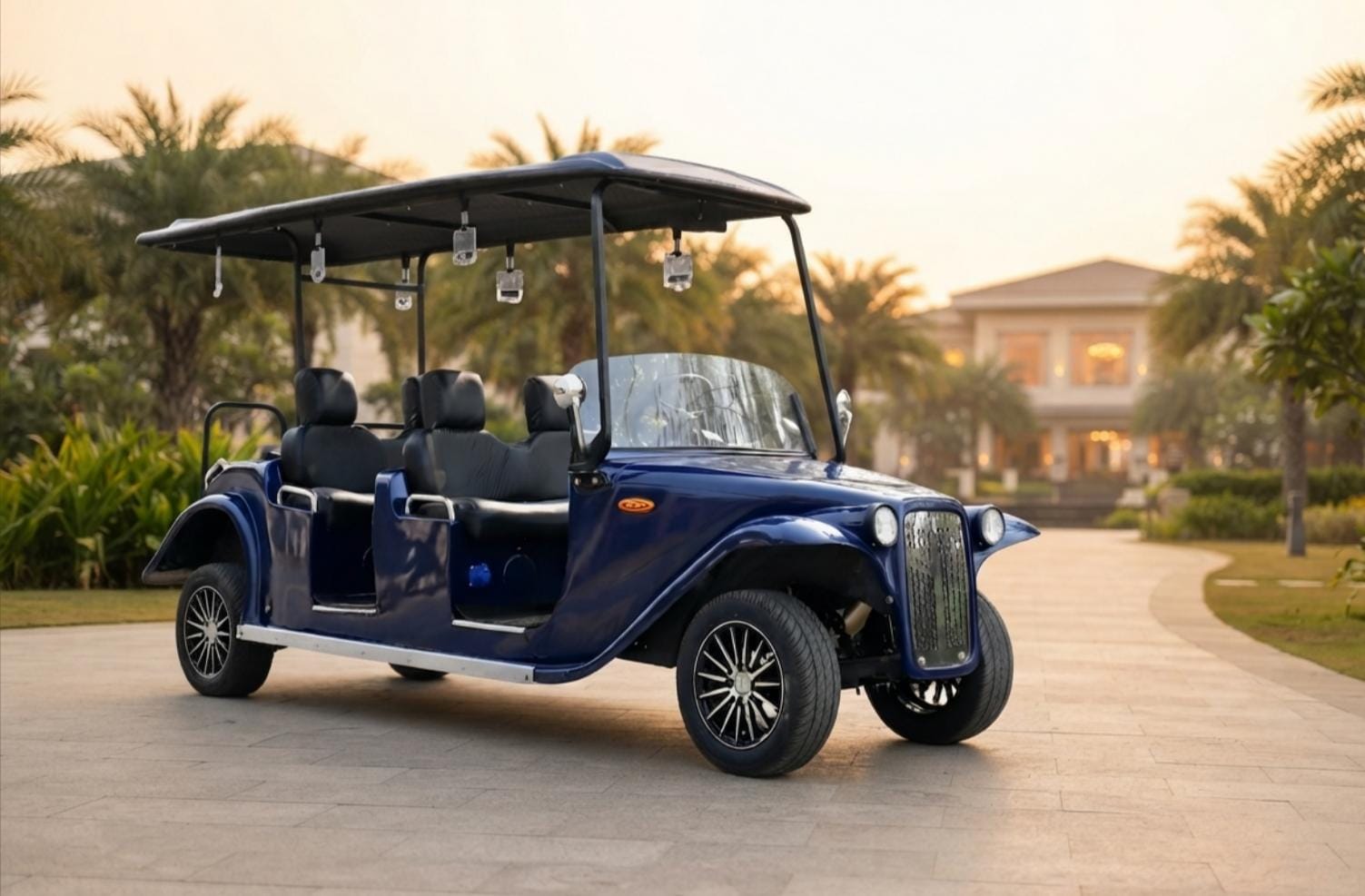
Heritage Edition Vintage Resort Passenger Cart
Combines classical coachwork styling with modern electric drivetrain technology. Chosen by heritage properties, royal retreats, and luxury wedding venues.
- Power
- 4.5 kW AC Drivetrain
- Brakes
- Hydraulic Rear / Front
- Seating
- 4 / 6 / 8 Premium Seats
- Finish
- Custom Hand Upholstery
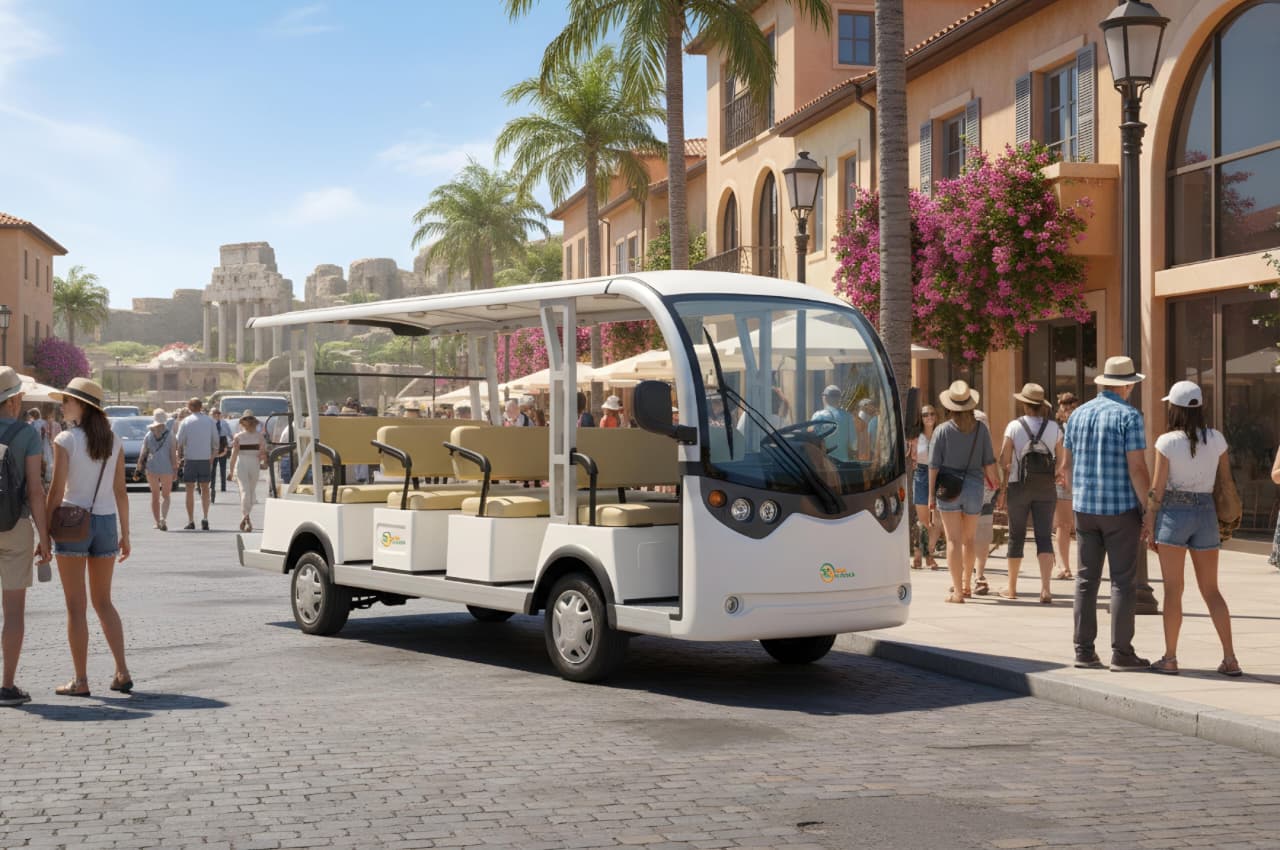
Mass Transit 11–14 Seater Electric Shuttle
Engineered for high-volume resort guest transfers, airport terminal runs, and eco-tourist site loops. Features dual circuit hydraulic braking and power steering.
- Motor
- 7.5 kW High-Torque AC
- Voltage
- 72V System Voltage
- Range
- 100–120 km (LiFePO4)
- Suspension
- Heavy Leaf Spring + Damper
 Back-of-House Workhorse
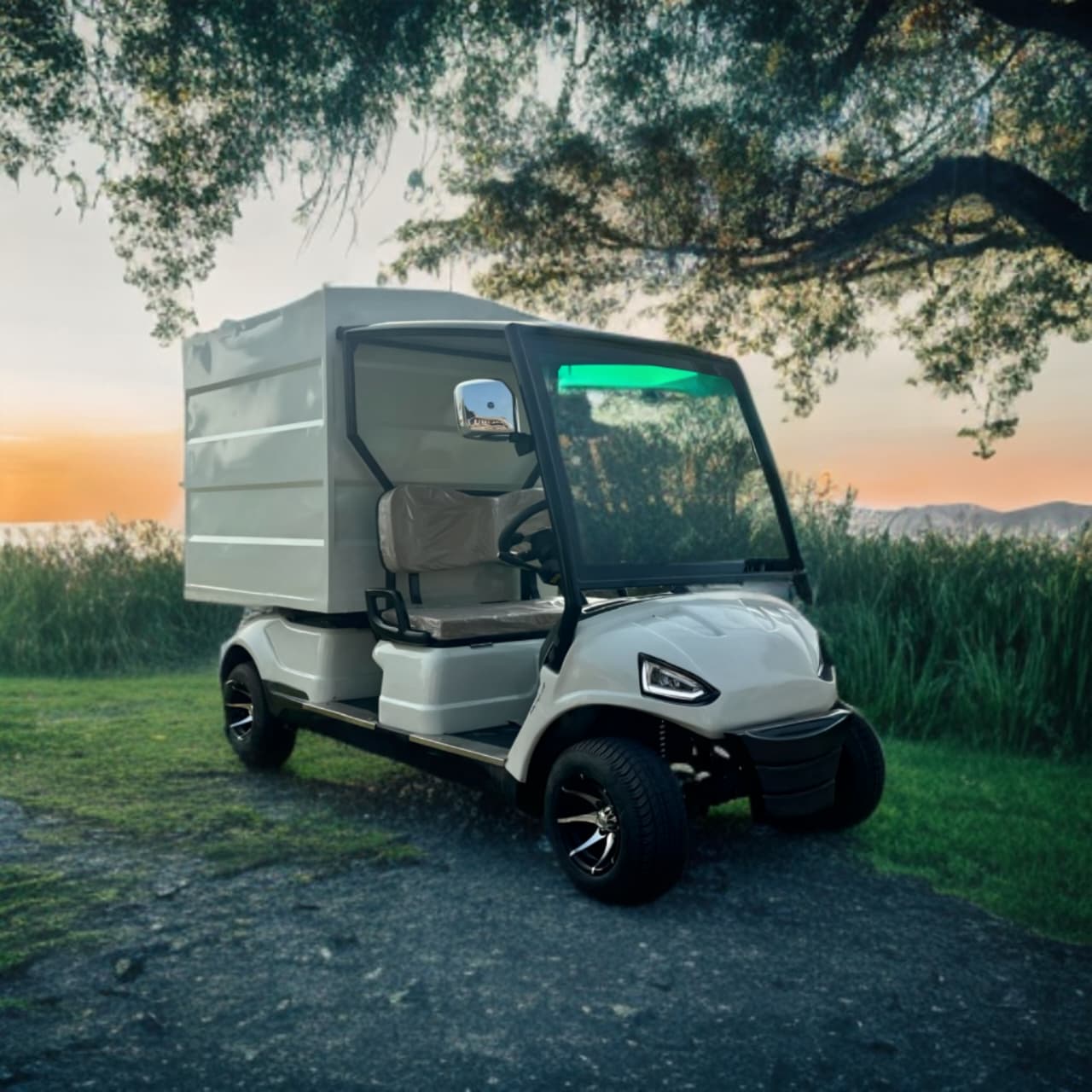
 Resort Utility & Cargo Cart
Heavy-duty utility platform configured for resort housekeeping, room service delivery, landscaping maintenance, and luggage haulage across rough resort terrain.
- Payload
- 600 kg to 1,000 kg
- Deck Type
- Aluminum Hydraulic Tip
- Motor
- 5 kW AC Heavy Duty
- Protection
- IP67 Sealed Controller
Total Cost of Ownership (TCO) Analysis: LiFePO4 Lithium vs Lead-Acid vs Solar Hybrid
For institutional buyers managing fleets of 10 to 100+ resort mobility electric carts, battery chemistry selection dictates long-term capital efficiency and operational expenditure. Below is a detailed 5-year financial performance breakdown evaluated across standard resort usage (averaging 45 km per vehicle per day).
5-Year Financial & Operational Comparison Matrix
Data compiled by EAYS Engineering Team based on operational telemetry from tropical resort fleets in the Indian Ocean, Middle East, and Southeast Asia.
| Evaluation Metric | Standard Lead-Acid (AGM/Flooded) | EAYS LiFePO4 Lithium Pack | EAYS Solar-Hybrid + LiFePO4 |
|---|---|---|---|
| Initial Battery CapEx | Lowest initial cost ($) | +40% higher initial investment | +55% higher initial investment |
| Battery Lifespan Cycles | 500 to 800 cycles (1.5 - 2 Years) | 3,500+ cycles (7 - 10 Years) | 4,000+ cycles (Sun relieves stress) |
| Distilled Water Maintenance | Required bi-weekly (High labor cost) | Zero maintenance (Sealed BMS) | Zero maintenance (Sealed BMS) |
| Usable Depth of Discharge (DoD) | 50% DoD (Severe voltage drop) | 95% DoD (Consistent power output) | 95% DoD + Daytime replenishment |
| 5-Year Battery Replacement Cycles | 2 to 3 full pack replacements | 0 replacements required | 0 replacements required |
| Estimated 5-Year Energy Savings | Baseline grid draw | 22% savings (Higher charge efficiency) | 45% savings (Direct PV generation) |
| Total 5-Year Operational Cost | High TCO (High labor & replacements) | 35% Lower TCO than Lead-Acid | 48% Lower TCO than Lead-Acid |
Future Procurement & Technological Trends in Resort Mobility (2025–2030)
As global hotel chains (Marriott, Hilton, Accor, IHG, Hyatt) establish aggressive Scope 1 and Scope 2 carbon neutrality targets, the low-speed vehicle market is undergoing structural technical shifts. When purchasing a Resort Mobility Electric Cart today, enterprise buyers must anticipate the following technology developments:
1. Integration of Smart Fleet Telematics & Geofencing
Modern commercial resort carts are moving from standalone vehicles to connected IoT nodes. Telematics modules integrated directly into the vehicle’s CAN-bus controller allow resort operations managers to:
- Geofence Operational Zones: Automatically limit top speed to 10 km/h in high-density pedestrian dining areas, while permitting 25 km/h on peripheral access roads.
- Monitor Live Battery State-of-Health (SoH): Receive automated alerts for cell imbalance, thermal spikes, or unauthorized driver usage.
- Keyless Guest/Staff Access: Utilize RFID keycards or mobile app integration for housekeeping teams and self-drive resort guests.
2. Monocoque Chassis & Structural Lightweighting
Traditional golf buggies relied on ladder frames wrapped in thin plastic body panels. Future-ready resort carts utilize automotive-inspired structural frames with lightweight composite bodywork (UV-stabilized PP/ABS engineered plastics). This design increases payload capacity while absorbing low-speed impacts without body denting or paint chipping.
3. Micro-Grid Integration & Bi-Directional Charging (V2L)
Advanced island resorts are deploying micro-grids powered by solar array fields. Modern LiFePO4 resort carts equipped with Vehicle-to-Load (V2L) capability serve as emergency energy storage nodes during grid interruptions, allowing maintenance teams to power mobile equipment directly from the vehicle’s traction battery.
Manufacturing Authority
Why Leading Hospitality Brands Partner With EAYS Electrics
Rooted in our state-of-the-art manufacturing facility in Bhiwani, Haryana, India, EAYS Electrics combines rigorous automotive engineering standards with deep customizability.
01 / STRUCTURAL RIGIDITY
Hot-Dip Galvanized Frames
Every frame undergoes total immersion hot-dip galvanization to prevent structural rust in high-salinity island and coastal resorts.
02 / DRIVETRAIN
Maintenance-Free AC Motors
Brushless 48V/72V AC motors feature IP65 sealing, eliminating carbon brush replacement and maximizing thermal efficiency.
03 / CUSTOMIZATION
Bespoke Brand Styling
Custom paint matching (Pantone/RAL), luxury hand-stitched leatherette seating, custom canopy enclosures, and logo branding.
04 / RELIABILITY
Rigorous QC Testing
100% of vehicles undergo gradient climbing tests, brake stopping distance checks, and electrical insulation testing prior to shipping.
Verified Global Client References
Proven Performance Across International Hospitality Brands
Hear from resort general managers, estate engineers, and fleet directors operating EAYS electric vehicles under real-world conditions.
“Operating an island resort in the Maldives means salt corrosion is our constant enemy. The hot-dip galvanised chassis on EAYS Resort Mobility Electric Carts has eliminated frame rust entirely. Our guests love the silent ride.”
David ChenDirector of Engineering — Luxury Island Resort & Spa
“We upgraded our 24-vehicle guest fleet to EAYS LiFePO4 solar-hybrid carts. Battery maintenance labor was reduced to zero, and daytime rooftop solar charging extended our operational shift by 4 extra hours.”
Marcus VanceGroup General Manager — Heritage Mountain Estate
“The 14-seater electric mini buses handle our peak airport-to-resort shuttles with complete ease. Even on steep 20% inclines under full passenger load, the AC drivetrain delivers smooth, reliable torque.”
Tariq Al-MansoorFleet Operations Manager — Gulf Eco-Tourism Hub
Enterprise Procurement FAQ
Frequently Asked Questions by Global Commercial Buyers
In-depth technical answers addressing international shipping logistics, customization options, climate testing, and warranty protocols.
Standard golf buggies are engineered for light recreational play (18 holes per day on grass paths). Dedicated Resort Mobility Electric Carts from EAYS are industrial passenger shuttles designed for continuous 16-to-24 hour guest transport over paved, unpaved, and hilly terrain. They feature reinforced hot-dip galvanised chassis, heavy-duty hydraulic brakes, higher payload capacity (up to 1,000 kg), wider passenger seating, and commercial-grade AC powertrains engineered for heavy stop-and-go usage.
Hot-dip galvanization involves submerging the entire fabricated steel chassis into molten zinc at approximately 450°C (840°F). This process creates a metallurgical bond, coating both internal tube cavities and external surface areas with layers of corrosion-resistant zinc-iron alloy. Unlike standard liquid spray paint or powder coating—which chips and permits rust underneath—hot-dip galvanization prevents structural corrosion even when subjected to extreme salt spray and marine humidity (tested under ISO 9227 standards).
Packaging efficiency depends on the vehicle length and roof disassembly option:
• 20 ft Standard Container: Accommodates 2 to 3 units (4-seater models) with knock-down roof packing.
• 40 ft High-Cube (HQ) Container: Accommodates 4 to 6 units (4-seater or 6-seater models) or 2 units of 11-14 seater electric shuttles. EAYS provides custom metal shipping frames to prevent transit movement and maximize container volume utilization.
LiFePO4 is chemically stable, non-combustible, and delivers superior thermal tolerance in tropical environments (+50°C ambient). Key commercial benefits include: 3,500+ charge cycles (vs. 600 for lead-acid), zero electrolyte topping labor, 60% weight reduction (lowering wear on tires and suspension), and 1-hour fast opportunity charging capability between resort shift changes.
Yes. EAYS provides full OEM customization. Buyers can specify exact Pantone or RAL color codes for body panels, select premium weather-resistant Marine-grade vinyl seating with custom piping and stitched resort logos, choose enclosed or open canopy curtains, and add specialized equipment such as rear luggage racks, golf bag holders, or room service food trays.
Every EAYS vehicle includes a standard 1-Year Factory Warranty covering the chassis, motor, controller, and charger. Lithium battery packs carry an extended 3-to-5 year warranty option. For international buyers, EAYS ships a recommended 2-Year Spare Parts Fast-Track Kit (including spare controllers, solenoids, brake shoes, suspension bushes, and light assemblies) alongside the vehicle container to ensure zero operational downtime.
A monocrystalline solar panel is integrated directly into the vehicle’s roof canopy and connected to an MPPT (Maximum Power Point Tracking) charge controller. During daylight operations, the solar panel delivers continuous trickle charging to the main traction pack, extending daily range by 20% to 30% and reducing total AC grid power consumption.
Upgrade Your Resort Fleet Performance Today
Request our comprehensive 2025–2026 Fleet Specifier Catalog, complete technical drawings, pricing tables, and container loading schedules.